






British Colonial Campaign Furniture
British colonial campaign furniture brings portable utility and robust timbers into the home, designed for officers on the move.
British Colonial Campaign Furniture
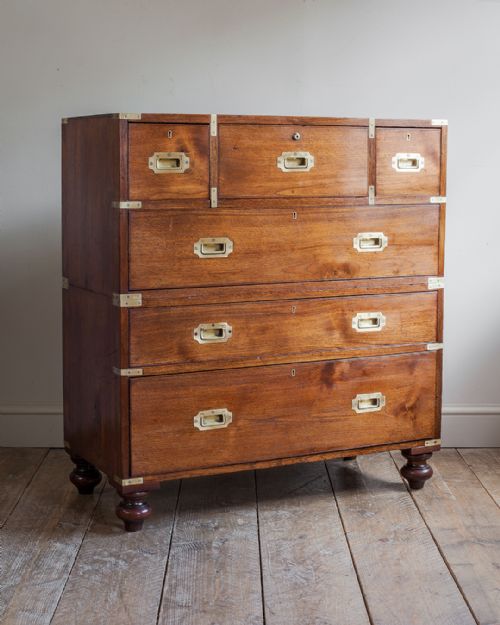
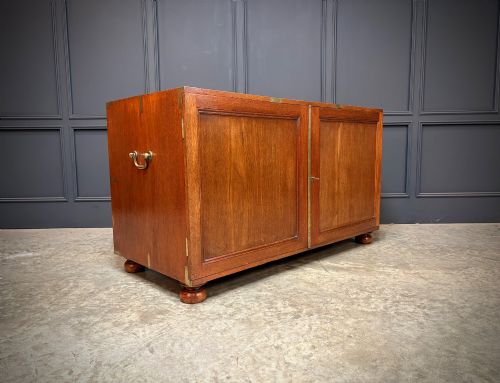
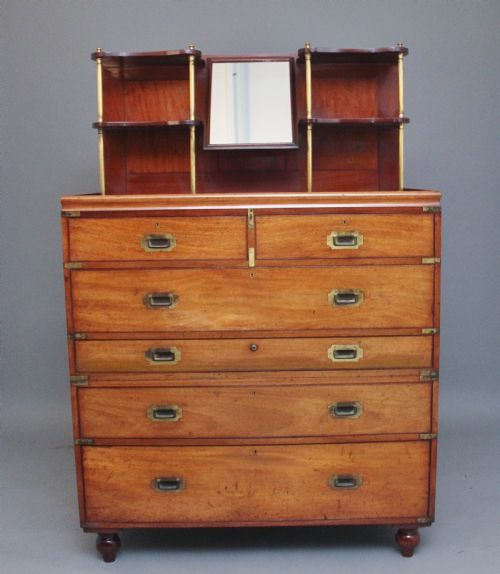
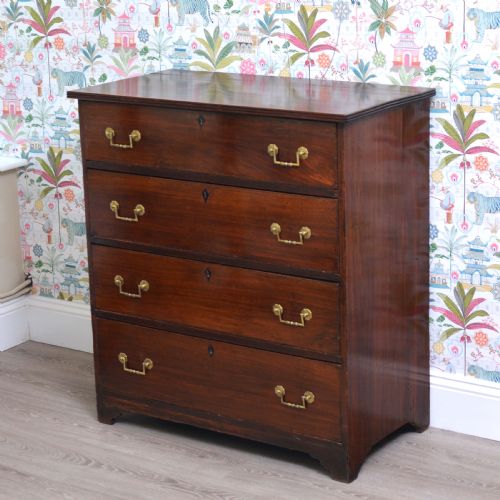
British colonial campaign furniture comprises sturdy, knock-down furnishings constructed for travel and military relocation during the nineteenth century. These objects include chests of drawers, secretaire chests, side cabinets, and folding chairs designed to withstand arduous journeys.
The pieces on this page are predominantly Victorian examples originating from the nineteenth century, including specific dates such as eighteen-sixty and eighteen-seventy. They frequently present in dense tropical timbers such as teak, camphorwood, padauk wood, and mahogany.
Buyers will encounter two-part chests fitted with recessed brass hardware and carrying handles alongside colonial chairs designed for easy dismantling. Anglo-Indian variants appear alongside standard Victorian military forms, reflecting the global reach of the British Empire.
How they were made
Cabinetmakers built these items using durable timbers capable of enduring extreme climates, relying heavily on teak, mahogany, camphorwood, and padauk wood. These woods resisted warping and insect damage while offering substantial structural integrity for constant transport.
Construction methods prioritised modular design, dividing large case pieces into two stacked sections with removable feet and flush brass corners to prevent snagging. Hardware included cast iron carrying handles and brass mounts screwed firmly into the wood to reinforce vulnerable joints.
Recorded object types include folding campaign chairs, side cabinets, and secretaire chests fitted with brass mounts and cast iron carrying handles.
What varies in quality
The grade of timber and the precision of the joinery dictate the standing of an individual piece, with dense grain and rich natural colour marking superior examples. Well-executed secretaire drawers with fitted pigeonholes and secret compartments elevate the sophistication of a chest.
Quality also shows in the retention of original brass mounts, recessed handles, and flush fittings that sit level with the wood surface. The integrity of the two-part division and the smoothness of the dismantling mechanism separate utilitarian transit items from finer officer-grade commissions.
The British Colonial Campaign Furniture Glossary
- Campaign chest
- A sturdy chest of drawers built in two separate sections for easy transport during military movements. These units feature flush brass handles and reinforced corners.
- Secretaire
- A cabinet or chest incorporating a pull-out writing drawer with a drop-front desk surface and internal pigeonholes. This provides a portable office for officers on duty.
- Camphorwood
- An aromatic timber utilised for campaign chests due to its insect-repellent properties and distinct fragrance. It offers a lighter hue alongside strong dimensional stability.
- Recessed hardware
- Handles and brackets set flush into the timber surface to prevent catching during transit. This technique protects both the furniture and surrounding cargo.
British Colonial Campaign Furniture: Frequently Asked Questions
Why are campaign chests built in two parts?
These chests split horizontally into separate stacked modules to make loading onto pack animals, wagons, and ships manageable for travelling officers.
This modular construction also lightened the overall load when traversing difficult terrain during nineteenth-century military campaigns.
What woods were used for colonial furniture?
Cabinetmakers selected dense tropical hardwoods such as teak, mahogany, camphorwood, and padauk wood for their strength and resistance to humidity.
These timbers endured harsh climates without splitting, protecting the officer's belongings during long overseas postings.
Where does the brass hardware come from?
Brass corners, straps, and flush-fitting handles were fitted to reinforce structural joints and protect vulnerable edges from knocks during transit.
These metal elements sit level with the timber surface so nothing catches on ropes or packing crates.