
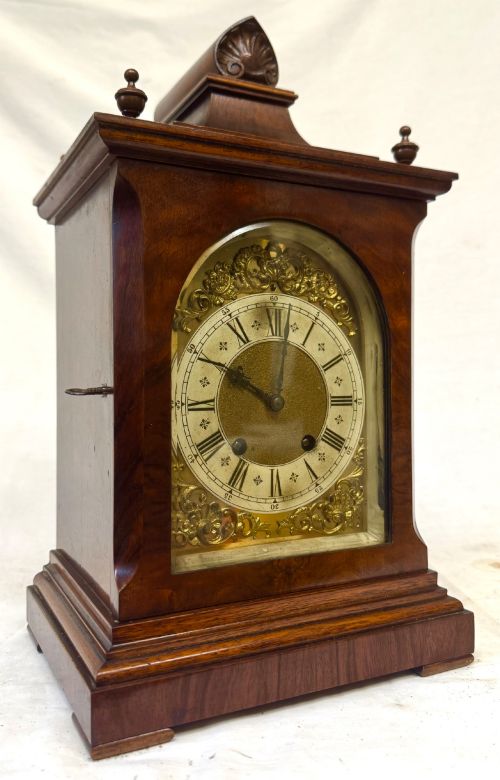
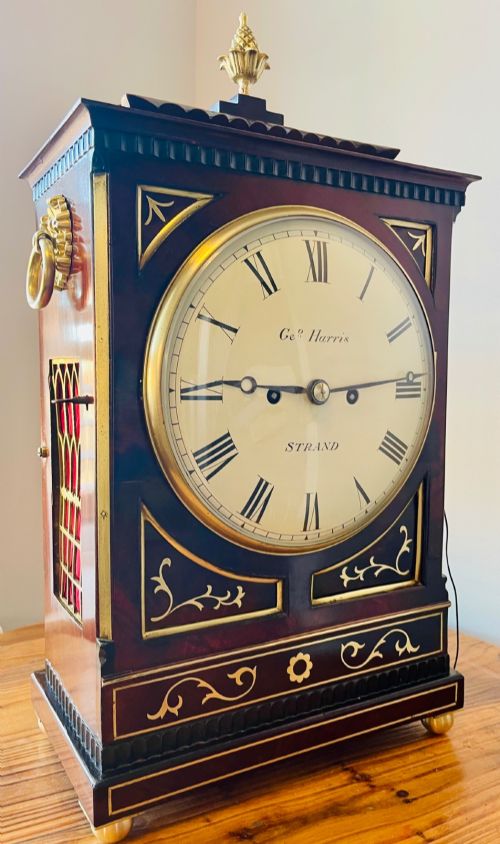
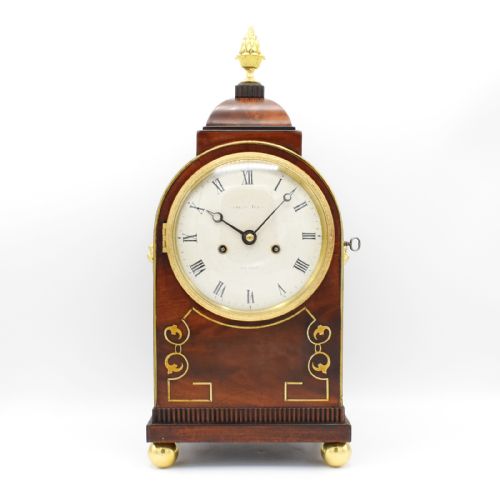
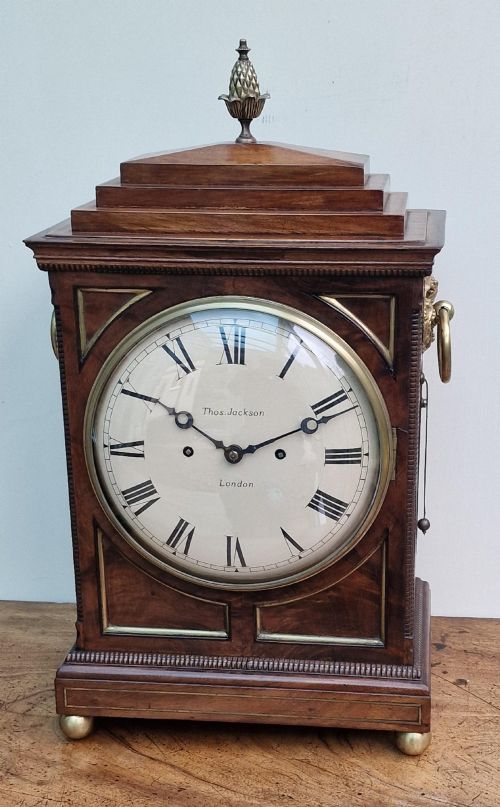


Brass Finial Bracket Clock
These brass finial bracket clock examples combine rich timber cases with precise mechanical movements, offering timeless elegance for mantelpieces and tables.
Brass Finial Bracket Clock
A brass finial bracket clock stands as a traditional timepiece designed for tabletop or shelf placement, frequently incorporating metal finials upon the case. The selections here span the Regency, Georgian, and Victorian periods, alongside later 19th and early 20th century examples.
Most entries on this page take the form of mantel clocks or dedicated bracket clocks housed in dark wood cases. London makers dominate the origins, alongside French workshops producing elaborate revival styles.
The casing commonly relies on timbers such as mahogany and walnut, punctuated by brass dials, glass covers, and enamel chapters. Buyers meet both architectural architectural forms and miniature balloon clock shapes within the selection.
Evaluating craftsmanship and condition
The distinction between standard production and exceptional work rests in the crispness of the timber carving and the complexity of the movement. Finer examples display hand-engraved brass backplates and finely figured mahogany or walnut veneers.
Makers of note add considerable weight to a piece, where signed dials by recognised London watchmakers or Parisian firms indicate superior workshop standards. The integration of ormolu mounts and genuine tortoiseshell inlay separates elaborate luxury items from simpler domestic clocks.
Listings feature woods spanning mahogany, walnut, and ebonised timber, alongside decorative applications of tortoiseshell and ormolu.
Charles Pratt London·Thomas Jackson·Webster Cornhill London·John Bull of Bedford·Samuel Marti·Leplastrier of London·Berguer of the Strand
The Brass Finial Bracket Clock Glossary
- Fusee
- A conical pulley used in mechanical clocks to equalise the torque of the mainspring as it runs down. This mechanism helps the clock maintain steady timekeeping from a full wind to empty.
- Bracket clock
- A portable timekeeper originally designed to sit on a wall bracket or a table. Over time, the term came to describe any substantial table clock with a handle or flat base.
- Boulle
- A form of marquetry decoration using brass and tortoiseshell inlaid in intricate floral or geometric patterns. Developed in France, it appears frequently on revival mantel clocks.
- Ormolu
- Gilded bronze used for decorative mounts, feet, and finials on the corners and peaks of clock cases. It adds metallic contrast to the dark wood bodies.
- Chamfer top
- A case design where the upper edges are bevelled or angled inwards towards a central summit. This profile appears frequently on Regency mahogany models.
Brass Finial Bracket Clock: Frequently Asked Questions
How do I wind a fusee bracket clock?
Winding requires a dedicated key inserted into the dial aperture, turned gently until resistance signals a full spring. Care must be taken not to overwind older mechanisms.
Most fusee movements require attention once a week, depending on the specific gear train ratio designed by the maker.
Where should I place a bracket clock?
These timepieces suit level surfaces such as mantelpieces, sideboards, or dedicated wall brackets away from direct sunlight and drafts. A stable base ensures the pendulum beats evenly.
Because many examples feature delicate wood veneers and glass panels, high-humidity rooms like kitchens should be avoided.
How do I tell Regency clocks from Victorian ones?
Regency pieces often favour clean architectural mahogany cases with brass inlay and chamfered tops. Victorian examples frequently embrace revival aesthetics, including French Boulle work and ormolu.
Examining the maker signature and dial style provides further clues to the manufacturing decade.
What is a single fusee movement?
A single fusee movement drives the timekeeping train only, without striking the hours or quarters. This simplified mechanism was common in smaller table and balloon clocks.
Simpler trains require fewer interventions during maintenance while preserving reliable daily operation.