


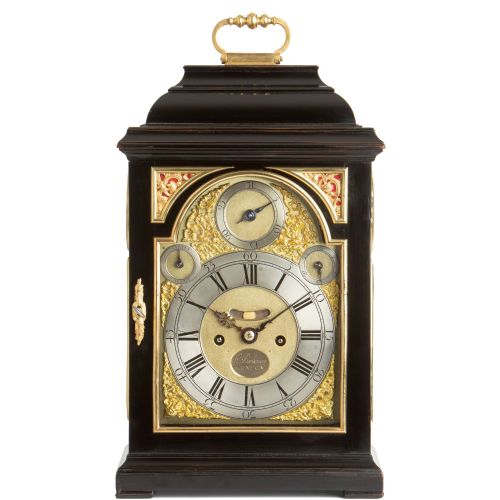


Ebonised Chiming Clock
An ebonised chiming clock brings mechanical precision and dark-toned elegance to a room, driven by brass movements and rich wooden cases.
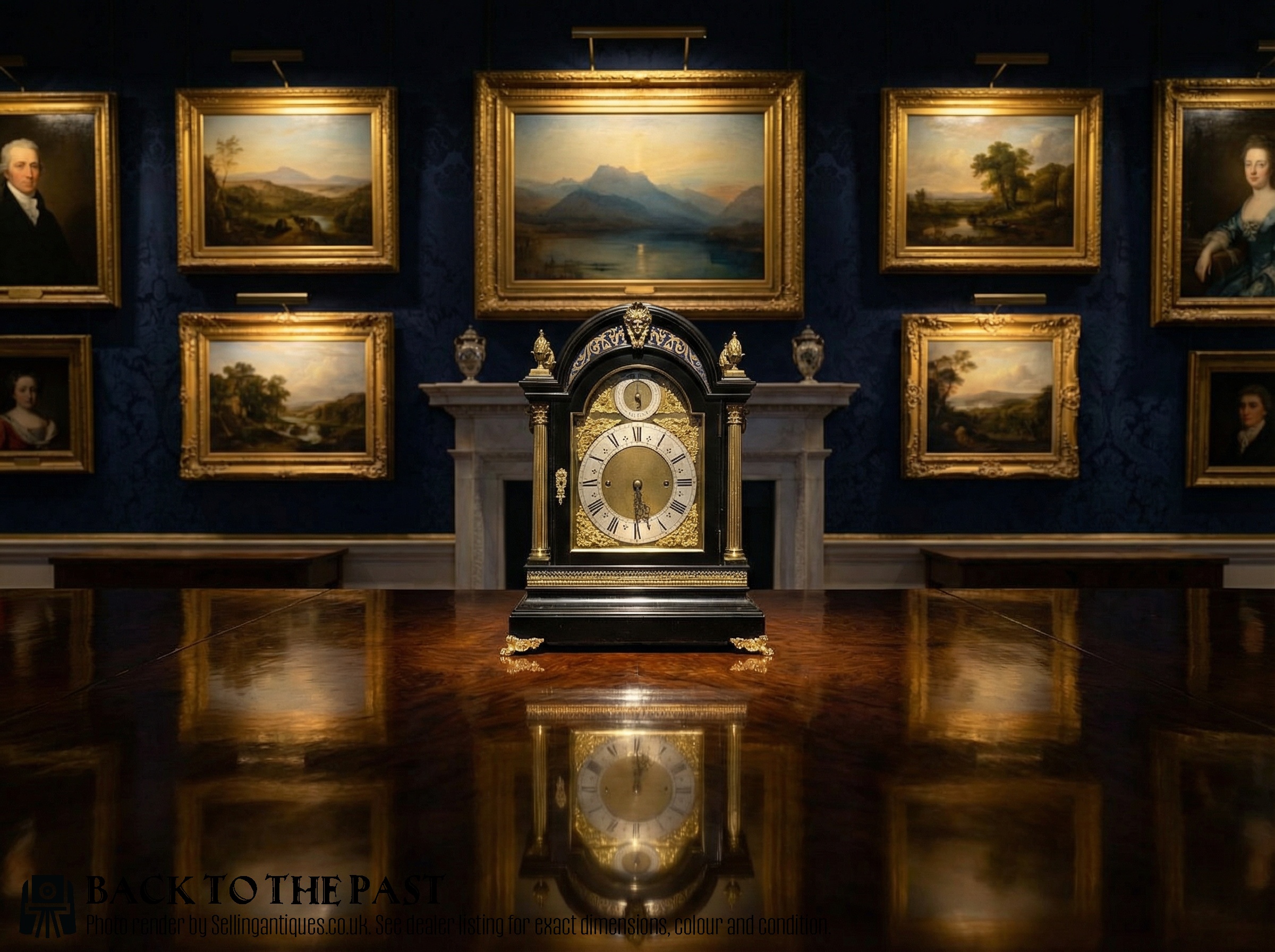
Ebonised Chiming Clock
An ebonised chiming clock is a timekeeping machine housed in wood treated to resemble ebony, combining striking or chiming mechanisms with refined cabinet work. These objects serve both practical timekeeping and decorative display across domestic interiors.
The pieces appearing on this page span several eras including the eighteenth century, the Regency period, and the Victorian age. Mantel clocks and bracket clocks dominate the selection, offering various styles from austere architectural forms to ornate revival designs.
Buyers meet examples ranging from compact table clocks to massive bracket pieces featuring multiple bells or gongs. London makers and continental workshops both contribute to the variety of movements found within these dark wooden cases.
How they were made
Cases utilise timber treated with dark stain or paint to achieve an ebonised finish, often embellished with ormolu, gilt bronze, or brass mounts. Glass panels frequently protect the dial while allowing visibility of the internal mechanics.
Internal movements rely on brass plates, wheels, and escapements, driven by spring-driven fusee mechanisms or weight-driven systems. Chimes and strikes operate through complex arrangements of hammers striking bells, gongs, or rods.
Dials incorporate enamelled cartouche numerals, engraved brass plates, or silvered chapter rings, protected behind hinged bezels. Specialised makers constructed these intricate gear trains to ensure accurate timekeeping alongside audible musical or striking sequences.
Some bracket clocks demand eight different bells to sound a tune, ensuring nobody sleeps through the Westminster chime.
What varies in quality
Quality separates simple timepieces from masterworks through the complexity of the movement and the fidelity of the case ornamentation. Triple fusee musical movements and grand sonnerie mechanisms represent higher tiers of horological achievement compared to standard striking setups.
The execution of the ebonised finish and the quality of the cast ormolu and gilt brass mounts dictate visual distinction. Finer pieces display crisp engraving on the backplates and dials, alongside robust cabinetry built from quality timbers.
frodsham and baker london·Berguer of the Strand·William Withers London·Barraud and Lunds·William Smith London·Percy Webster·Richard Peckover London·Christopher Pinchbeck
The Ebonised Chiming Clock Glossary
- Fusee
- A conical pulley used in spring-driven clocks to maintain equal power as the mainspring unwinds. This device ensures consistent force reaches the escapement for better timekeeping accuracy.
- Bracket clock
- A portable clock originally designed to sit on a wall bracket or table. These pieces frequently feature carrying handles and glazed side panels.
- Grande sonnerie
- A complication that strikes the hours and quarters automatically on every quarter hour. It represents a sophisticated level of mechanical horology.
- Ormolu
- Gilt bronze ornamentation applied to furniture and clock cases. The technique involves fusing a gold-mercury amalgam onto a bronze base.
- Quarter repeating
- A mechanism that sounds the last hour and the number of quarters elapsed since the hour when a cord or lever is activated. This allowed owners to check the time in the dark.
Ebonised Chiming Clock: Frequently Asked Questions
What is an ebonised chiming clock?
An ebonised chiming clock is a mechanical timepiece housed in wood finished to look like ebony, featuring mechanisms that sound bells, gongs, or chimes at set intervals. These objects combine complex brass gear trains with dark wooden cabinetry.
Craftsmen produced these clocks across the eighteenth and nineteenth centuries in various forms, including mantel and bracket clocks. They served both to mark the passing hours audibly and to decorate domestic interiors.
How do you wind a fusee clock?
Winding a fusee clock requires inserting a key into the winding square on the dial or backplate and turning it gently until the spring reaches tension. Care must be taken not to overwind the mechanism.
Most fusee movements on this page require weekly attention to maintain proper operation. Consult the specific movement type before applying tension to the mainspring.
How do you distinguish Regency ebonised clocks?
Regency ebonised clocks typically display neoclassical restraint, clean architectural lines, and restrained brass or gilt mounts. Their proportions often reflect the design principles popular in the early nineteenth century.
Makers such as Berguer of the Strand produced notable bracket examples during this era. Examining the dial design and internal movement style helps confirm the Regency origin.