
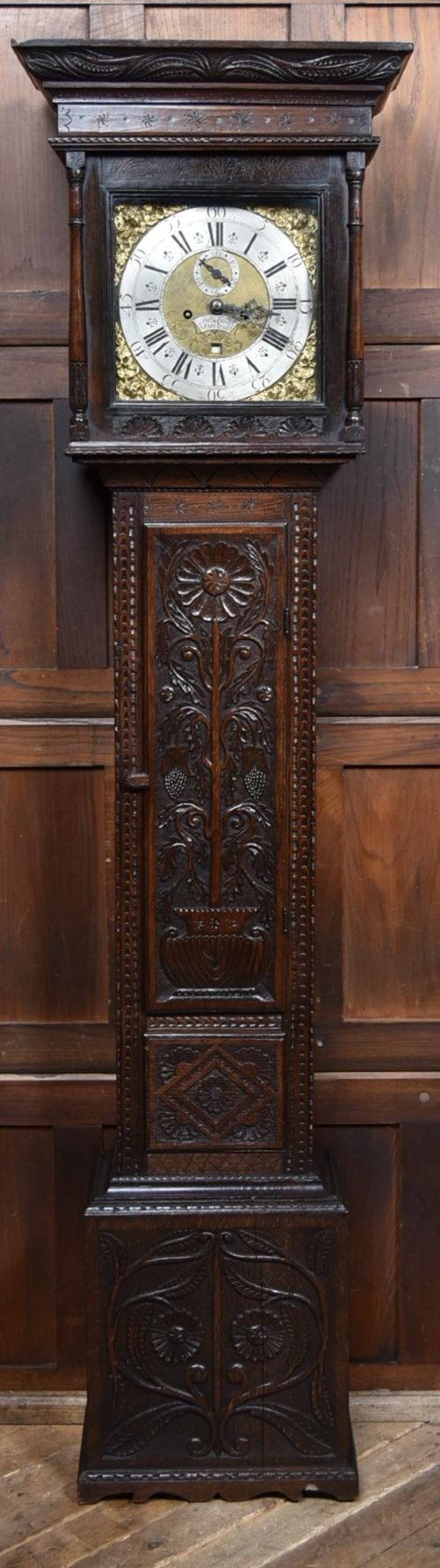
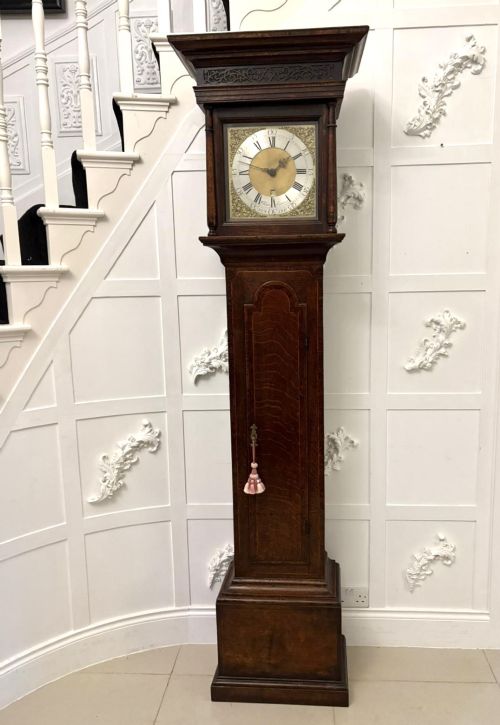
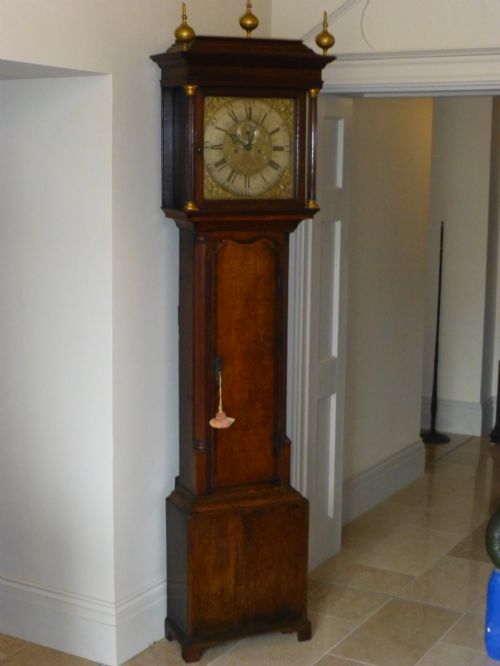
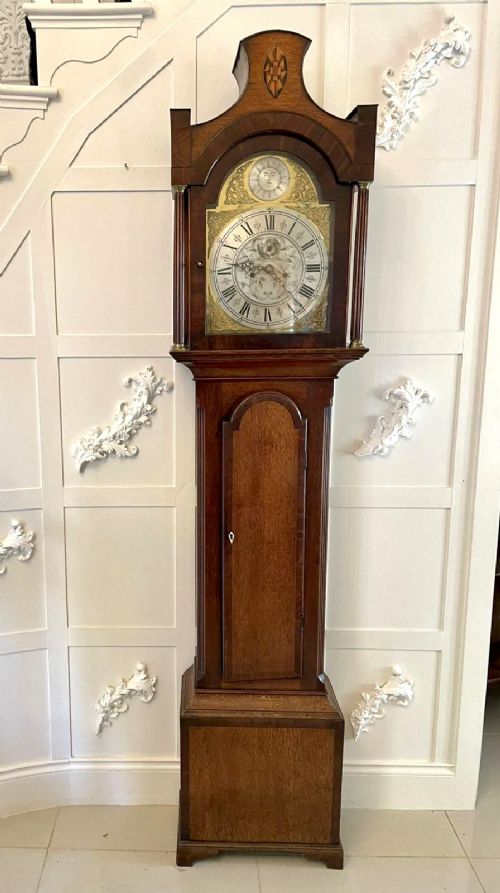
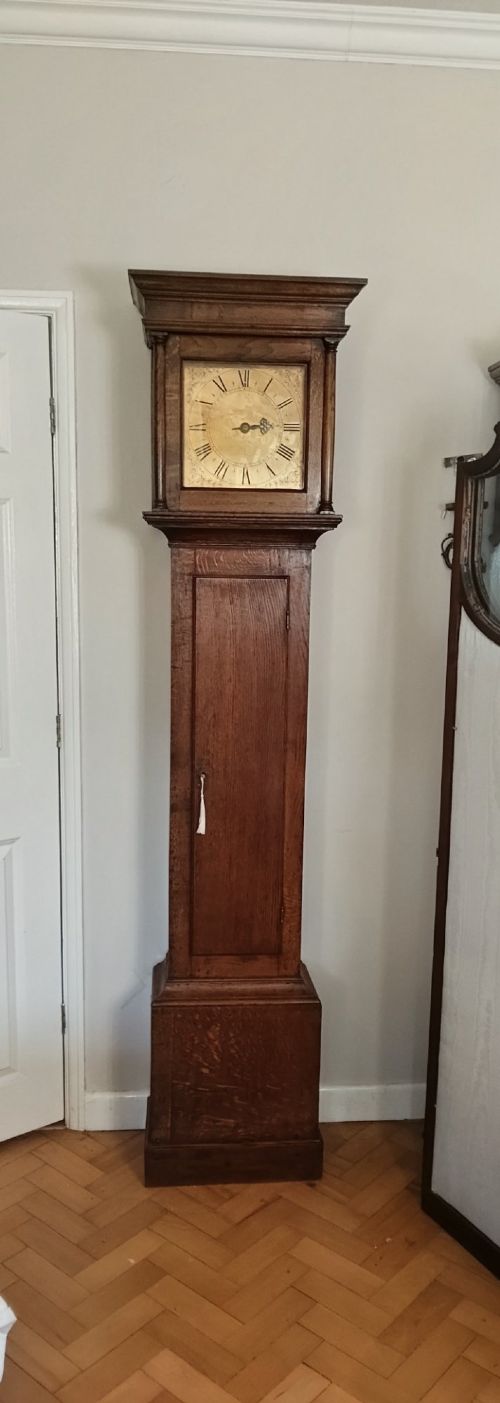

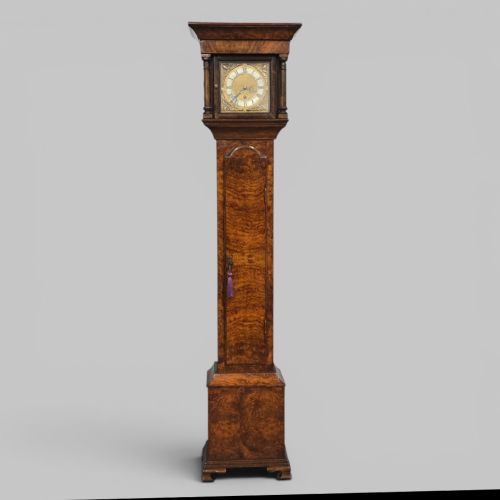


Brass Face Floor Clock
A brass face floor clock stands tall in a hallway, bringing measured time and polished metal warmth into a room.
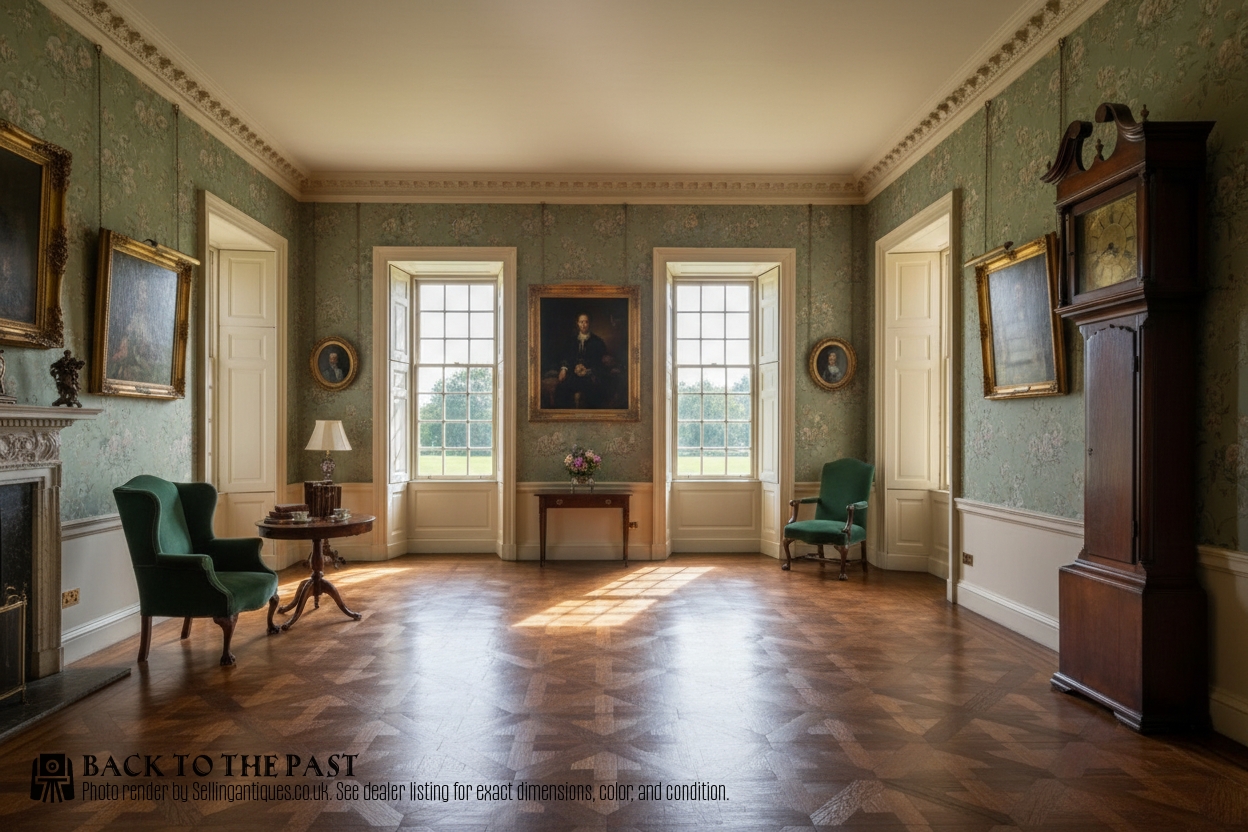
Brass Face Floor Clock
A brass face floor clock, also known as a longcase or grandfather clock, stands upright to house a tall pendulum and movement within a wooden trunk. These pieces measure time through weight-driven or spring mechanisms behind decorated metal dials.
The pieces on this page appear mostly in oak, mahogany, and walnut from periods spanning the Georgian era into the twentieth century. Early Georgian and George III examples dominate the selection, showing regional cabinet-making traditions alongside metropolitan London work.
Buyers encounter smaller variants such as grandmother clocks alongside standard tall formats. These vertical timepieces combine practical utility with cabinetry ranging from plain country oak to carved revival styles.
How they were made
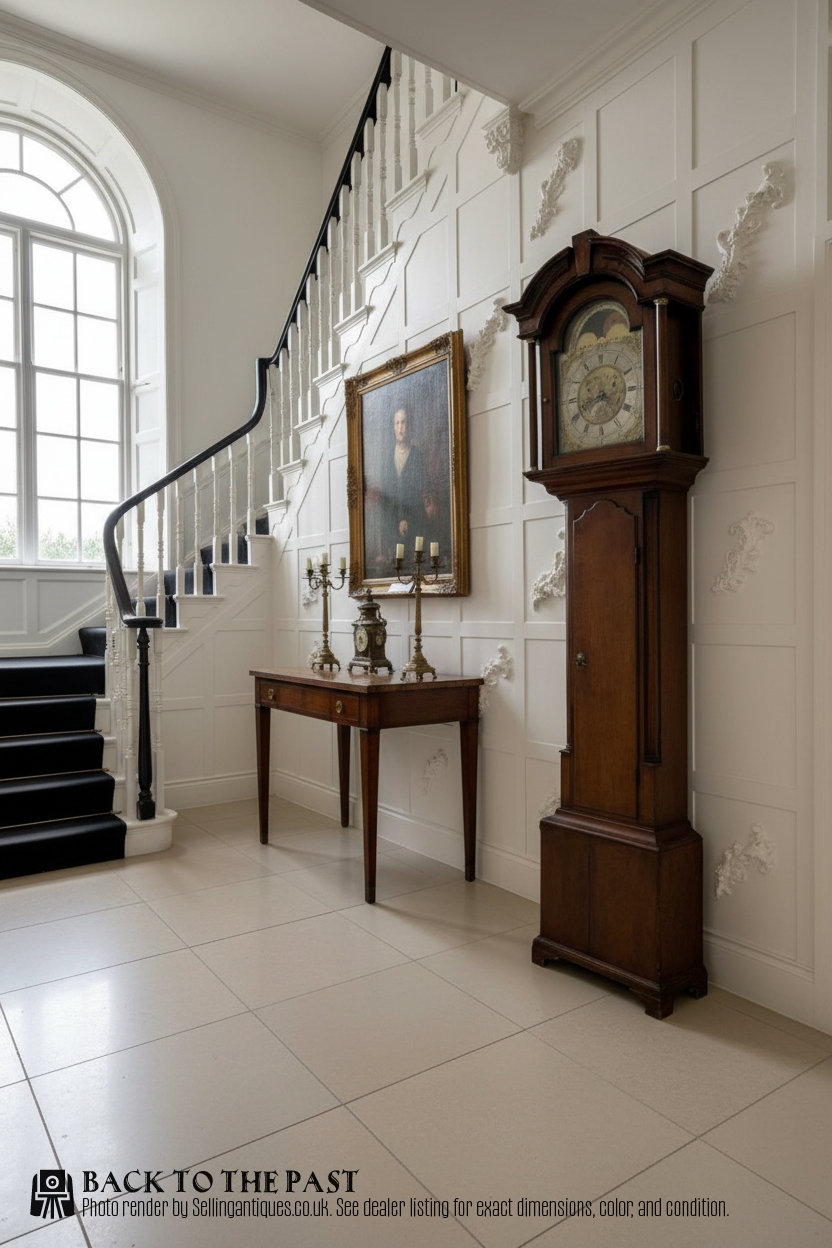
Cabinet makers constructed the tall wooden cases using timbers such as oak, mahogany, walnut, and burr oak, often incorporating flame veneers or carved details. Cases protect the hanging weights and pendulum while providing a stable architectural frame for the dial.
Clockmakers engraved and cast the brass dials, integrating steel hands, glass doors, and painted iron elements where applicable. Movements relied on brass gear trains driven by hanging lead weights or internal springs.
Brass Face Floor Clock Retail Price Guide 2026
Typical asking prices for brass face floor clock among the pieces listed under this phrase on Sellingantiques today, from the lower quarter to the upper quarter. They describe what is for sale here now, not the wider market.
Listings feature oak, mahogany, walnut, and burr oak cases housing brass dials across Georgian, Victorian, and early twentieth-century periods.
What varies in quality
Quality rests in the harmony between the dial's engraved detail and the cabinet's timber selection. Finely figured walnut or flame mahogany cases paired with signed, well-engraved brass dials represent the upper tier of execution.
Proportion and cabinet preservation define the visual strength of a piece. Clean lines, original timber patination, and maker-signed brass dials separate standard workshop output from exceptional examples.
Jn° Smith Macclesfd·Smith of Chester·Joseph Gibson·William Betagh·David Morice·Samuel Young·Richard Northen·Robert Thomson·James Draycot Wells·George Clapham·Jonathan Blake·William Lister·Thomas Baker·Samuel Whalley
The Brass Face Floor Clock Glossary
- Longcase clock
- A tall pendulum clock enclosed in a wooden case resting on the floor. These items are frequently referred to as grandfather clocks.
- Grandmother clock
- A smaller version of the longcase clock, typically produced during the twentieth century. They occupy less vertical space while retaining traditional dial and weight configurations.
- Dial
- The visible face of the clock where the time is displayed. Brass dials often feature engraved spandrels and maker signatures.
- Spandrel
- The ornamental corner piece surrounding the central dial. These metal castings changed in design style across different decades.
Brass Face Floor Clock: Frequently Asked Questions
How do I wind an eight day clock?
Eight day movements require winding every week using a crank key inserted into holes on the brass dial. Turning the key draws the internal weights back up toward the top of the trunk.
Care must be taken not to overwind the movement. Regular gentle winding keeps the pendulum swinging at a steady rate.
What is the difference between a grandfather and a grandmother clock?
Grandfather clocks are standard tall floor clocks designed to house long pendulums. Grandmother clocks are scaled-down versions produced later, usually standing noticeably shorter.
Both utilise brass dials and weighted movements within wooden cases. The choice depends on available ceiling height and room proportions.
Where should I place a floor clock?
Floor clocks need a stable, level surface against a solid wall to ensure the pendulum swings evenly. Hallways and landings provide traditional placement where the chime can resonate.
Direct sunlight and damp areas should be avoided to protect the wooden case and internal brass components.
How do I date a brass dial clock?
Dating relies on stylistic clues in the brass dial spandrels, the shape of the arched top, and the cabinet timber. Georgian pieces often feature square brass dials before arched versions became common.
Maker names inscribed on the dial can also be cross-referenced with regional records of active clockmakers.