
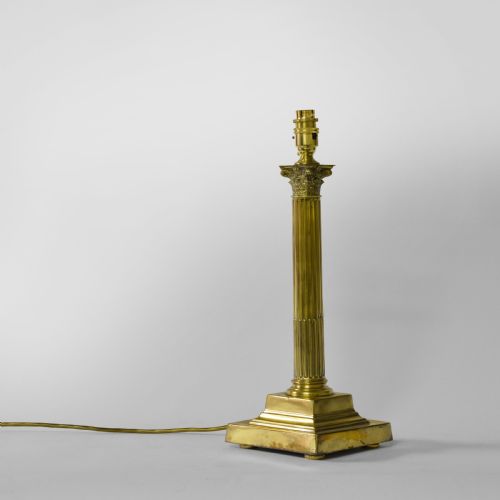


Brass Column Lamp Base
A brass column lamp base brings classical order and a bright, reflective warmth to a room.
Brass Column Lamp Base
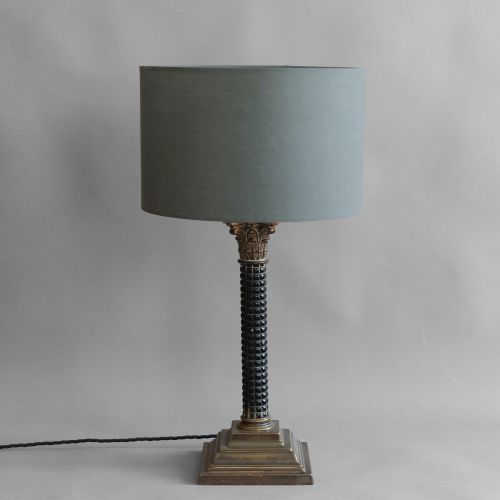
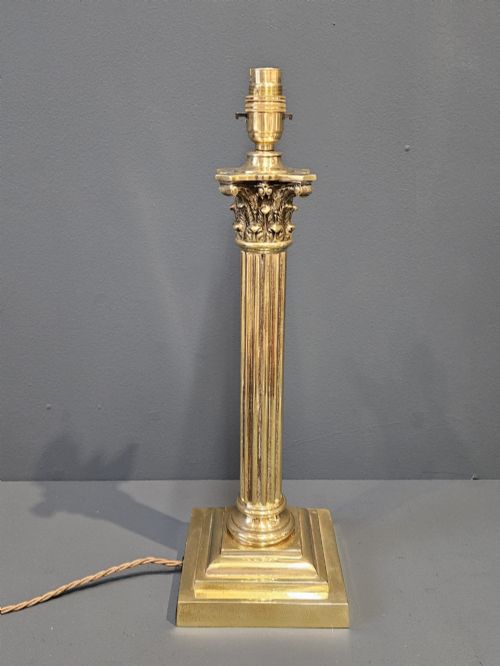
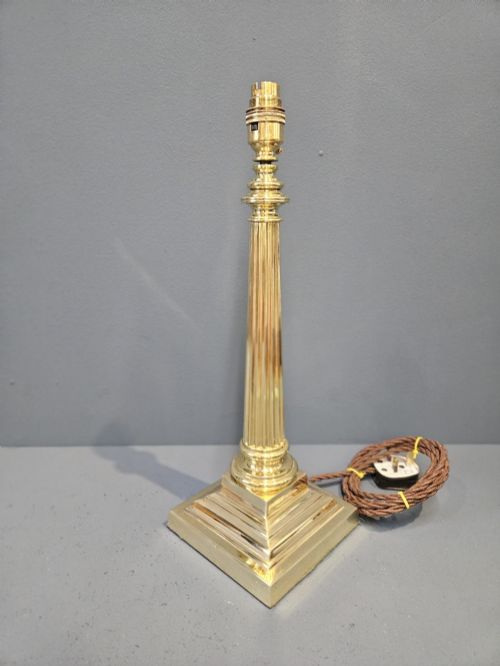
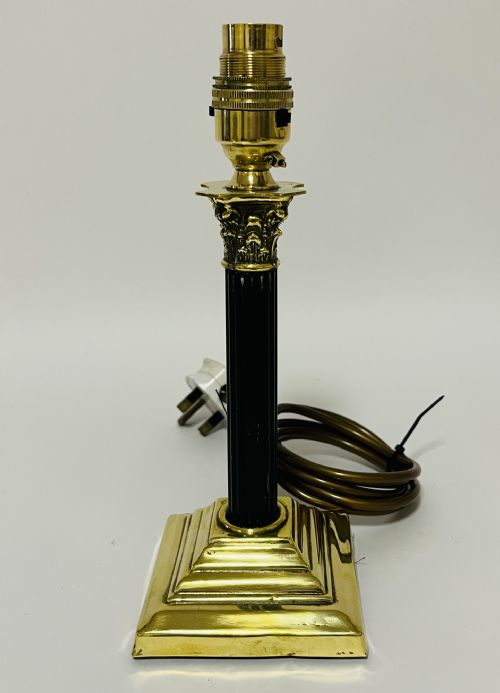
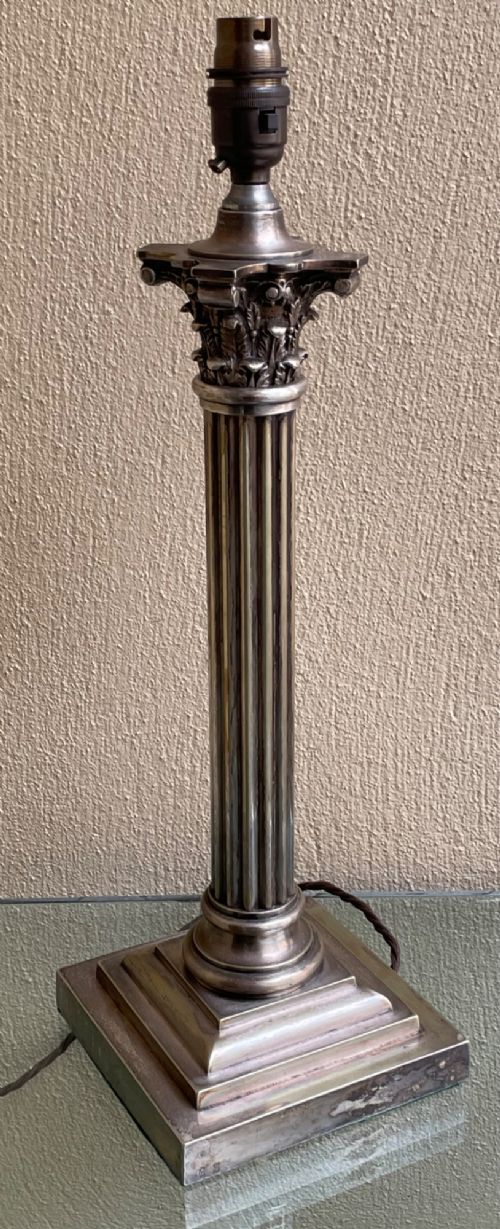
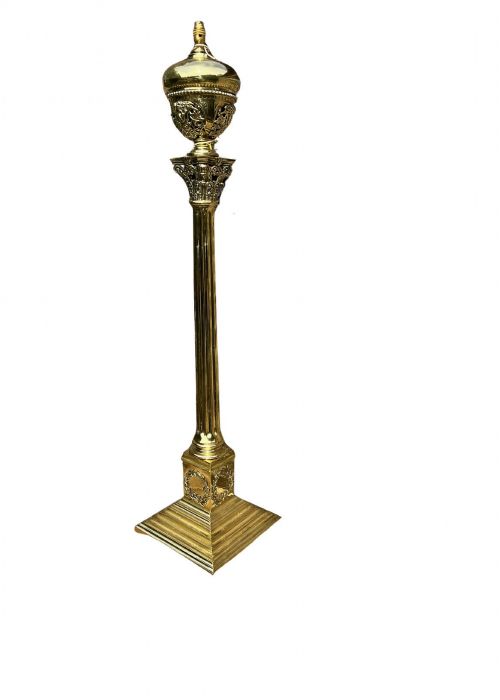
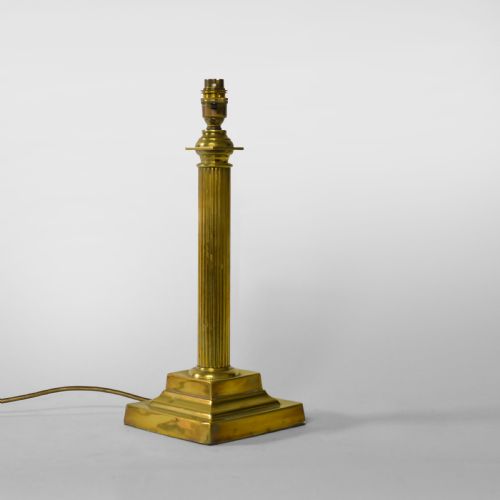
A brass column lamp base stands as a sturdy vertical support modeled on architectural orders, frequently found in the evidence carrying classical capitals such as Corinthian or ionic designs. These pieces span the nineteenth century and the early decades of the twentieth century, evolving from original oil-burning configurations into electrified table and standard lamps.
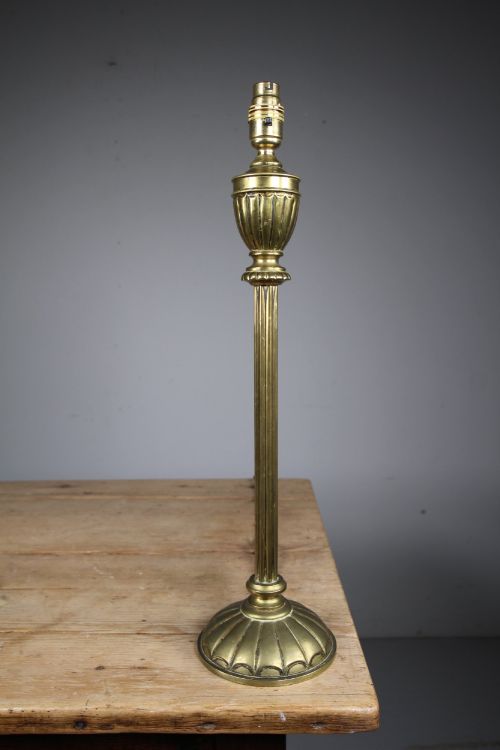
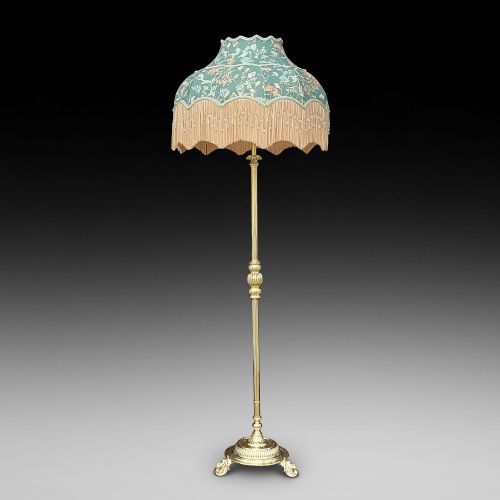
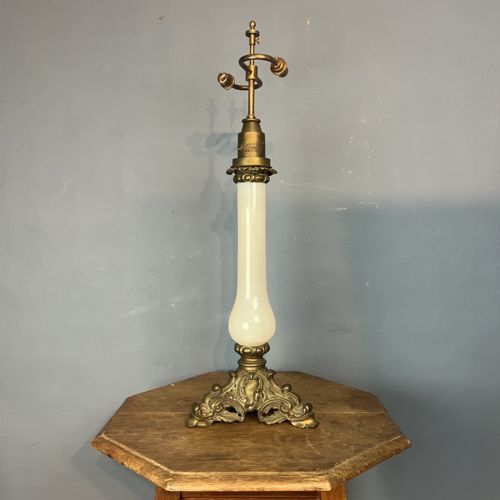
The most common examples on this page are Victorian table lamps featuring fluted or reeded shafts and stepped square bases. Collectors also encounter taller floor lamps and converted oil burners that incorporate materials like opaline glass, ceramic, and marble alongside the bright metal.
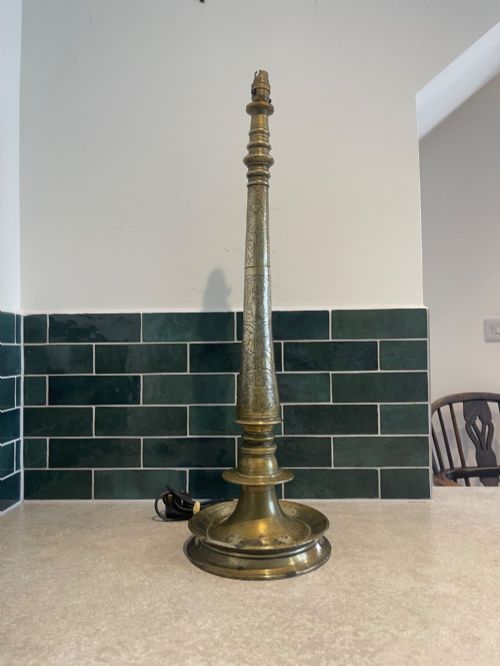
Origins stretch across English, French, and Indian workshops, capturing styles from Neoclassical Revival to French Empire. Whether configured as a desk lamp or a large standard lamp, each piece relies on classical proportions to anchor an interior.
Materials and Construction
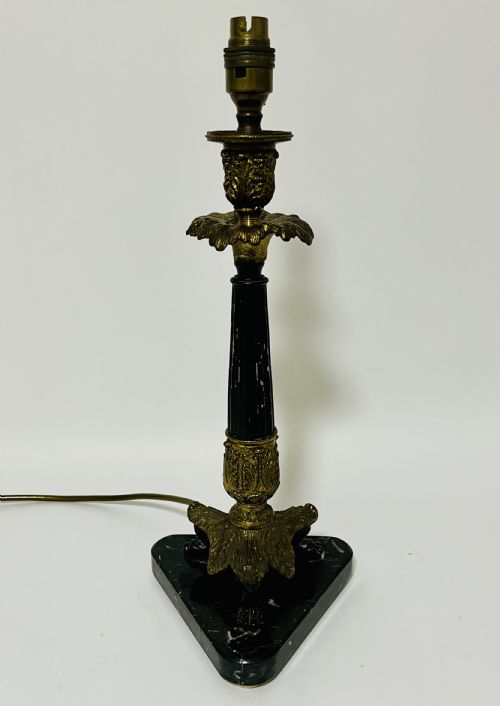
Casting and turning form the foundation of these pieces, utilising solid brass, gilt bronze, and ormolu to shape detailed shafts and elaborate capitals. Many items combine this bright metal with contrasting elements of cut glass, opaline glass, slate, or polished marble.
Makers often integrated decorative collars, faux lapis lazuli, or painted toleware into the columns, securing them to weighted square or triangular bases for stability. Standard lamps and large table versions frequently show evidence of later conversions from oil reservoirs to electrical fittings.
The archive records heavy brass Corinthian and ionic columns paired with square slate or stepped metal bases.
Assessing Quality and Execution
The sharpness of the cast detail separates superior work from softer production, particularly in the acanthus leaves of a Corinthian capital or the crisp fluting of the shaft. Heavier gauge brass and substantial bases provide a physical heft that distinguishes finer examples from lighter, mass-produced alternatives.
The integration of mixed media, such as flawless opaline glass columns, rich gilt bronze, or finely polished marble, elevates certain pieces above standard solid brass models. Original patination and crisp maker stamps also indicate higher workshop standards.
JOSEPH HINKS·Messenger and Co
The Brass Column Lamp Base Glossary
- Corinthian
- A classical architectural order defined by ornate capitals decorated with rows of carved acanthus leaves. This style appears frequently on nineteenth-century lamp shafts.
- Opaline glass
- A translucent, milky glass used to form colourful or white central column sections on Victorian and Edwardian lamps. It diffuses light with a soft glow.
- Ionic
- A classical column style identifiable by the distinctive scroll-like volutes on its capital. These bases offer a slightly more restrained profile than Corinthian versions.
- Standard lamp
- A tall floor-standing lighting fixture designed to illuminate a wider area. The evidence records these alongside smaller table-height variants.
- Toleware
- Painted or lacquered metalware used on lamp bases for contrasting colour and decorative effect. It often appears alongside polished brass and marble elements.
Brass Column Lamp Base: Frequently Asked Questions
How do I date a brass column lamp base?
Dating relies on stylistic clues like the specific classical revival movement, material combinations such as opaline glass or slate bases, and manufacturing techniques visible in the casting.
Maker stamps or patent marks can also narrow the timeframe to specific decades within the nineteenth and early twentieth centuries.
Were these always electric lamps?
Many examples began life as oil lamps or standard oil standards before being converted to electricity during the twentieth century.
Converted pieces often retain original brass reservoirs, burners, or collar assemblies that reveal their earlier function.
How do I clean an antique brass base?
Gentle dusting with a soft cloth preserves the historic surface and accumulated patina that collectors value.
Avoid harsh chemical polishes that strip away the aged character built up over generations.
Where should I place a standard lamp version?
A taller floor-standing standard lamp suits dark corners, beside reading chairs, or anchoring large living spaces.
The vertical column draws the eye upward, adding architectural height to the room.