


Brass Cloisonne Charger
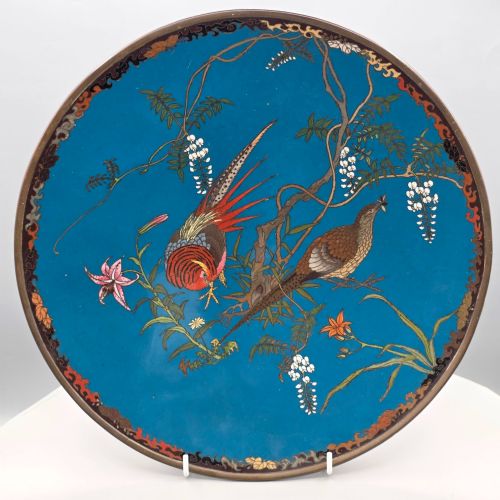
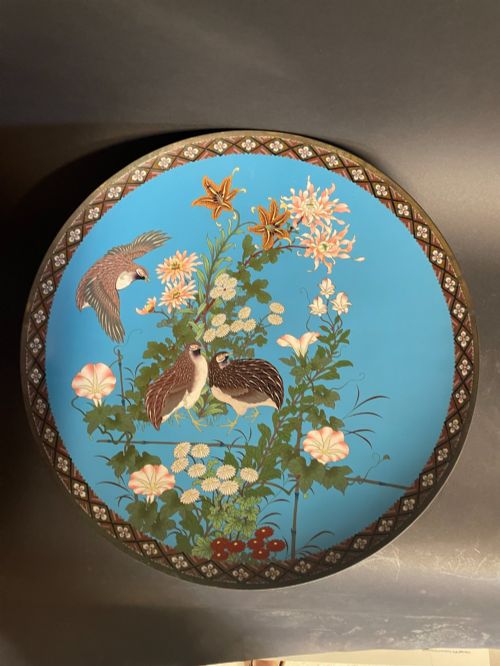
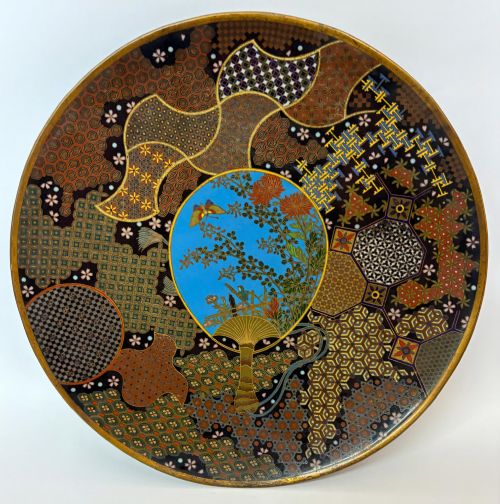
These large decorative brass cloisonne charger pieces bring vibrant enamelled birds, florals and mythical beasts into any room.
Brass Cloisonne Charger
A brass cloisonne charger is a wide decorative plate or tray formed from metal and filled with colourful enamels. Collectors seek out these substantial display plaques for their intricate depictions of nature and myth.
Most examples found here originate from the Japanese Meiji period, alongside pieces from the Edo period and the Qing dynasty. Forms range from circular dishes to octagonal trays featuring birds, dragons, koi and landscapes.
How they were made
Artisans constructed these vessels using brass, copper or bronze as the foundational metal body. Thin wire cloisons were soldered onto the surface to create cells for the coloured glass paste.
The enamel paste was applied into these tiny metal compartments before being fired in a kiln and polished smooth. This meticulous technique allowed makers to achieve detailed imagery such as chrysanthemums, iris flowers and Mount Fuji.
Current listings span the eighteenth, nineteenth and twentieth centuries, uniting brass, copper and bronze foundations under Japanese and Chinese aesthetic traditions.
What varies in quality
The refinement of the wirework dictates much of the visual success, with tighter grids and thinner lines demanding greater skill from the maker. Composition also plays a role, as balanced layouts of subjects like dragons or leaping koi hold the eye more effectively than cluttered designs.
Depth of colour and smoothness in the polished enamel surface separate standard production from superior pieces. Signed plaques often exhibit a higher degree of execution in the pictorial details.
The Brass Cloisonne Charger Glossary
- Cloisonne enamel
- A technique where metal wires form small cells on a brass or copper base to hold coloured glass paste before firing. This method creates the characteristic cellular pattern seen across the surface.
- Charger
- A large ornamental plate or platter designed primarily for display rather than dining use. These wide vessels provide a broad canvas for pictorial enamel work.
- Meiji Period
- A span of Japanese history lasting from 1868 to 1912 noted for a surge in high-level decorative arts export. Many of the finest enamel plaques originate from this era.
- Mon
- A traditional Japanese heraldic badge or crest used to identify families or clans. These circular emblems frequently appear incorporated into the decorative border or background.
- Qing Dynasty
- The final imperial dynasty of China lasting from 1644 to 1912. Enamel work from this period employs distinct regional palettes and motifs.
Brass Cloisonne Charger: Frequently Asked Questions
How were brass cloisonne chargers displayed?
These large plates and trays were typically mounted on wooden stands or hung directly on walls as decorative art. Their generous diameters made them central visual points in formal rooms.
Today, they function similarly on sideboards, tables or wall displays where the enamel work catches the light.
How do I identify a Meiji period piece?
Meiji period chargers often feature naturalistic subjects like birds, iris flowers, owls and Mount Fuji rendered in vibrant enamels on brass or copper bases. The precision of the wirework and subjects align with late nineteenth-century Japanese production.
Comparing the motif styles and the weight of the metal helps distinguish these nineteenth-century items from later decorative reproductions.
What is the difference between a charger and a tray?
Chargers are generally broad, circular decorative plates intended for visual display on tables or walls. Trays can adopt alternative geometries, such as octagonal shapes, while serving a similar ornamental purpose.
Both forms utilise the same cellular enamel technique across a brass or copper foundation.
How should I clean my cloisonne charger?
Dusting gently with a dry, soft cloth is sufficient for routine maintenance of the enamelled surface. Avoid harsh chemical cleaners or abrasive materials that could scratch the polished glass paste or tarnish the metal wires.
Keeping the piece away from direct, prolonged sunlight helps preserve the rich tones of the coloured enamels over time.