










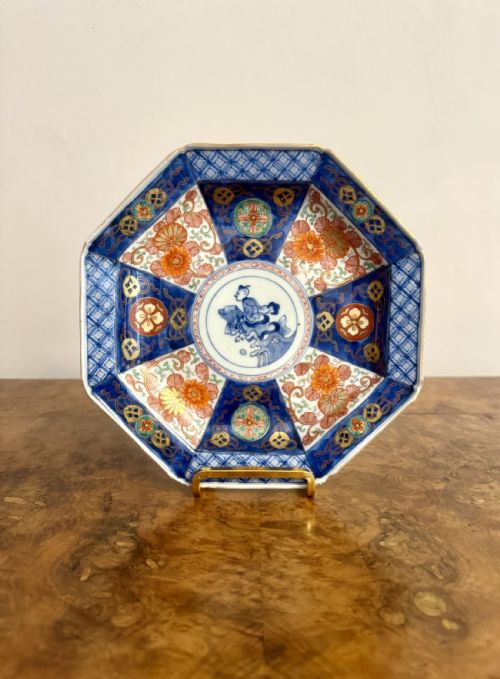
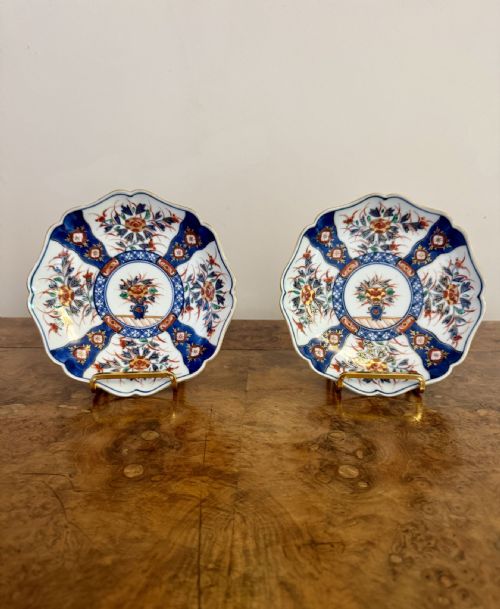
Japanese Floral Charger
A japanese floral charger brings intricate hand-painted ceramics and enamelwork into a room, offering bold colour and traditional motifs.
Japanese Floral Charger
A japanese floral charger is a wide, shallow display plate intended primarily for decorative presentation rather than dining service. The selection on this page encompasses varied forms originating from the Meiji period, Edo period, and Victorian era, alongside pieces dated across the late nineteenth and early twentieth centuries.
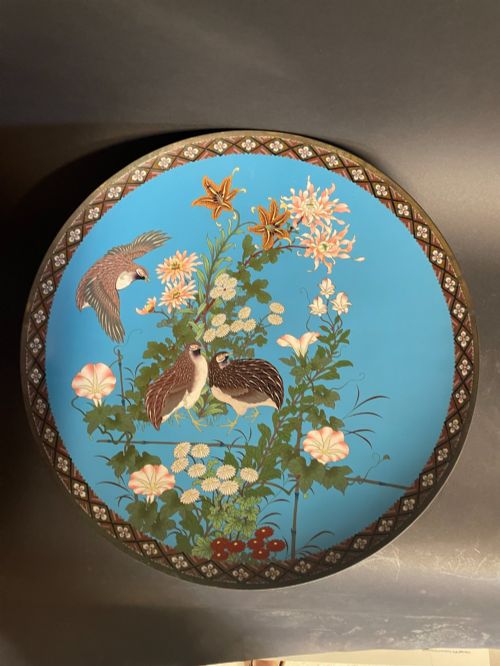
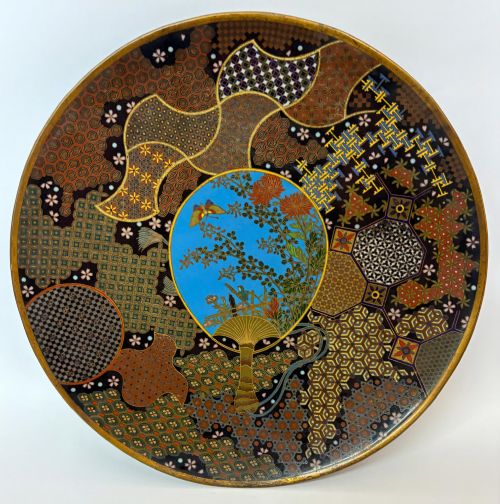
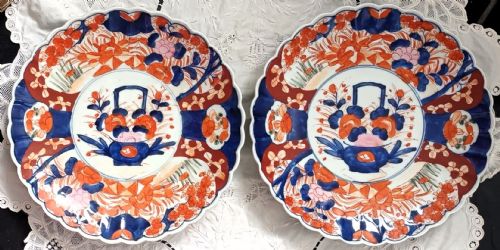
Imari porcelain pieces dominate the selection, frequently featuring traditional blue and white or iron-red and gilt palettes. Alongside these ceramics, buyers will encounter cloisonne enamel chargers and trays embellished with motifs such as chrysanthemums, peonies, birds, and landscapes.
How they were made
Potters and artisans utilised porcelain bodies shaped into round, scalloped, or hexagonal profiles, then applied detailed underglaze blue and enamel pigments. Gold leaf and gilt details were frequently incorporated into the surface design to add rich highlights to the floral and avian patterns.
Cloisonne examples were constructed using metal bases of copper or brass, onto which thin wire partitions formed cellular compartments for coloured enamel paste. These enamel surfaces were fired and polished to a smooth finish, occasionally featuring specific subjects like irises, butterflies, and frogs.
Materials recorded across the inventory include porcelain, enamel, copper, brass, and gold leaf.
What varies in quality
Quality rests primarily on the precision and complexity of the hand-painted or enamelled decoration across the surface. Pieces described with terms like outstanding or masterwork demonstrate superior control of fine lines, balanced composition, and rich colour saturation.
The physical form also influences the distinction between standard examples and superior specimens, particularly where complex scalloped edges, hexagonal shaping, or large diameters demand greater technical skill during firing.
The Japanese Floral Charger Glossary
- Imari
- A style of Japanese porcelain decorated in underglaze blue, iron red, and gilt. It takes its name from the port town from which the wares were exported to Europe.
- Cloisonne
- An enamelling technique where metal wire is soldered to a metal base to create compartments filled with enamel paste. These pieces are subsequently fired and polished flat.
- Arita
- A Japanese town and region famous for producing foundational porcelain wares. Wares from this area formed a major part of historical export trade.
- Meiji Period
- The era in Japanese history spanning from eighteen sixty-eight to nineteen twelve, associated with significant opening to international trade and artistic exchange.
- Charger
- A large decorative plate or dish utilised historically for formal display or service. These items measure substantially wider than standard dining plates.
Japanese Floral Charger: Frequently Asked Questions
How were chargers displayed?
These large dishes were traditionally placed on sideboards, tables, or specialised stands for visual appreciation. Their generous diameters made them ideal focal points in a room.
Many also feature methods for wall hanging, allowing them to function as decorative wall plates within domestic interiors.
What is Imari porcelain?
Imari refers to Japanese export porcelain decorated in a distinct palette of deep blue, iron red, and gold. The style developed during the Edo period and remained popular through the Meiji era.
These pieces are easily recognised by their dense, symmetrical floral and geometric patterns.
How do I identify Meiji period pieces?
Meiji period items date from eighteen sixty-eight to nineteen twelve, a time of rapid industrial and artistic development in Japan. Artisans during this era produced highly refined cloisonne and porcelain for international markets.
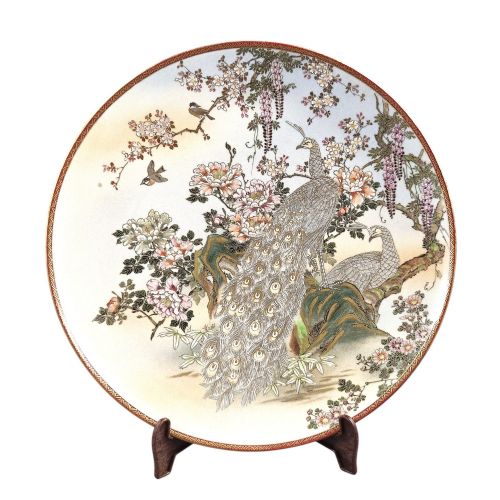
Listing details often reference this period alongside specific motifs like birds, wisteria, and peonies.
What is the difference between a plate and a charger?
A charger is significantly larger than a standard dinner plate, typically measuring well over ten inches in diameter. They were designed primarily for ceremonial display rather than daily utility.
Plates in these collections are usually smaller and may form part of a matching pair or set.
Are these pieces hand painted?
The antique ceramics and enamel pieces found in this category feature hand-applied decoration. Artisans painted intricate floral designs, birds, and landscapes directly onto the porcelain or enamel surface.
This manual execution accounts for the slight individual variations found between seemingly matching pairs.