







Imari Pattern Display Plate
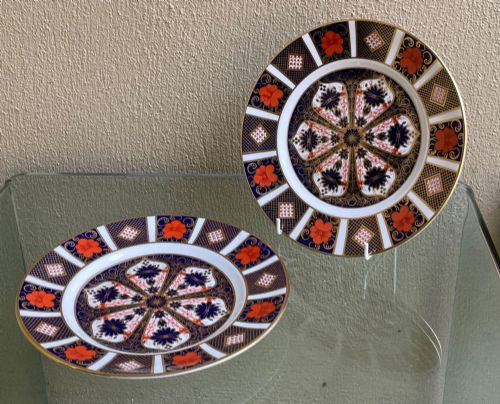
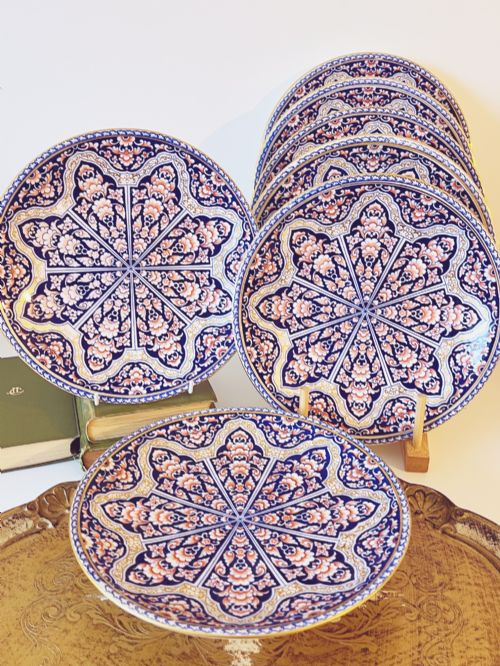
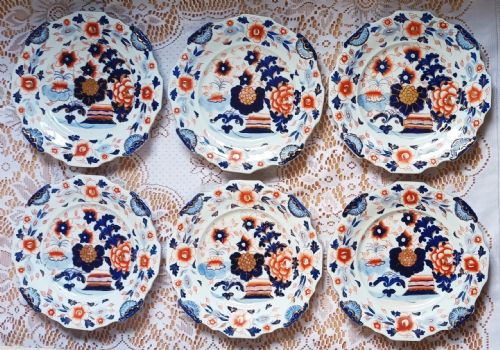
An imari pattern display plate brings bold iron-red and cobalt-blue hand-painted ironstone, porcelain, and bone china directly into your interior.
Imari Pattern Display Plate
An imari pattern display plate bridges traditional Japanese export ceramics and their English interpretations across the eighteenth and nineteenth centuries. You will encounter both authentic Meiji period Japanese examples and robust English ironstone or bone china counterparts produced by major factories.
The forms range from standard round plates to hexagonal and scalloped shapes designed specifically for visual presentation rather than daily dining. Many survive within larger sets or dessert services, reflecting their original purpose as part of formal nineteenth century dining tables.
Originating from diverse periods spanning Georgian production through to nineteen hundred, these pieces rely on distinctive palettes incorporating enamel and gold leaf. The survival of these plates demonstrates their enduring appeal for wall hanging or cabinet display.
Materials and methods
Potters built these plates using ceramic bodies ranging from dense ironstone to translucent porcelain and refined bone china. The choice of clay determined the weight and durability of the finished dish.
Decoration relied on underglaze cobalt blue combined with overglaze iron-red enamel, often accented with hand-applied gold leaf or gilt highlights. This layered technique required multiple firings in kiln environments to fix the complex colours permanently.
Imari Pattern Display Plate Retail Price Guide 2026
Typical asking prices for imari pattern display plate among the pieces listed under this phrase on Sellingantiques today, from the lower quarter to the upper quarter. They describe what is for sale here now, not the wider market.
The listings on this site encompass porcelain, ironstone, and bone china pieces spanning from the eighteenth century to the mid-twentieth century.
Judging quality and execution
Quality rests upon the precision of the hand-painted brushwork and the vibrancy of the enamel palette. Superior pieces exhibit crisp detail in the motifs and careful alignment between the blue underglaze and the red and gilt overglaze layers.
The fineness of the ceramic body and the crispness of moulded elements such as scalloped or hexagonal edges distinguish finer examples. Potters who achieved smooth, even glazes without firing blemishes produced plates that retain their visual impact after centuries.
Royal Crown Derby·Masons·Flight Barr And Barr·John Ridgway
The Imari Pattern Display Plate Glossary
- Imari palette
- A decorative colour scheme characteristically dominated by cobalt blue, iron red, and enriched with gold leaf. This combination mimics traditional Japanese export porcelain.
- Ironstone
- A dense, durable type of earthenware patented in the nineteenth century to rival true porcelain. It provided a strong surface for heavy enamel decoration.
- Enamel
- Coloured glass fused to the ceramic surface during a secondary, lower-temperature kiln firing. It allowed potters to add vivid reds and greens over the initial glaze.
- Comport
- A raised pedestal dish designed to hold fruit or sweetmeats as part of a formal dessert service. They frequently accompany matching plates in surviving sets.
- Meiji Period
- The era of Japanese history spanning from eighteen sixty-eight to nineteen twelve, noted for prolific export porcelain production including Imari wares.
Imari Pattern Display Plate: Frequently Asked Questions
How do I hang an imari plate safely?
Use a spring-loaded brass plate hanger with protective rubber tips that grip the rim securely without scratching the glaze.
Ensure the wall fixing is anchored into solid brick or a stud rather than hollow plaster to bear the weight of heavier ironstone pieces.
Can I use these plates for serving food?
While technically functional, most antique display pieces feature delicate overglaze enamels and gold leaf that wear away with regular cutlery use and washing.
It is best to reserve these plates for visual display in cabinets or on walls to preserve their historic painted surfaces.
How do I tell Japanese imari from English imari?
Japanese examples usually employ lighter porcelain bodies with hand-painted motifs directly on the paste beneath a clear glaze.
English pieces from factories like Mason's or Royal Crown Derby typically utilise heavier ironstone or bone china with distinct factory marks or impressed stamps on the reverse.
What does the dragon and kylin pattern mean?
Kylin and dragon motifs derive from traditional East Asian mythology, symbolising protection, prosperity, and good fortune.
English porcelain manufacturers adopted these auspicious symbols during the Georgian period to satisfy European fascination with exotic eastern design.