
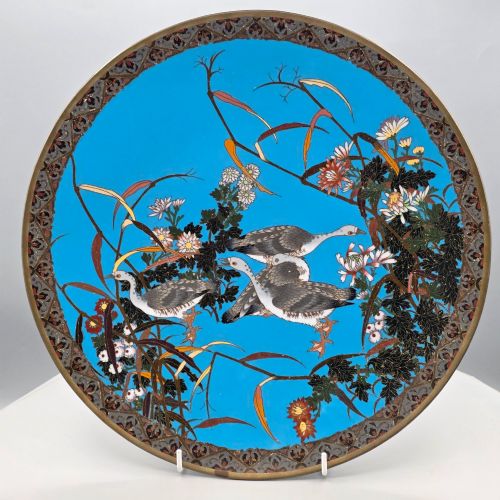
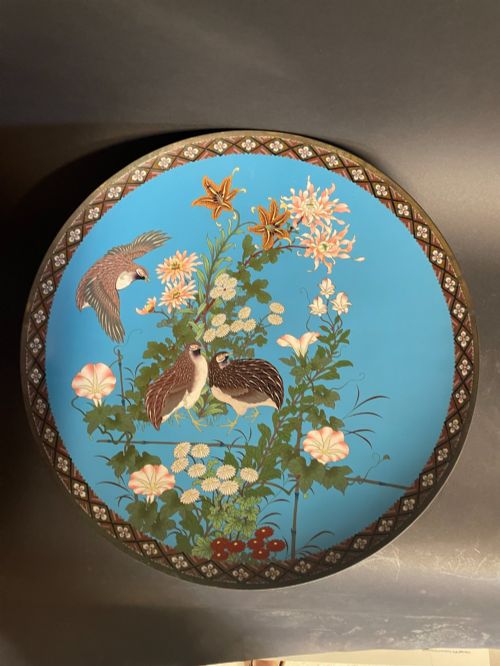


Turquoise Enamel Plate
These turquoise enamel plate examples bring intricate metalwork and vibrant colour into a room, offering striking decorative presence from the Meiji and Edo periods.
Turquoise Enamel Plate
When you search for a turquoise enamel plate, you encounter decorative chargers, plaques, and dishes originating primarily from Japan and China across the nineteenth century. These pieces serve principally as display items rather than utilitarian tableware.
The objects most frequently met on this page date from the Meiji period around 1890 and 1900, alongside earlier examples from the late Edo period and the Qing dynasty. They span varied scales, from medium plates to large chargers measuring up to fifty centimetres.
How they were made
Makers construct these items using copper, brass, and wire to form intricate compartments on metal bases. Artisans then fill these distinct sections with coloured enamel pastes before firing and polishing the surfaces.
The technique relies heavily on cloisonné enamel work, where fine metal wires outline pictorial subjects such as birds, flowers, samurai, and dragons. This disciplined method requires precise temperature control during firing to achieve a smooth finish.
Listings feature copper and brass bases combined with cloisonne enamel and wire across nineteenth century periods.
What varies in quality
Quality differentiates through the complexity of the subject matter and the precision of the wirework. Pieces depicting detailed figures like samurai or dragons demand greater skill than simpler floral designs.
The refinement of the enamel surface and the clarity of the turquoise ground separate standard production from masterwork pieces. Signature marks from notable workshops also distinguish exceptional examples from unmarked items.
Kinkozan
The Turquoise Enamel Plate Glossary
- Cloisonne Enamel
- A metalwork technique where fine wires create cells that hold coloured glass paste. Artisans fire the piece multiple times to fuse the enamel to the metal base.
- Charger
- A large decorative plate intended for display on a wall or stand rather than for serving food. These items often measure significantly larger than standard dinner plates.
- Meiji Period
- A Japanese historical era lasting from 1868 to 1912 noted for high technical achievement in decorative arts. Works from this time frequently feature naturalistic motifs and detailed wirework.
- Edo Period
- A historical epoch in Japan preceding the Meiji era, spanning from 1603 to 1867. Pieces from the late phase of this period show traditional craftsmanship preceding later industrial shifts.
Turquoise Enamel Plate: Frequently Asked Questions
How do I display a large charger?
Large chargers and plaques require sturdy wall brackets or dedicated display stands designed to support substantial weight.
Position the piece away from direct sunlight to preserve the vibrant turquoise enamel over time.
Are these plates meant for dining?
These items serve strictly as decorative art objects rather than functional tableware for serving food.
Using them for dining risks damaging the delicate enamel and wire surface structures.
How do I date an enamel plate?
Dating relies on stylistic motifs, manufacturing techniques, and documentation associated with specific historical periods.
Japanese Meiji pieces often display refined naturalism, while earlier Edo or Qing examples exhibit distinct baseline construction traits.
What is the difference between a dish and a charger?
Dishes generally measure smaller and suit cabinet display or smaller shelf arrangements.
Chargers provide a much larger surface area, often featuring complex pictorial scenes meant to anchor a room's decor.