

Brass Bound Mahogany
When you encounter brass bound mahogany, you are looking at functional antique containers and chests strengthened for travel or formal service by metal bands.
Brass Bound Mahogany
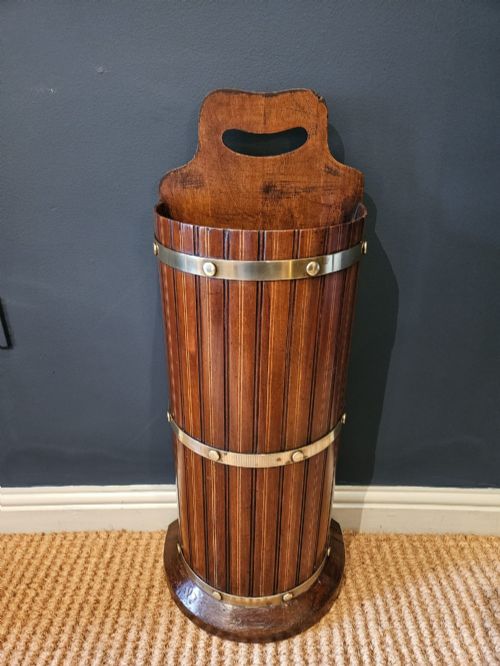
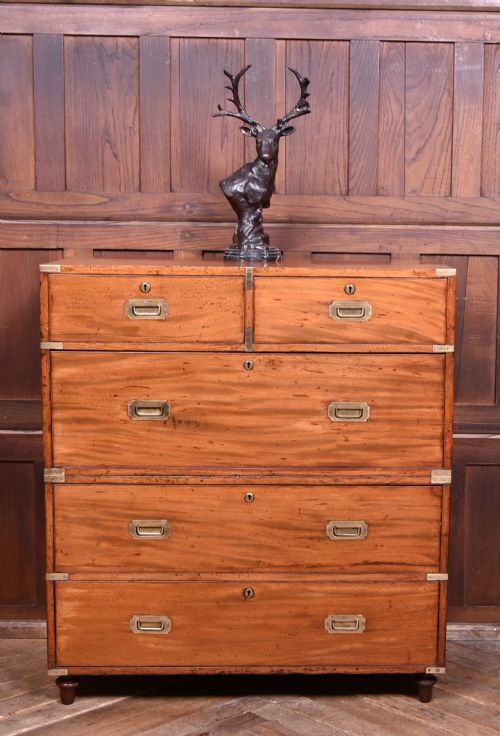
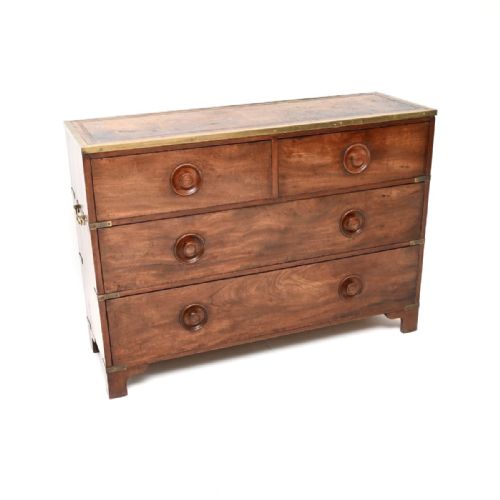
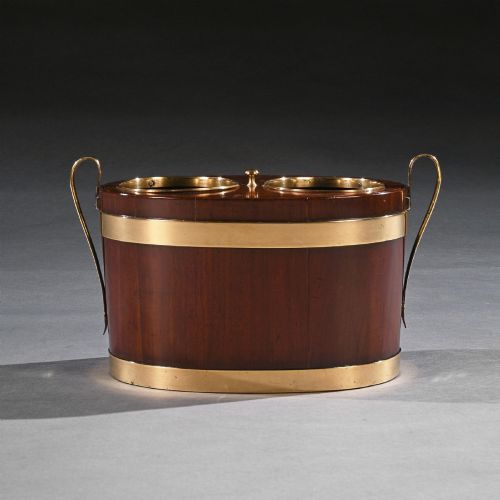
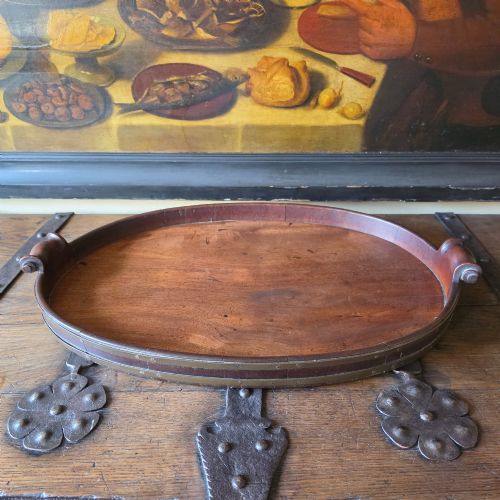
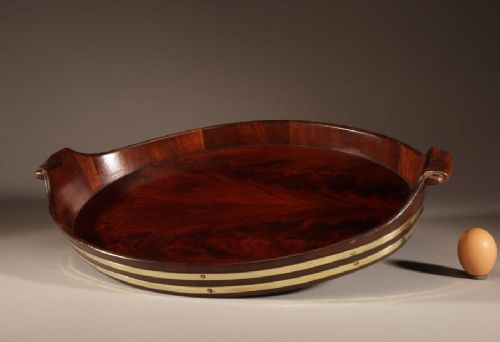
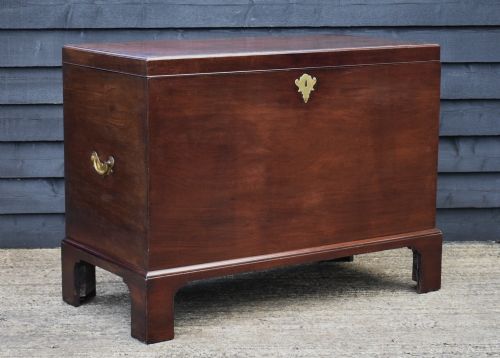
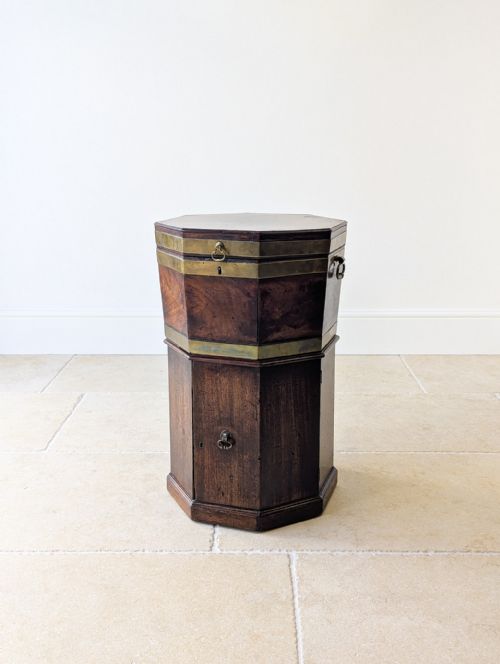
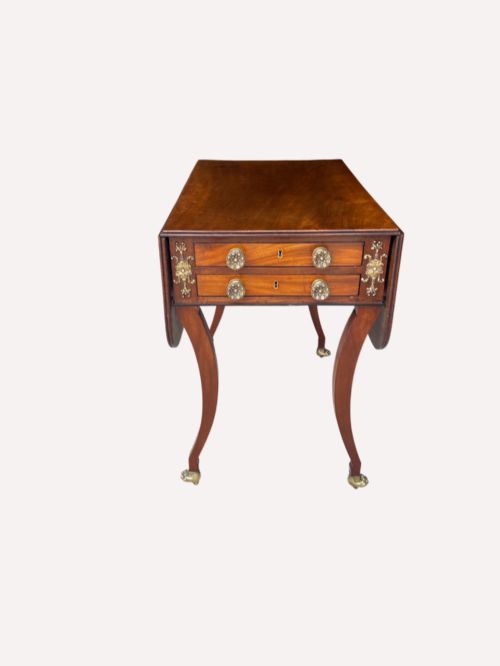
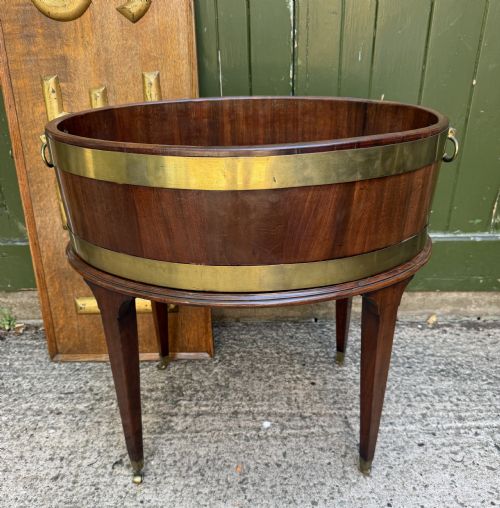
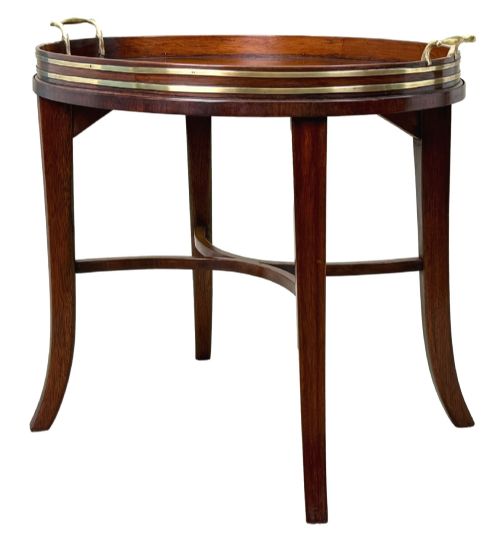
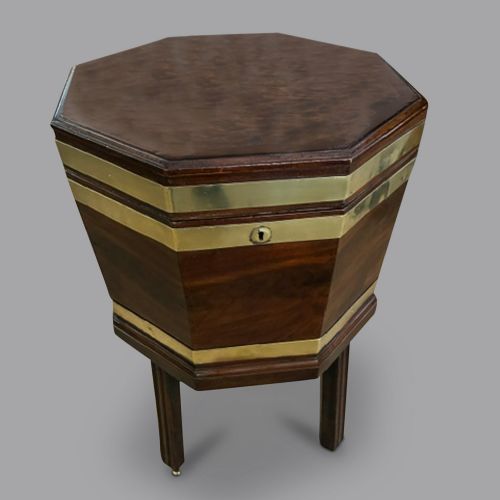
Brass bound mahogany pieces encompass a range of utilitarian objects designed primarily for storage, serving, and campaign use during the Georgian and Victorian eras. The selection frequently includes octagonal and oval wine coolers, cellarettes, plate buckets, and military campaign chests of drawers.
Buyers will most commonly meet mid-nineteenth-century campaign chests and eighteenth-century George III wine coolers or serving trays across these listings. These items reflect a period of expanding global travel and domestic formality where robust timber and metal reinforcement met high standards of craftsmanship.
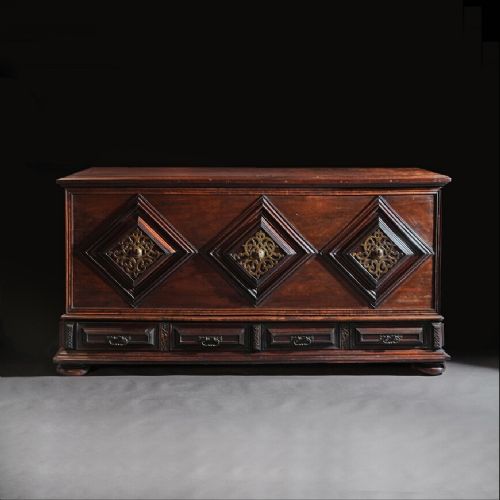
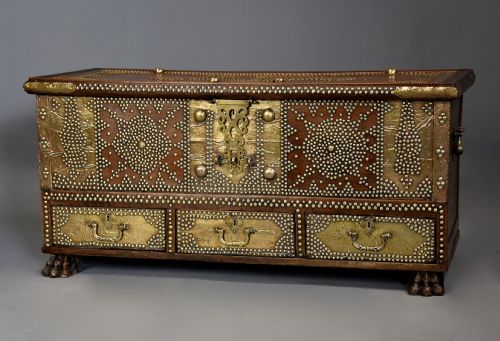
Objects span several centuries, reaching from seventeenth-century Portuguese colonial trunks to early twentieth-century campaign style reproductions. The underlying unity across these eras remains the deliberate pairing of dense mahogany with protective brass straps and corner brackets.
Materials and Construction
Makers utilised dense timbers such as mahogany, padouk, and rosewood to withstand the rigours of domestic use or military transport. These woods provided a stable, dark foundation that accepted tight joinery and resisted warping in changing climates.
Heavy brass bands, strapwork, and flush-fitting hardware were secured across seams and corners to reinforce joints against heavy loads and impacts. On coopered items like buckets and cellarettes, metal bands held curved staves tightly in place without glue.
Secondary timbers like oak frequently lined the interiors of drawers and boxes, while leather inserts appeared on writing slopes and desktops. Flush brass drop handles allowed campaign chests to separate into modular sections for transit without external projections catching on storage spaces.
Some nineteenth-century officers packed folding washstands and judges' wig boxes alongside their clothes.
Judging Quality
Quality rests upon the crispness of the brass work and the precision with which the metal mounts integrate into the surrounding timber. Superior pieces display hand-cut dovetailing, original flush fittings, and robust locking mechanisms that operate smoothly after centuries of use.
The choice of mahogany timber dictates much of the visual merit, with well-figured grain patterns and rich natural patination elevating a piece far above utilitarian standards. Inferior examples often show clumsy metal repairs, replaced handles, or mismatched secondary woods that disrupt the visual harmony.
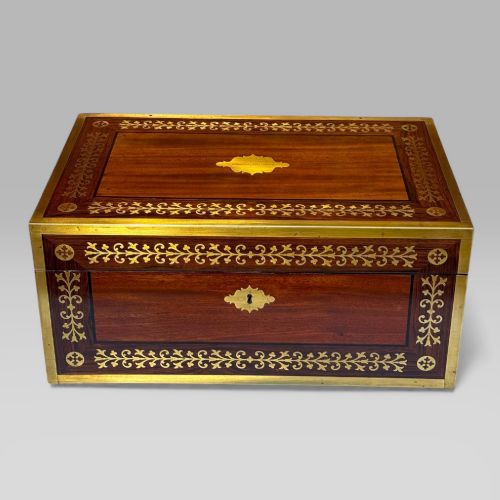
Proportion and structural integrity define the higher end of the market, particularly in larger items like two-part campaign chests and fitted writing boxes. Pieces that retain their original stands, working keys, and internal partitions command greater respect from collectors.
S. W. Silver & Co. London & Liverpool
The Brass Bound Mahogany Glossary
- Cellarette
- A lockable container used for holding wine bottles near the dining table. These vessels often feature lead linings and tight brass bands around coopered staves.
- Campaign chest
- A modular chest of drawers built in two or more stacking sections for easy transport by military officers. They feature recessed brass handles and corner brackets to prevent damage during transit.
- Coopered
- Constructed using curved wooden staves joined side by side to form a round or oval vessel, similar to the method used for barrels.
- Writing slope
- A portable box with a hinged sloping lid that opens to reveal a writing surface, inkwells, and storage compartments for correspondence.
- Plate bucket
- A deep cylindrical or oval container fitted with brass bands, historically used for carrying or storing dining plates.
- Padouk
- A heavy tropical hardwood with a rich reddish-brown colour, occasionally utilised in eighteenth-century campaign furniture for its exceptional durability.
Brass Bound Mahogany: Frequently Asked Questions
What are brass bound mahogany campaign chests?
These are modular wooden storage chests built in sections with recessed brass hardware so military officers could pack and transport their belongings easily during travel.
The brass corners and straps protected the edges from heavy impacts, while removable carrying handles kept the exterior flat for stacking in tents or ships.
How were mahogany wine coolers used?
Wine coolers and cellarettes stood in the dining room during formal meals to hold bottles and ice near the table.
Inside linings made of lead or metal helped keep bottles chilled, while the sturdy brass bands on coopered staves ensured the wooden vessels held liquid safely.
How do I care for brass and mahogany?
Keep these items away from direct sunlight and extreme humidity changes to prevent the mahogany timber from drying out or cracking.
Clean the wood with a soft, dry cloth and polish the brass mounts gently without letting metal cleaning agents touch the surrounding grain.
How can I tell George III pieces apart?
George III pieces from the eighteenth century typically exhibit finer hand-cut dovetails, lighter proportions, and rich dark mahogany patination.
Later Victorian and campaign-style reproductions often use heavier brass mountings, standardisation in drawer sizes, and machine-cut elements suited to industrial production.