

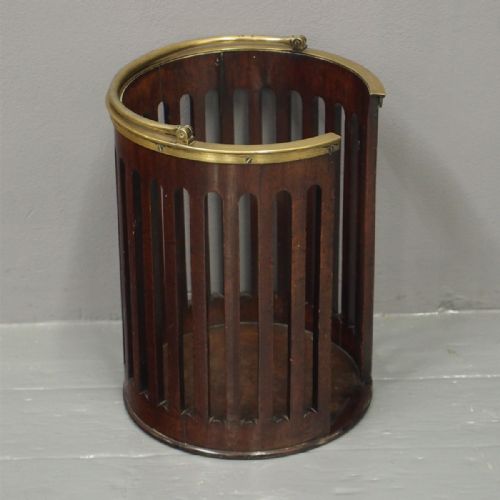


Georgian Mahogany Pail
A georgian mahogany pail is a sturdy domestic container for dining or fireside use, prized for its rich timber and metal banding.
Georgian Mahogany Pail
When you search for a georgian mahogany pail, you encounter functional vessels spanning the eighteenth and nineteenth centuries, including plate buckets, wine coolers, oyster buckets, and fireplace buckets. These objects originate primarily from the Georgian, George III, and Victorian eras, demonstrating how wealthy households managed dining and hearth logistics.
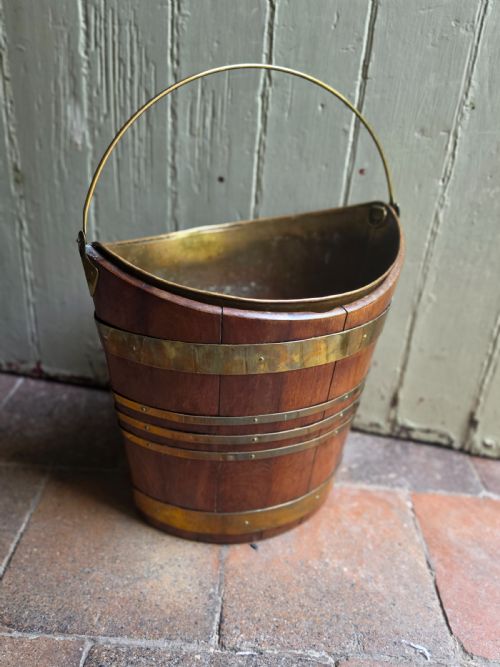
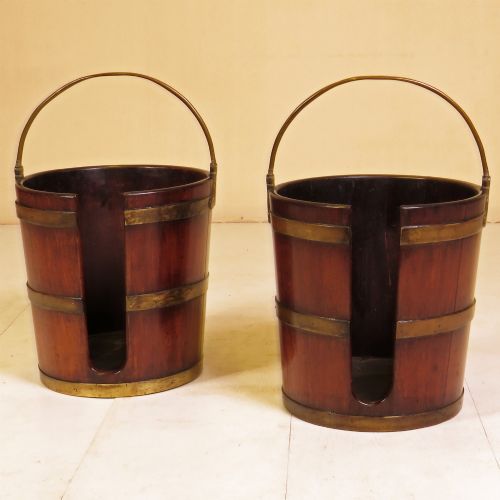
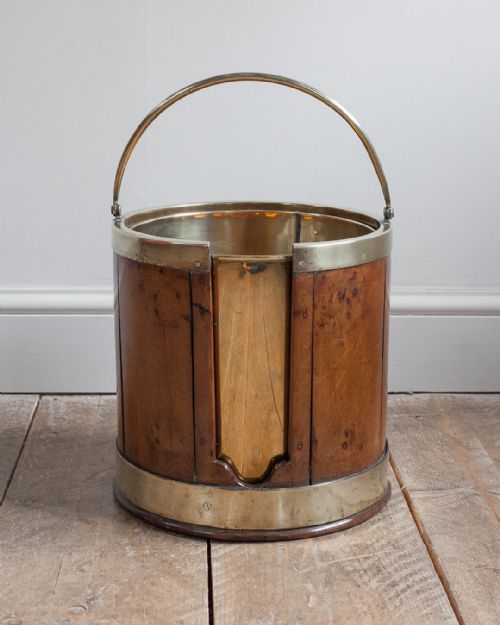
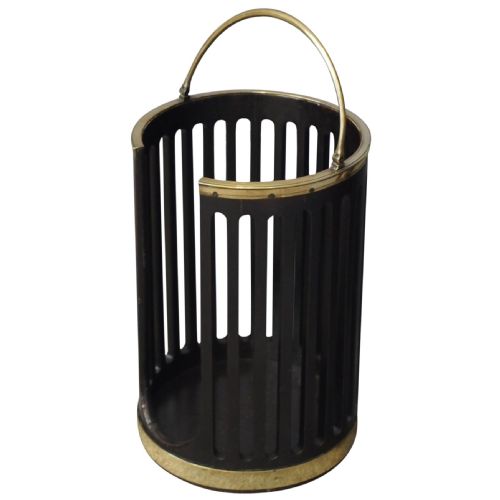
The version you are most likely to meet on this page is the George III mahogany plate bucket, often constructed with brass bands and vertical stave assembly. Such pieces served to carry plates safely from the kitchen to the dining table or held ice and bottles for social occasions.
Other variations include oval wine coolers and late Georgian oyster buckets, reflecting the diverse domestic tasks these timber containers fulfilled. The stylistic markers align with 18th Century and 19th Century cabinet-making traditions, using dark, figured wood to suit formal dining rooms.
Materials and construction methods
Makers built each georgian mahogany pail using solid mahogany staves, joined tightly together in the manner of traditional cooperage to form a stable, curved body. The warm, dark grain of the timber was turned or planed to achieve a smooth exterior finish.
Metal components such as brass bands, swing handles, and iron fittings were fitted securely around the wood to provide structural reinforcement and functional utility. Zinc linings occasionally appeared inside wine coolers and plate buckets to protect the timber from moisture and heavy ceramic plates.
Georgian Mahogany Pail Retail Price Guide 2026
Typical asking prices for georgian mahogany pail among the pieces listed under this phrase on Sellingantiques today, from the lower quarter to the upper quarter. They describe what is for sale here now, not the wider market.
Listings feature items spanning the 18th Century, 19th Century, and Georgian periods, constructed from mahogany, brass, zinc, and iron.
Differentiating quality across examples
Quality in a georgian mahogany pail rests upon the crispness of the cooperage, the weight and finish of the brass or iron metalwork, and the preservation of the original timber surface. Finer examples display tight, even stave construction and well-proportioned brass binding that follows the contours of the wood precisely.
The presence of period-correct liners, such as zinc or iron inserts, alongside original swing handles and mounting brackets, elevates an object. Lesser examples may show heavy timber shrinkage, replacement metal bands, or mismatched hardware applied during later repairs.
The Georgian Mahogany Pail Glossary
- Mahogany
- A durable, deep-toned tropical hardwood utilised extensively in eighteenth and nineteenth-century British cabinet-making for its rich grain and strength. It forms the primary body of these buckets and coolers.
- Brass bound
- A construction method where metal strips circle the wooden staves to hold them firmly together while adding decorative contrast to the dark timber. These bands often feature riveted joins.
- Plate bucket
- A deep cylindrical or oval container designed specifically for the safe transport and storage of ceramic dining plates. They typically include sturdy upright handles for carrying.
- Wine cooler
- A large insulated container, sometimes lead or zinc-lined, used during formal meals to chill bottles in ice. They share similar stave construction with plate buckets but serve a liquid-holding purpose.
- Cooperage
- The traditional trade and technique of making wooden vessels from staves, bound together with hoops of metal or wood. This method creates the curved walls of the buckets.
Georgian Mahogany Pail: Frequently Asked Questions
What is a georgian mahogany pail?
A georgian mahogany pail is a coopered wooden container fashioned from dense tropical timber, traditionally utilised in elite households for carrying dining plates or chilling wine.
These vessels combine robust structural staves with decorative metal bands and carrying handles, merging utilitarian function with refined dining room aesthetics.
How were plate buckets used?
Plate buckets served to transport heavy porcelain or earthenware plates between the kitchen quarters and the dining table without chipping the edges.
Servants loaded the cylindrical vessels vertically, allowing the sturdy mahogany walls and metal reinforcement to bear the weight safely during transit.
Are these buckets lined with metal?
Certain examples, particularly wine coolers and specific plate carriers, feature interior linings made of zinc or iron to contain moisture or ice.
This protective layer prevented liquids from damaging the internal wooden staves and made the vessels suitable for holding melting ice alongside bottles.
How do I date a mahogany bucket?
Dating relies on observing the timber characteristics, the joinery of the staves, and the style of the brass bands and handle mounts.
Pieces attributed to the George III period or the eighteenth century typically exhibit hand-forged metalwork and specific patination on the mahogany that differs from later nineteenth-century Victorian manufacturing.