
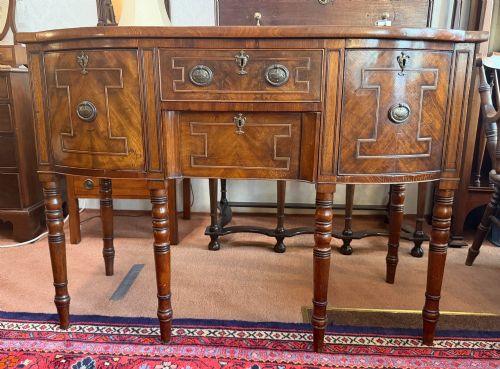
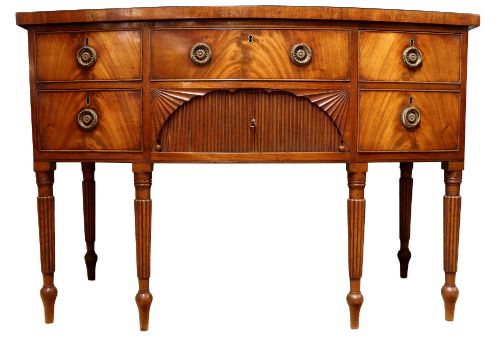
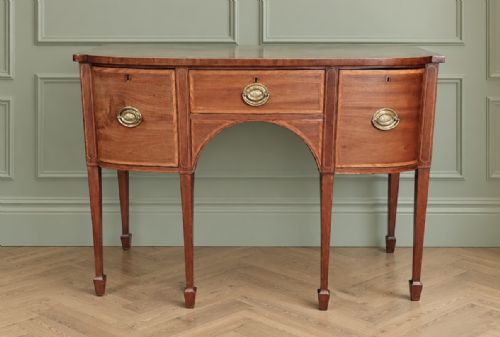
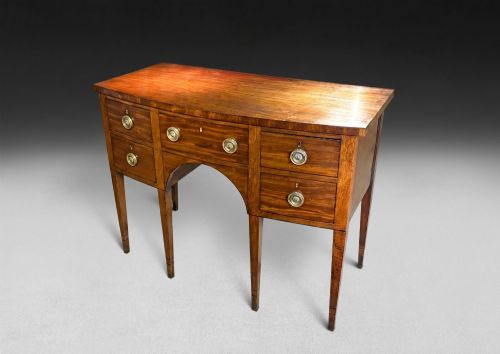
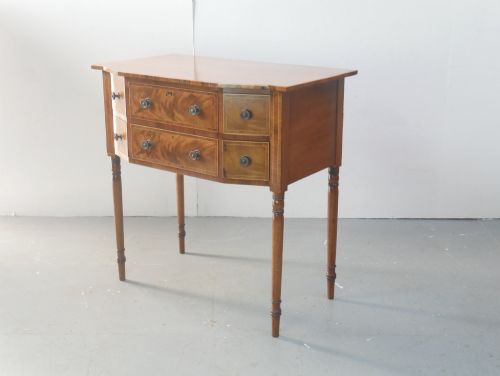
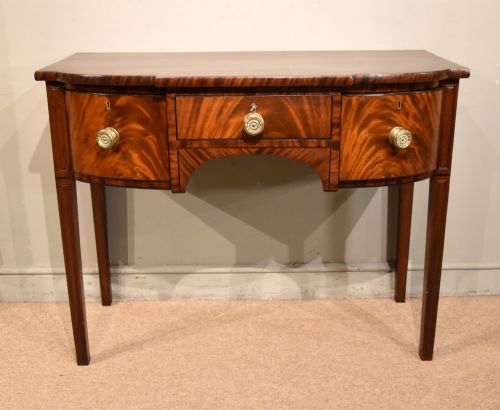
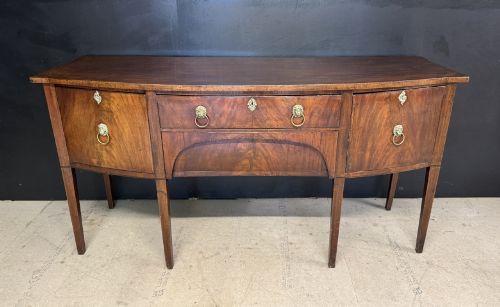
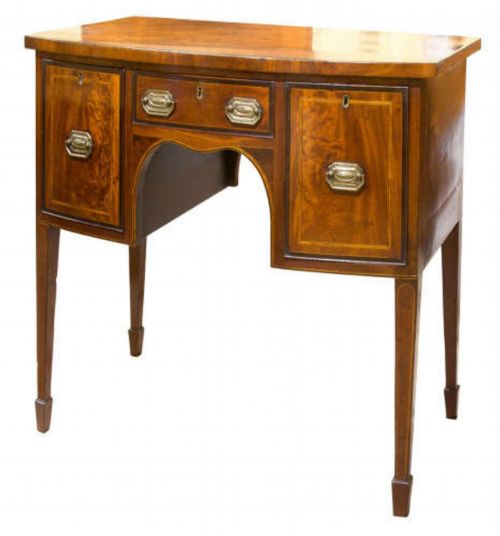



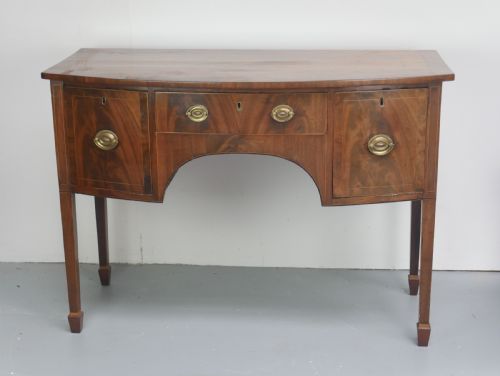
Bowfront Server Table
A bowfront server table provides a curvaceous silhouette that commands a room while offering practical storage.

Bowfront Server Table
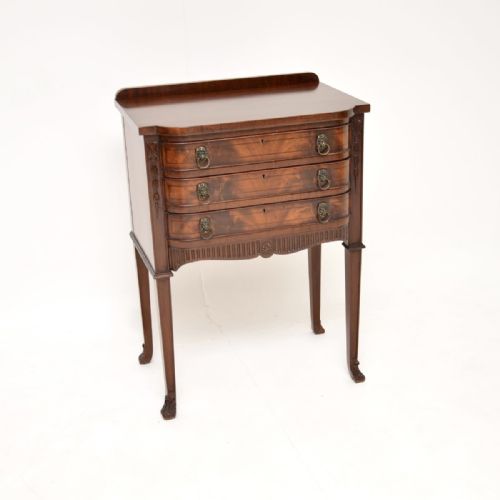
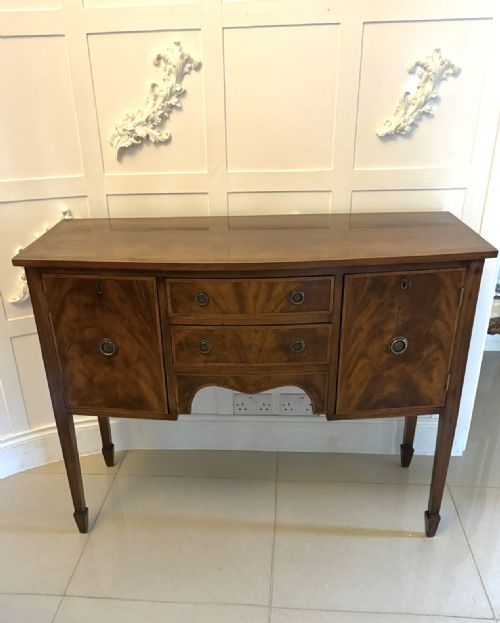
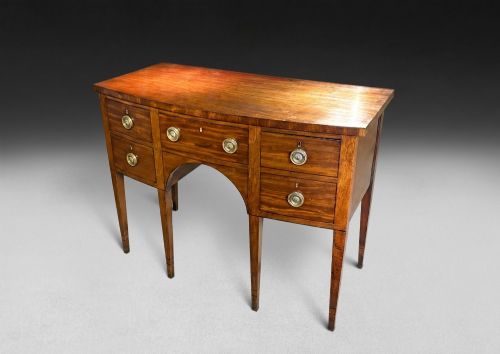
A bowfront server table presents a curved front facade that softens the rigid geometry of a dining room or hallway. When searching for a bowfront server table, buyers most frequently encounter mahogany examples dating from the Georgian and Regency periods, alongside later Edwardian interpretations.
These pieces function primarily as serving surfaces or storage units, appearing variously under descriptions such as sideboards, side tables, and console tables. The curved profile allows the timber grain to catch the light differently across the sweeping doors and drawers.
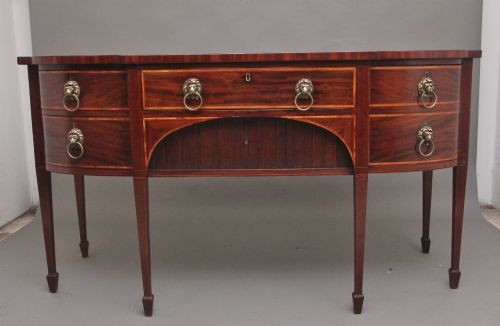
Originating predominantly from British cabinetmaking traditions, these items range from substantial six-legged formats to compact proportions suitable for smaller rooms. The overarching design unifies utility with refined proportion, making each piece an architectural focal point.
Materials and construction
Cabinetmakers relied heavily upon solid mahogany and flame mahogany veneer, often selecting timber with rich figuring to accentuate the curved front. Structural elements beneath frequently utilise secondary woods such as oak or pine.
Surface embellishment involves precise contrasting stringing and banding using satinwood, boxwood, and occasionally purpleheart. Inlaid details define the edges of drawers and tabletops, demonstrating the high level of joinery required to curve wood successfully.
Several listings feature six-legged formats, giving these imposing server tables an unexpectedly stately stance.
Evaluating craftsmanship
Quality rests in the handling of the curved timber and the continuity of the grain across multiple drawer fronts. Superior examples maintain crisp inlay work and retain their original brass hardware, showing minimal disruption to the primary veneers.
Proportion and scale dictate the desirability of a piece, with smaller formats requiring exceptional dexterity from the maker. The integrity of the internal drawer construction and the stability of the bowfront frame further separate standard furniture from exceptional cabinetwork.
The Bowfront Server Table Glossary
- Bowfront
- A convex curved front profile typical of cabinets and side tables produced from the Georgian era onwards. This shape replaces sharp corners with a sweeping arc.
- Crossbanding
- A strip of veneer applied perpendicularly to the grain of the primary surface to form a decorative border. It often incorporates lighter woods like satinwood or boxwood.
- Inlay
- A technique where contrasting materials are inserted into recessed cavities within the wood to create decorative patterns. Stringing is a particularly slender form of this work.
- Flame mahogany
- A highly figured veneer cut from the fork of the mahogany tree where the branch meets the trunk. The resulting pattern resembles flickering flames.
- Sideboard
- A dining room storage piece designed for holding crockery and serving food. They frequently share stylistic traits with server tables and console tables.
Bowfront Server Table: Frequently Asked Questions
Where should I place a bowfront server table?
These tables suit dining rooms as functional servers for dishes during meals, or hallways where their curved profile prevents sharp corners from obstructing a walkway.
Because the front projects outward, ensure adequate clearance in narrow spaces so the drawers open fully without obstruction.
How do I date a Georgian piece?
Examine the secondary woods used inside the drawers, the style of the brass hardware, and the complexity of any inlay work. Georgian and Regency makers favoured hand-cut dovetails and specific timber selections that evolved over time.
Compare the carcass construction against known stylistic periods like George III or Sheraton to narrow down the decade of manufacture.
Are these tables sturdy enough for daily use?
Solid mahogany and robust secondary timbers like oak provide strong structural integrity capable of supporting heavy serving platters and everyday objects.
Avoid placing them in areas with extreme temperature fluctuations to protect the delicate veneers and boxwood inlays from warping.
What is the difference between a sideboard and a server?
Sideboards traditionally incorporate deep cupboards and multiple drawers specifically designed for storing dining room paraphernalia.
Server tables often present a lighter, more open silhouette with slender legs, functioning primarily as a surface for presenting food and drink.