




Serpentine Serving Table
A serpentine serving table brings an undulating, sculptural grace to a dining room or hall through its curving front.
Serpentine Serving Table
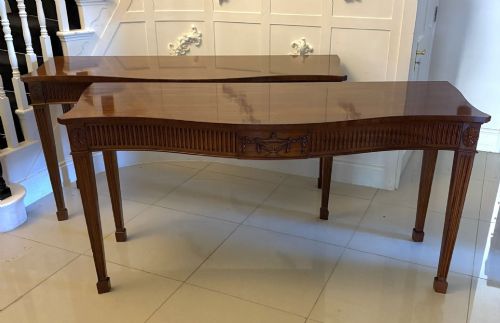
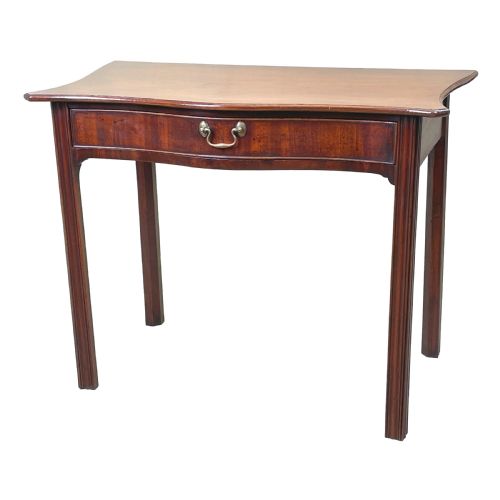
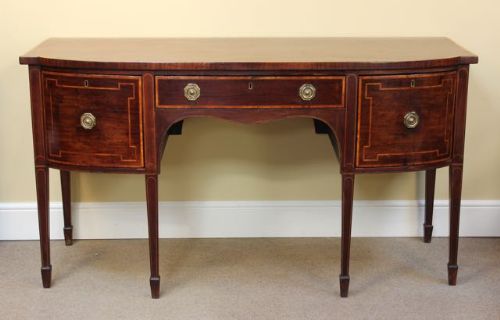
A serpentine serving table is a substantial dining room piece designed with a gently curving front that undulates outward and inward. The pieces seen on this page span several centuries, with a strong representation of Georgian examples alongside later revivals.
Makers produced these forms as sideboards, console tables, and servers, often incorporating drawers for storage or display surfaces for dining service. The silhouettes range from strict eighteenth-century proportions to Edwardian and later interpretations.
How they were made
Craftsmen built these tables primarily using solid mahogany and mahogany veneers, occasionally selecting burr walnut or satinwood for figured surfaces. The curved serpentine fronts required careful shaping of timber to maintain the continuous contour.
Details such as boxwood inlay, brass fittings, and neoclassical carving accentuate the form. Joinery methods relied on traditional techniques to support the wide spans and heavy timber tops.
Some nineteenth-century makers evidently enjoyed hiding extra drawers in the curved flanks of these servers just to surprise guests.
What varies in quality
The distinction between ordinary and exceptional pieces lies in the choice of timber and the precision of the curved drawer fronts. Figured grain patterns and crisp carving define the upper tier of execution.
Proportion and the handling of the serpentine sweep determine visual balance. Subtle details in the edge moulding and the integration of inlay separate standard production from masterwork output.
Gillow
The Serpentine Serving Table Glossary
- Serpentine front
- A furniture front characterised by a convex centre flanked by concave curves, creating an undulating line. This shape demands high skill from the cabinetmaker.
- Flame mahogany veneer
- A thin slice of timber cut from the fork of the mahogany tree, showing a flamelike pattern. Cabinetmakers applied this to prominent surfaces for visual impact.
- Boxwood inlay
- Narrow strips of pale boxwood inserted into grooves in darker wood to form geometric or floral patterns. This technique adds sharp contrast to tabletops and drawer fronts.
- Neoclassical
- A style drawing inspiration from classical antiquity, featuring motifs like urns, husks, and delicate swags. It appears frequently on carved mouldings and friezes.
Serpentine Serving Table: Frequently Asked Questions
Where do I place a serpentine serving table?
These tables fit naturally against dining room walls to hold dishes or silver during meals. Their curved fronts also make them striking focal points in large entrance halls.
Because many examples are long and shallow, they occupy minimal floor space while offering a wide surface area. They pair well with mirrors or paintings hung directly above them.
How do I care for mahogany surfaces?
Polishing the timber with traditional beeswax preserves the rich colour and natural sheen of the wood. Avoid placing these tables in direct sunlight or near heat sources to prevent the veneer from drying out.
Use coasters and mats to protect the antique polish from moisture and heat damage. Gentle dusting with a soft cloth maintains the finish.
Are these tables sturdy enough for daily use?
Solid timber construction and sturdy leg joints allow these tables to handle everyday duties such as holding serving platters or lamps. The substantial weight of mahogany provides natural stability.
Care should be taken not to overload drawers if the piece is fitted with them. Normal domestic use poses no risk to well-maintained frames.
How do I date a Georgian piece?
Examination of the secondary woods inside the drawers and the construction of the dovetails helps determine the age. Georgian pieces generally display hand-cut joinery and signs of age-appropriate wear.
Stylistic cues such as specific carving motifs or leg shapes also point to particular decades within the eighteenth century. Comparing the timber patination to documented examples confirms the period.