
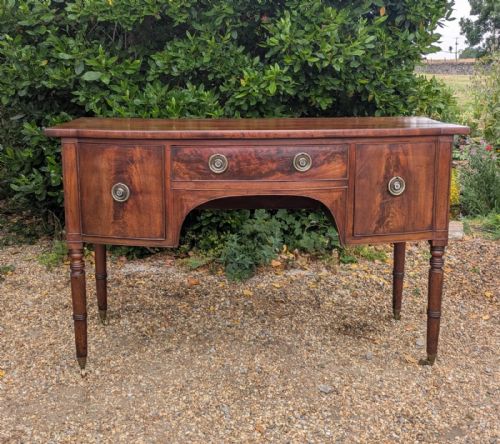
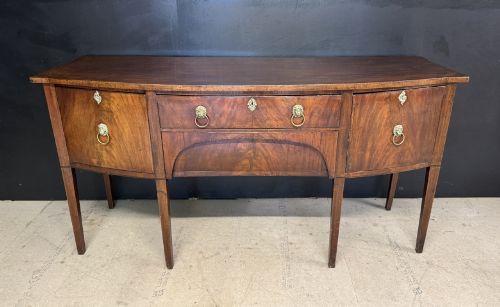
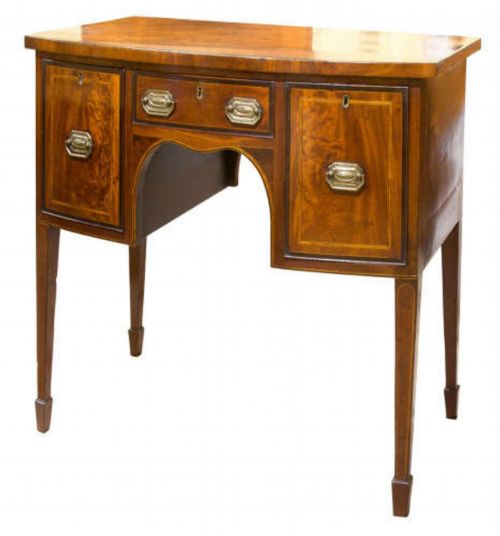
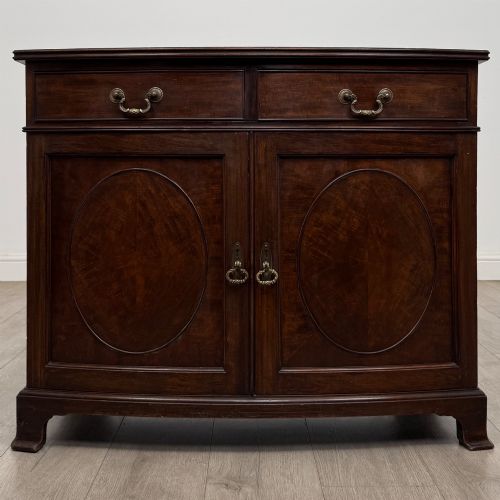
Bow Front Mahogany Server
A bow front mahogany server combines practical storage with sweeping curves, offering a refined focal point for dining rooms and hallways alike.
Bow Front Mahogany Server
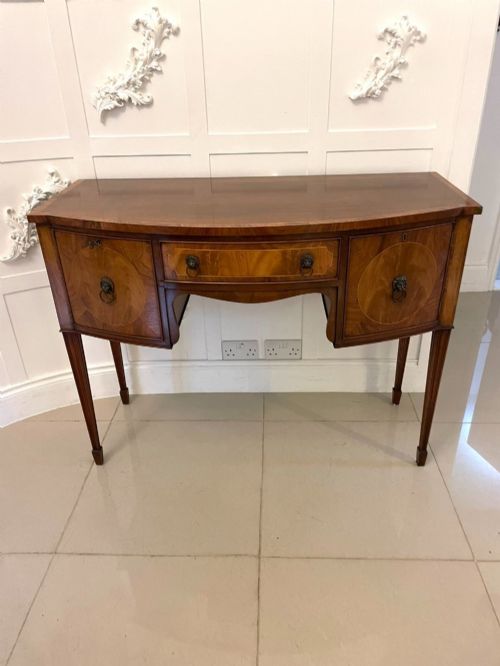
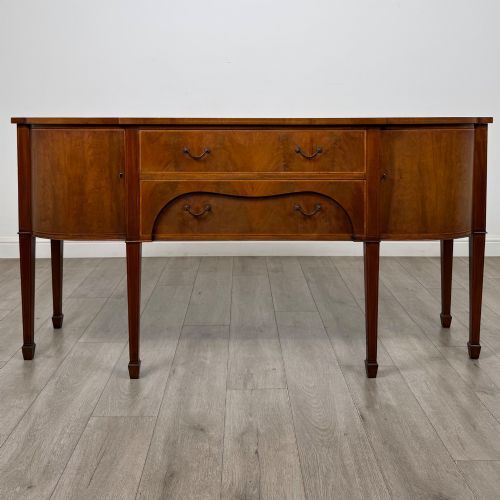
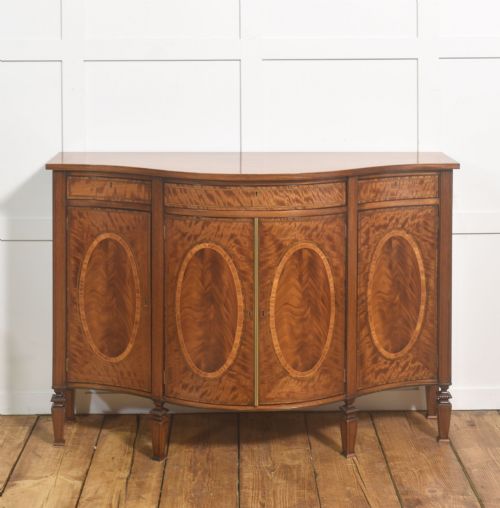
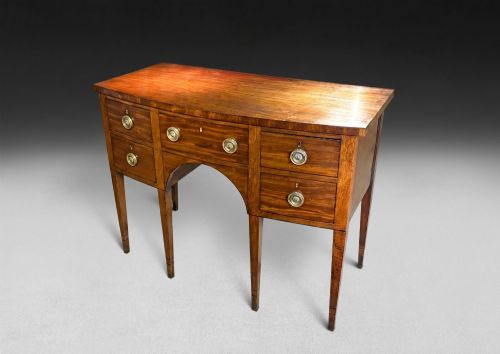
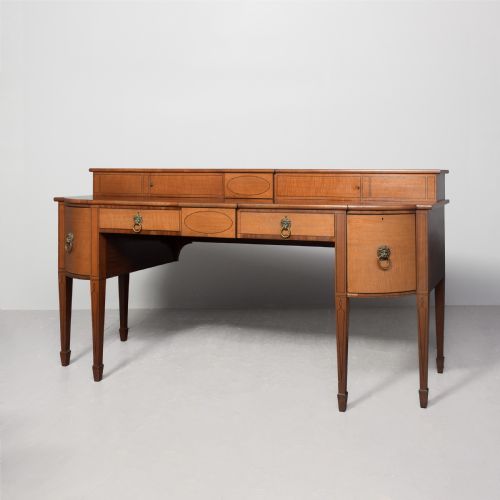
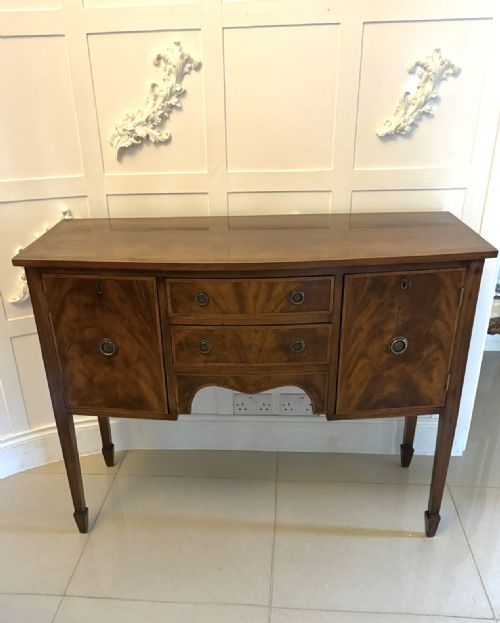
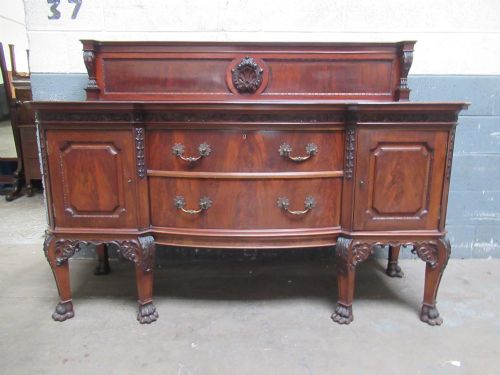
A bow front mahogany server is a substantial dining room piece designed to hold tableware, featuring a convex curved central facade that softens the linear feel of traditional furniture. You will most frequently encounter Georgian and Regency examples alongside later Edwardian and 20th-century revivals.
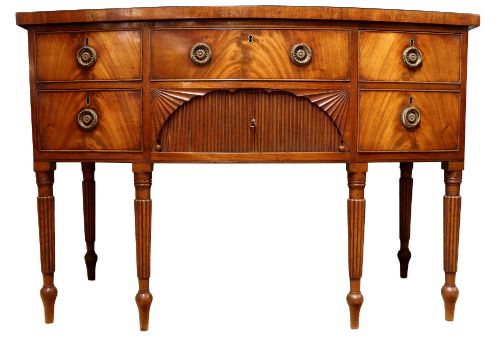
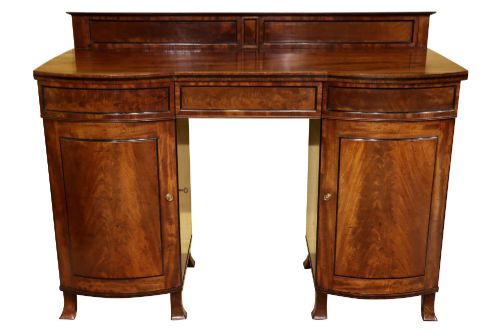
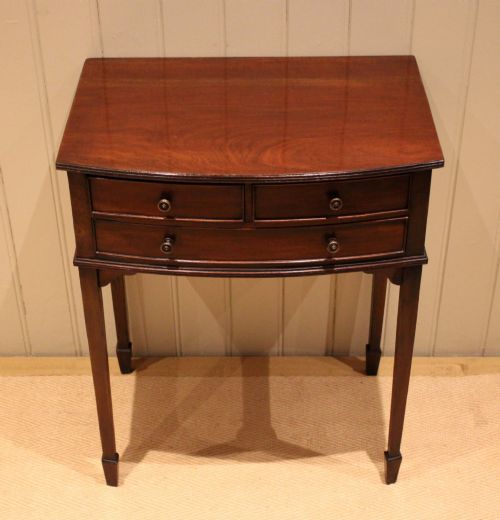
These items appear primarily as sideboards, side tables, and small cupboards, spanning the 18th, 19th, and early 20th centuries. The scale ranges from compact side tables to large pedestal or stage-back sideboards suited to grander spaces.
Construction and materials
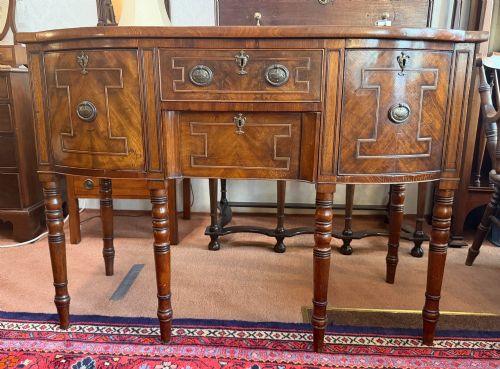
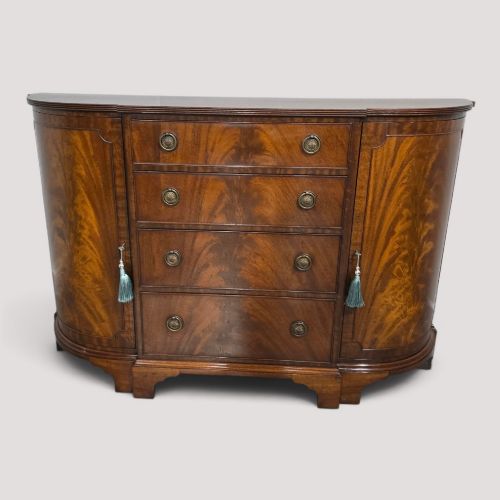
Cabinet makers built these pieces using solid mahogany and flame mahogany veneer over secondary timbers such as oak, often selecting figured boards to create striking visual movement across the curved doors and drawer fronts. Hand-cut dovetails secure the drawer construction while maintaining structural integrity.
Decoration relied on contrasting timber elements rather than heavy carving, incorporating boxwood stringing, satinwood inlay, and purpleheart banding. Brass hardware, including drop handles and backplates, completed the functional assembly.
The primary timber throughout the collection is mahogany, frequently enhanced with flame veneer, satinwood, and boxwood stringing.
Distinguishing craftsmanship
The distinction between standard pieces and the finest examples lies in the selection of timber and the precision of the curved joinery. Superior items display book-matched flame veneers that flow seamlessly across multiple drawers and doors without interruption.
Refined execution is visible in the subtlety of the stringing, the crispness of the inlay work, and the original matching brassware. The integration of the curved front into the overall frame requires exceptional skill from the cabinet maker.
The Bow Front Mahogany Server Glossary
- Bow front
- A convex curved cabinet front that projects outward in the centre. This shape became popular during the late 18th century to soften room angles.
- Flame mahogany
- A veneer cut from timber where the branch meets the trunk, producing a distinctive flame-like pattern. Makers prized this figure for principal drawer fronts.
- Stringing
- Thin inlaid lines of contrasting wood used to outline panels and drawers. Boxwood was a common choice for this delicate linear detail.
- Pedestal sideboard
- A form featuring distinct flanking cupboards or pedestals supporting a central surface. These larger pieces originated in the Georgian period.
- Stage-back
- A raised section at the rear of a sideboard used for displaying serving dishes. This feature appears on larger dining room pieces.
Bow Front Mahogany Server: Frequently Asked Questions
What is a bow front mahogany server used for?
These pieces served historically in dining rooms for storing silver, linen, and serving dishes while providing a surface for laying out food during meals.
In modern homes, they function similarly as sideboards or credenzas in dining spaces, or as striking console tables in hallways and living rooms.
How do I identify a Georgian server?
Georgian pieces typically exhibit hand-cut dovetailing, substantial timber weight, and restrained decoration such as fine boxwood stringing or subtle banding.
Later revival pieces from the Edwardian period often feature brighter satinwood inlays and lighter structural framing while imitating the earlier forms.
How should I care for mahogany furniture?
Keep mahogany pieces away from direct sunlight and heat sources to prevent the timber from drying out and the veneer from lifting.
Dust regularly with a soft, dry cloth and occasionally apply a traditional beeswax to maintain the natural lustre of the polished surface.
What is the difference between a sideboard and a server?
While terms often overlap in listings, servers tend to be slightly more compact and function primarily as side tables with drawer storage.
Sideboards generally offer greater capacity through deep cupboards, central drawers, and sometimes added superstructure like stage-backs.