
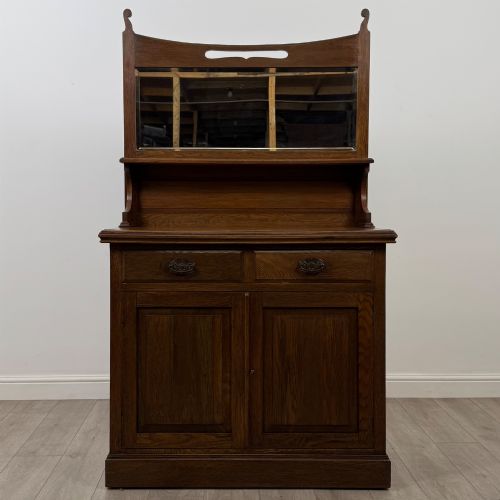
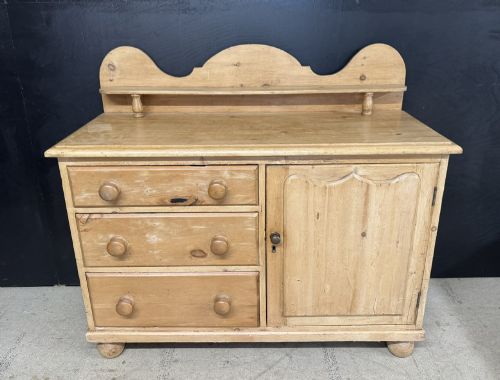
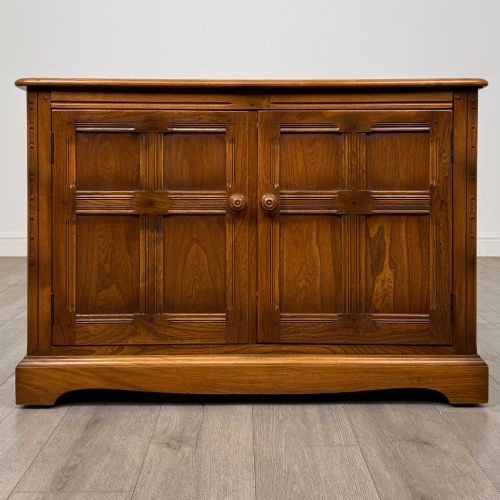
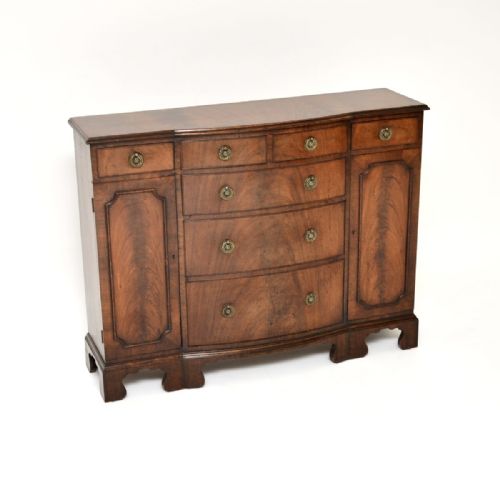
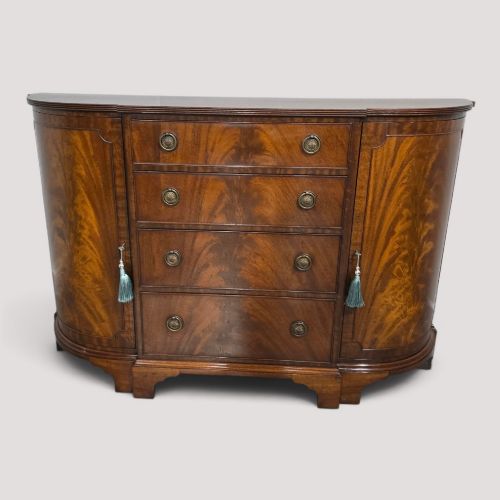
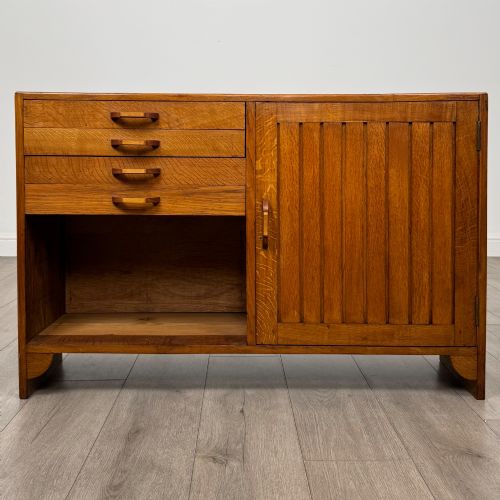
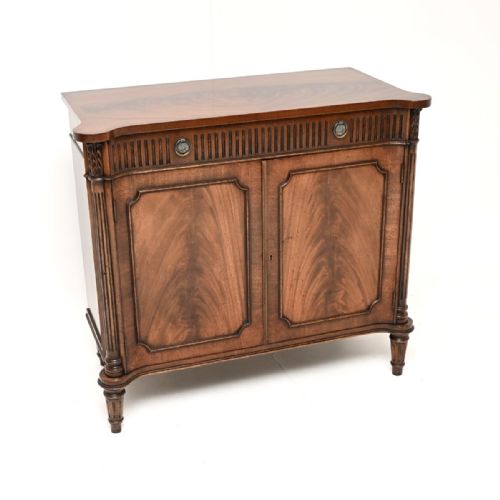
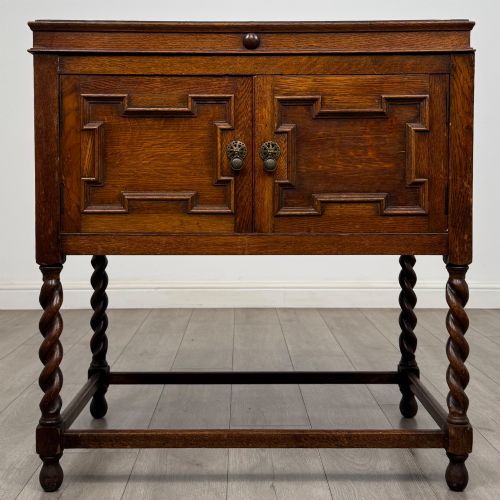
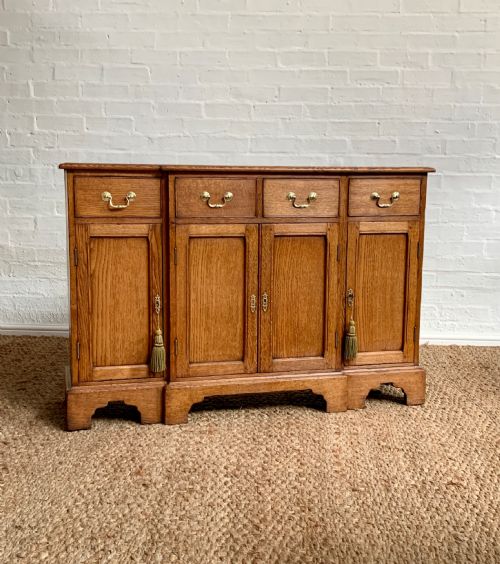
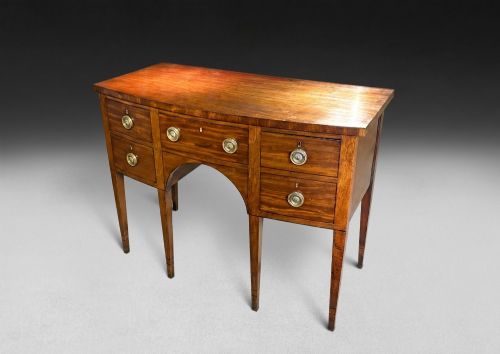
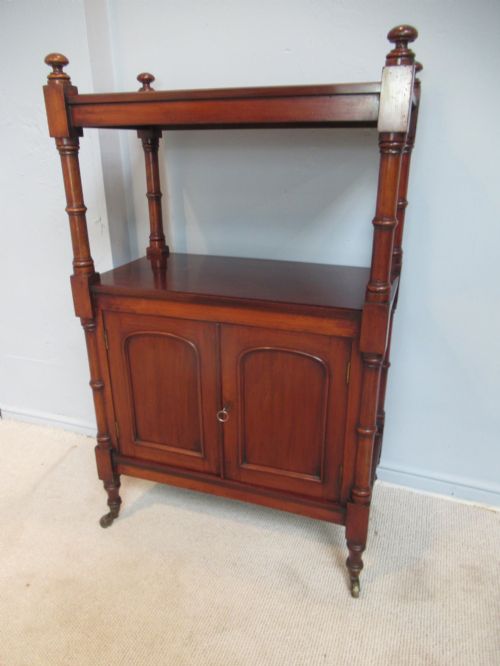
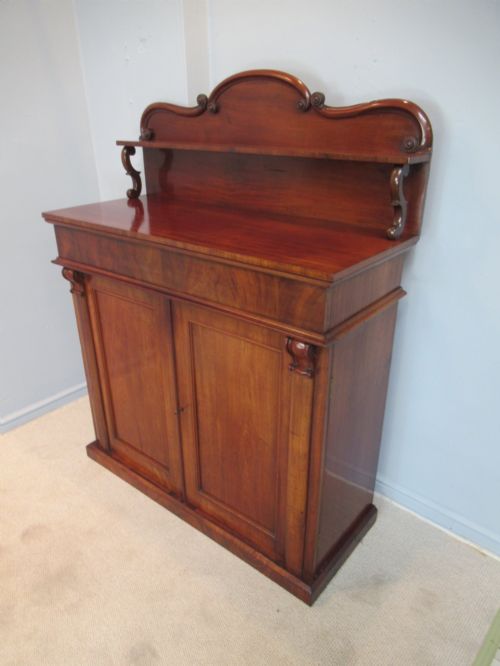
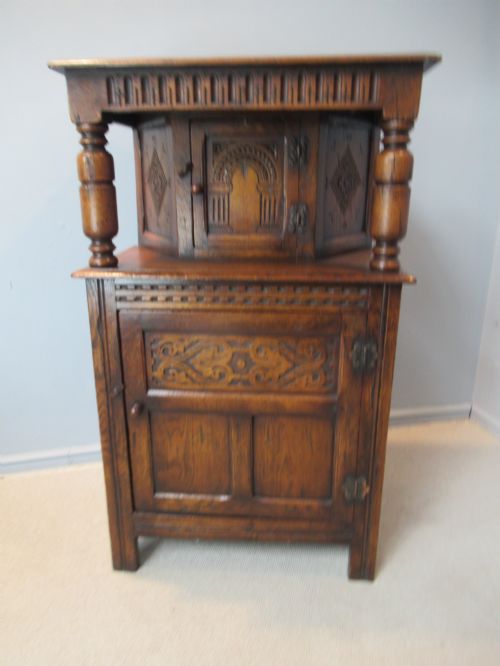


Small Buffet Cabinet
A small antique buffet cabinet brings compact storage and period character to a room, ranging from mahogany bowfronts to oak dressers.
Small Buffet Cabinet
A small antique buffet cabinet encompasses a varied group of dining and living room storage forms, including sideboards, chiffoniers, court cupboards, and small dressers.
Buyers seeking this phrase encounter pieces spanning several centuries, with particular frequency in Georgian, Regency, Victorian, and early twentieth-century formats.
How they were made
Cabinet makers relied primarily on hardwoods such as mahogany, walnut, and oak, frequently utilising flame mahogany veneer or rosewood for decorative exterior surfaces.
Secondary timbers like pine appear frequently in structural elements and dresser interiors, while brass hardware, glass panels, and iron details provide functional and visual accents.
Some pieces travel far from home, including a Spanish two-part buffet and a nineteenth-century Chinese small sideboard.
What varies in quality
The refinement of timber selection largely dictates the caliber of a piece, separating standard utility furniture from sophisticated examples featuring figured walnut, flame veneers, or hand-painted decoration.
Joinery execution and the subtlety of carved enrichment distinguish standard regional workshops from notable makers and specific regional traditions.
Heals of London·Gordovil Spain·Gillows·Melissa White
The Small Buffet Cabinet Glossary
- Bowfront
- A curved cabinet front that swells outward in the centre, common in Georgian and Regency mahogany sideboards.
- Chiffonier
- A compact sideboard or cabinet developed in the nineteenth century, typically featuring enclosed lower cupboards and sometimes a shelf superstructure.
- Court cupboard
- A traditional heavy oak storage piece featuring a recessed upper section supported by pillars, originating in earlier centuries and revived later.
- Breakfront
- A cabinet design where the central section projects forward from the flanking wings, creating a stepped facade.
- Serpentine
- A cabinet front shaped with a concave central section flanked by convex ends, requiring advanced woodworking skill.
Small Buffet Cabinet: Frequently Asked Questions
What is a small antique buffet cabinet used for?
These pieces serve as practical storage furniture for dining rooms, living areas, or hallways, holding tableware, linens, or everyday items.
Their compact proportions allow them to fit into tight spaces where standard large sideboards would overwhelm the room.
How do I identify a Georgian sideboard?
Georgian examples often display precise mahogany veneers, subtle stringing inlay, and balanced proportions with tapered or spade legs.
Many feature bowfront or serpentine shapes that reflect the refined design standards of the eighteenth century.
What is the difference between a chiffonier and a sideboard?
A chiffonier is typically smaller and more compact than a traditional sideboard, frequently including a low tier or shelf structure on top.
Originating in the nineteenth century, chiffoniers were designed for smaller dining rooms and drawing rooms.
How do I care for antique oak and mahogany cabinets?
Maintain the timber by keeping the cabinets away from direct heat sources and sudden humidity changes that cause wood to split.
Apply appropriate natural waxes periodically to nourish the surface and preserve the historic finish of the wood.