
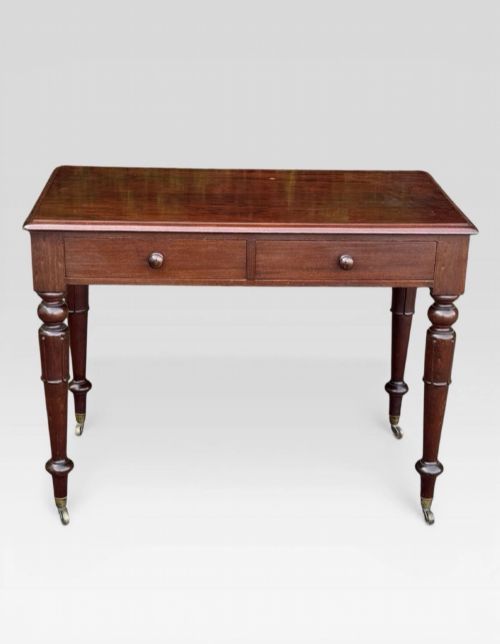


Victorian Console Cabinet
These victorian console cabinet pieces bring solid timber and fine proportions to a room, offering practical storage with distinct period character.
Victorian Console Cabinet
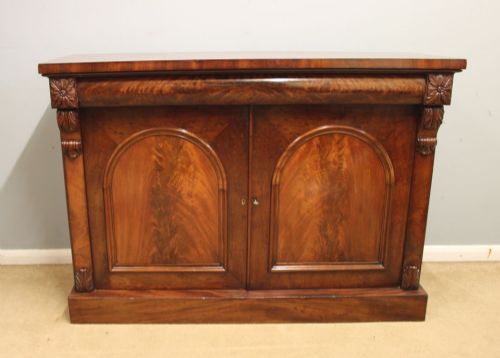
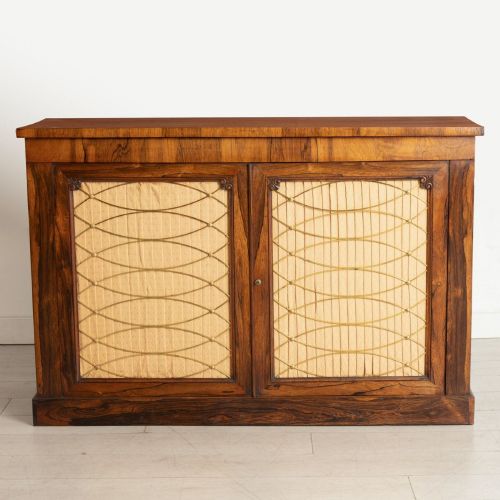
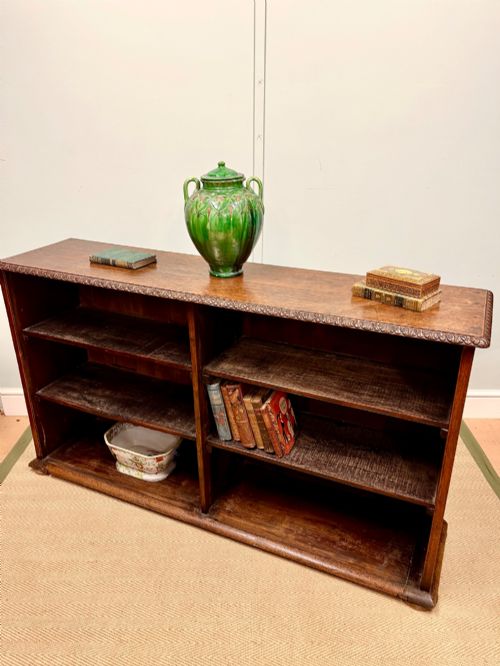
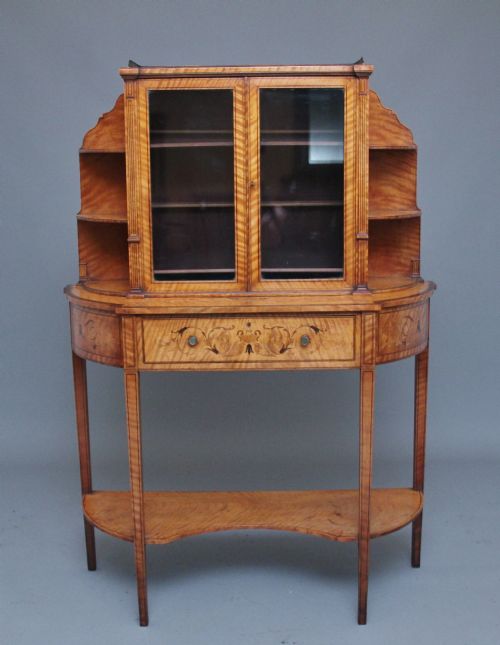
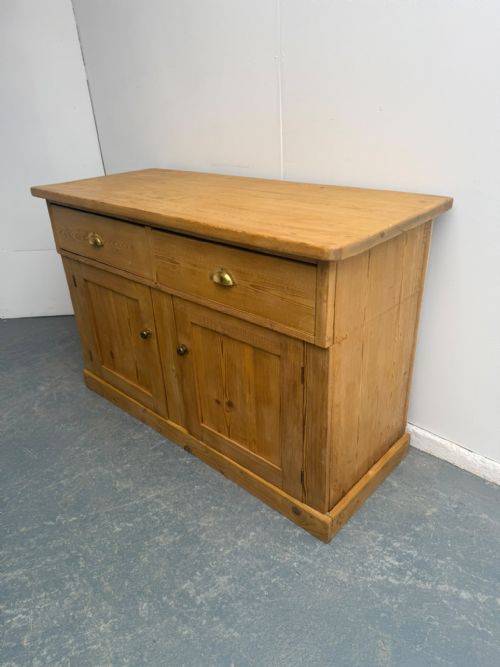
A victorian console cabinet encompasses a variety of timber storage furniture from the nineteenth century, including chiffoniers, sideboards, and credenzas designed for formal rooms. The pieces seen here range from compact mahogany side cupboards to large walnut credenzas and rosewood display cabinets.
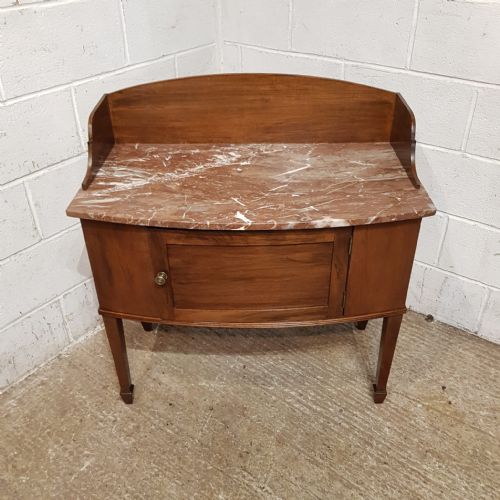
Buyers will most frequently encounter nineteenth-century mahogany and oak examples, often featuring marble tops or glass doors. These forms served to display decorative objects or store tableware in period interiors.
Materials and construction
Cabinet makers utilised dense hardwoods such as mahogany, walnut, rosewood, and oak for the primary carcases, frequently applying finer timbers like satinwood and satinbirch for veneers. Structural elements often incorporated brass mounts, glass panels, and marble slabs.
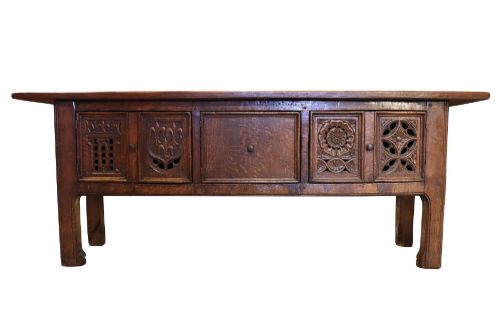
Surface decoration relied on marquetry inlay, carved detailing, and gilt bronze mounts to enhance the visual weight of the timber. Polished finishes protected the wood while highlighting the natural grain.
Listings feature woods including mahogany, rosewood, oak, walnut, satinwood, and pollard oak, alongside marble and brass.
Understanding quality
Superior examples distinguish themselves through the choice of figured timber and the precision of the cabinet work. The integration of decorative elements such as hand-carved panels and gilt bronze mounts elevates certain items above standard utility furniture.
The sophistication of the design, whether following Gothic Revival, Sheraton Revival, or Arts and Crafts principles, dictates the overall character. Finer pieces demonstrate careful attention to proportions and balanced ornamentation.
J A Mein Edinburgh Cabinet Maker·Gillow and Co
The Victorian Console Cabinet Glossary
- Credenza
- A large side cabinet or sideboard, frequently fitted with glass doors and used for display or storage. These pieces often incorporate elaborate marquetry and gilt bronze mounts.
- Chiffonier
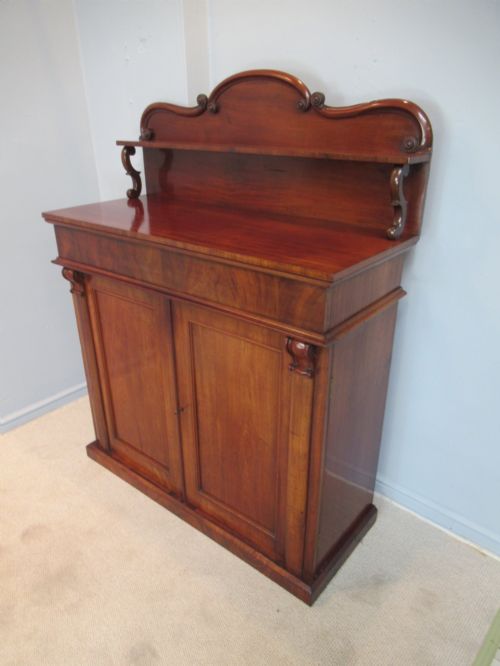
- A compact sideboard originating in the nineteenth century, typically featuring enclosed shelving below and sometimes a mirrored superstructure above.
- Marquetry
- The art of applying decorative veneer pieces in wood to form geometric or pictorial patterns on a furniture surface. This technique requires considerable skill to achieve a flush, seamless finish.
- Demi-lune
- A half-moon shape applied to tables and cabinets designed to stand flat against a wall. This profile creates a softer silhouette in a hallway or drawing room.
- Gesso
- A plaster-based mixture applied to wood surfaces as a preparation for gilding with gold leaf. It allows for crisp, intricate surface moulding.
Victorian Console Cabinet: Frequently Asked Questions
Where should I place a console cabinet?
These cabinets suit hallways, drawing rooms, or dining spaces where surface space and low-profile storage are required. Their varied depths allow them to sit flush against walls without dominating the floor area.
Position them away from direct heat sources to protect the polished timber and any applied veneer work from drying out.
How do I care for the timber surfaces?
Maintain the wood by dusting with a dry, soft cloth and occasionally applying a suitable wax polish to nourish the grain. Avoid chemical sprays that can degrade historic finishes over time.
Keep marble tops clean using mild, non-acidic soap and water to prevent staining on porous stone surfaces.
What is the difference between a chiffonier and a credenza?
A chiffonier is typically a smaller nineteenth-century sideboard format, often featuring enclosed lower doors and sometimes a raised back tier. They were designed for practical storage in dining rooms.
Credenzas tend to be grander, lower-profile cabinets with multiple doors, frequently incorporating extensive glass display sections and elaborate mounts for formal reception rooms.
Can I use a marble top cabinet as a washstand?
Many nineteenth-century marble-topped cabinets were originally constructed as washstands for bedrooms. The stone surface provides a durable, water-resistant area that accommodates daily use.
Ensure any moisture is wiped promptly from the timber surrounds to preserve the integrity of the antique wood joinery.