
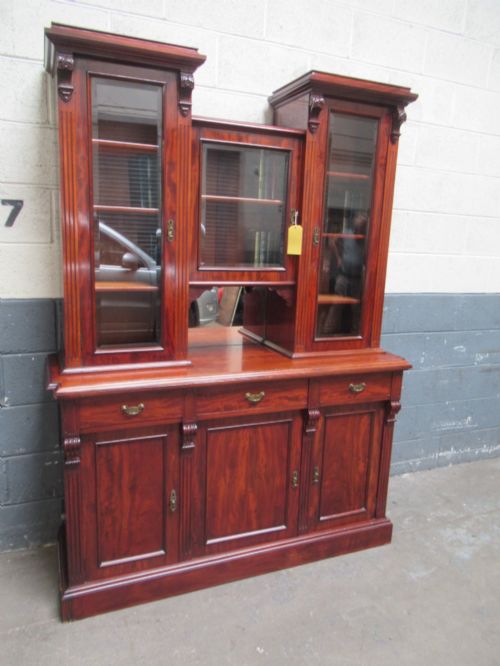
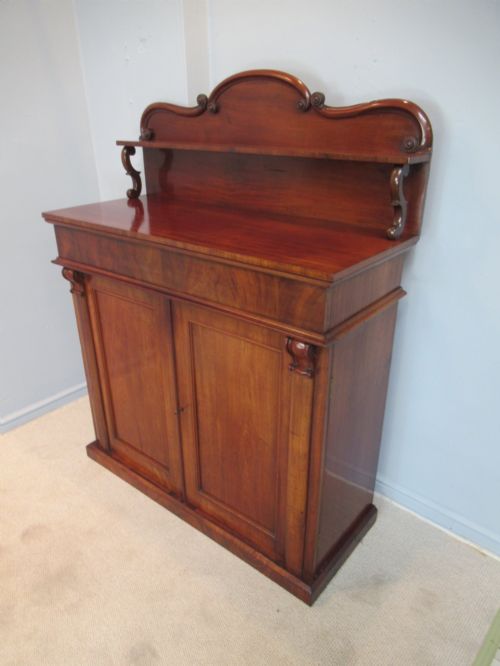


Reddish Brown Sideboard
A reddish brown sideboard brings deep timber warmth and practical storage to a room, drawing on centuries of cabinetmaking skill.
Reddish Brown Sideboard
How they were made
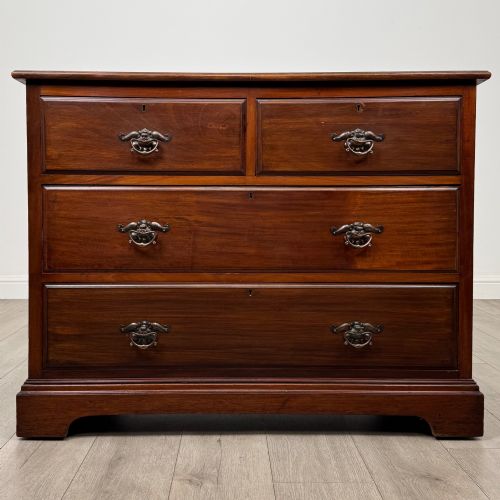
Cabinetmakers relied on dense timbers like mahogany and padouk, often selecting flame veneers to create striking grain patterns on drawer fronts and doors. These primary woods were supported by secondary timbers such as pine within internal carcases and drawer linings.
Construction techniques combined traditional joinery with decorative elements including brass hardware and glass panels. Surfaces were finished to highlight the natural reddish brown tones of the wood through polishing and varnishing.
Listings feature pieces spanning the eighteenth, nineteenth, and early twentieth centuries, constructed from mahogany, padouk wood, and pine.
What varies in quality
Quality in these items is determined by the selection of timber figures and the precision of the cabinetwork. Finer examples display carefully matched veneers and robust internal construction that survives heavy daily use.
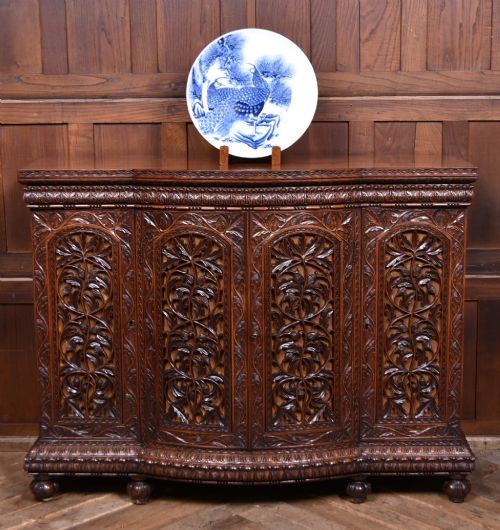
The sophistication of the design, from simple utilitarian cupboards to serpentine fronted masterpieces with intricate carvings, separates standard workshop production from high status commissions.
The Reddish Brown Sideboard Glossary
- Serpentine
- A curved front shape with a convex centre flanked by concave wings. This contour requires immense skill from the woodworker.
- Pedestal sideboard
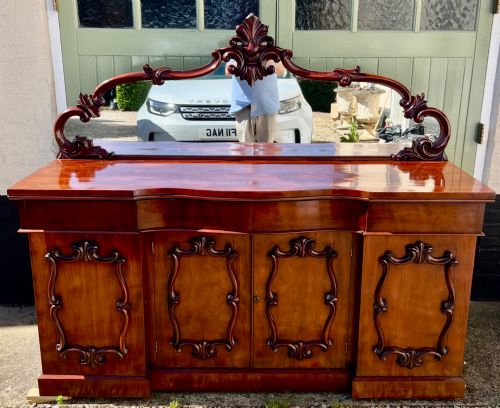
- A large dining room form featuring two independent pedestals flanking a central section. It emerged during the late eighteenth century.
- Chiffonier
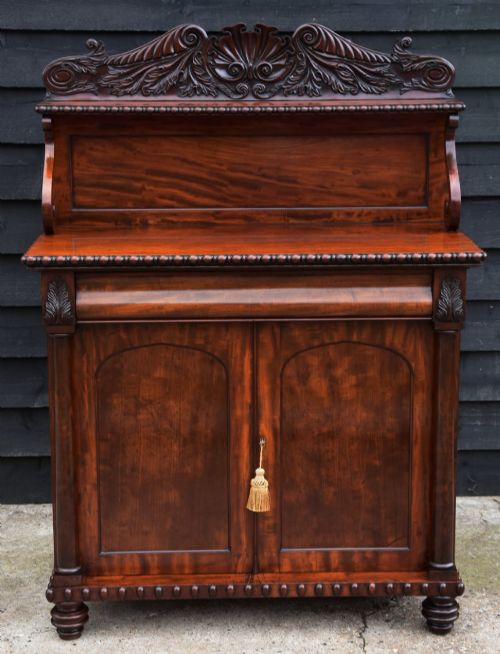
- A compact low sideboard or cabinet developed during the Regency and Victorian periods. It often incorporates glazed doors or a raised shelf at the back.
- Flame mahogany
- A veneer cut from the fork of the mahogany tree where the branch meets the trunk. It produces a dramatic flickering flame effect across the surface.
Reddish Brown Sideboard: Frequently Asked Questions
How do I clean a mahogany sideboard?
Dust regularly with a soft, dry cloth to prevent dirt accumulation on the polished wood surface. Avoid modern silicone sprays that can damage the historic finish.
Apply a traditional beeswax periodically to nourish the timber and maintain its natural reddish brown lustre. Buff gently after application to achieve a soft sheen.
Where should I place a sideboard?
Position the piece against a sturdy wall in a dining room, hallway, or living space where it commands attention without obstructing traffic flow. Ensure the location remains away from direct heat sources and strong sunlight to protect the wood.
Allow sufficient clearance around doors and drawers for unhindered access during daily use. A stable environment helps preserve the structural integrity of older timber.
How do I date a sideboard?
Examine the construction methods, such as dovetail joints and tool marks on internal drawer linings, which reveal the period of manufacture. Secondary woods and hardware styles also offer reliable clues to the decade.
Compare the overall silhouette and decorative motifs against documented historical styles like Georgian or Victorian. Subtle shifts in proportion help narrow down the exact era.
Can I use a sideboard in a hallway?
These storage pieces work exceptionally well in larger entrance halls to hold keys, post, and seasonal accessories. Their deep timber tones create a welcoming atmosphere for visitors entering the home.
Select a more compact chiffonier or cabinet variant if hallway space is limited. Ensure the depth allows people to pass comfortably.