

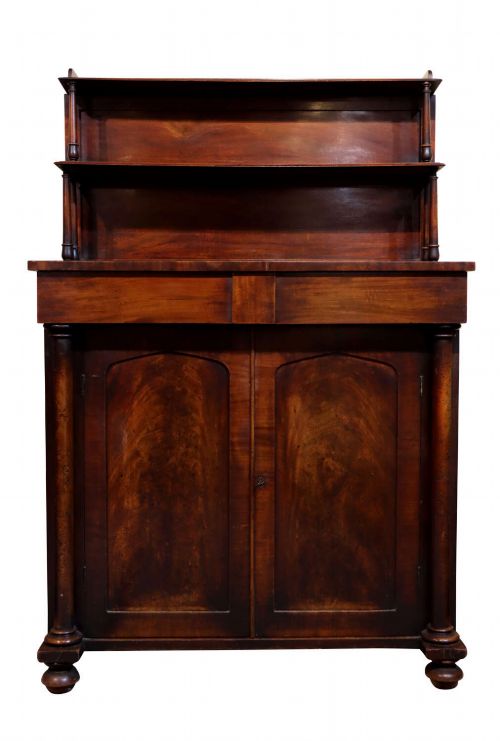
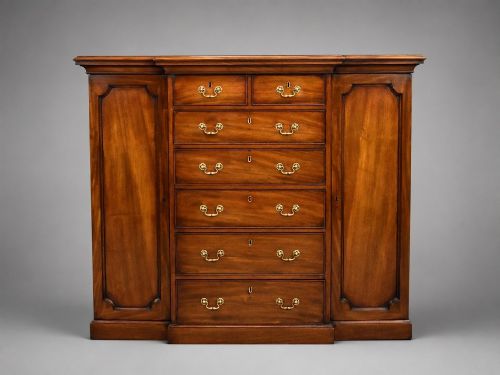
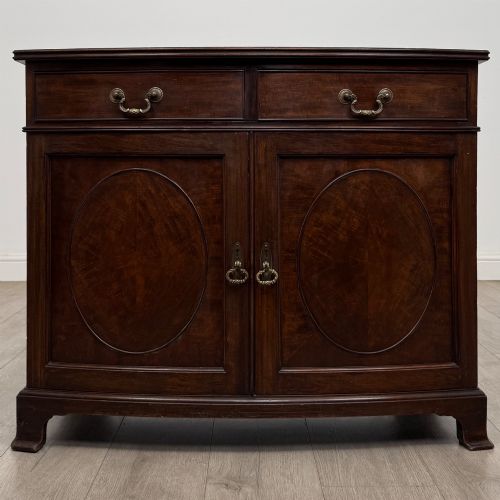
Antique Dining Room Cupboard
An antique dining room cupboard brings period craftsmanship and practical storage to the home, anchored by solid timber and traditional joinery.

Antique Dining Room Cupboard
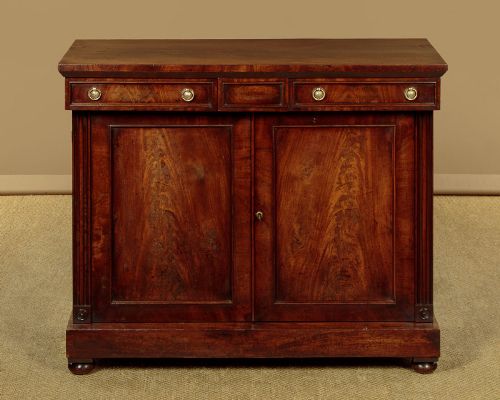
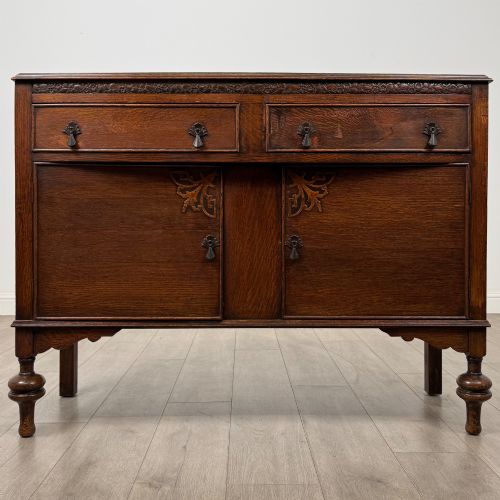
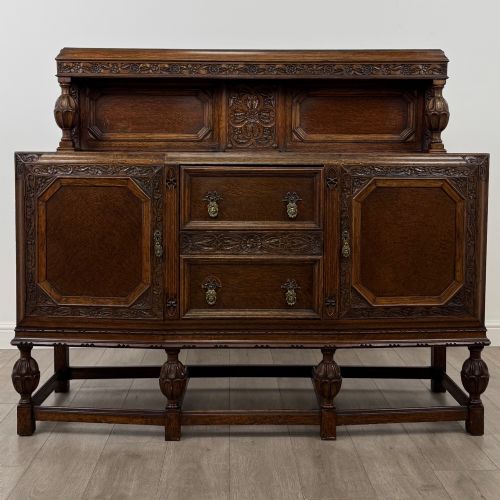
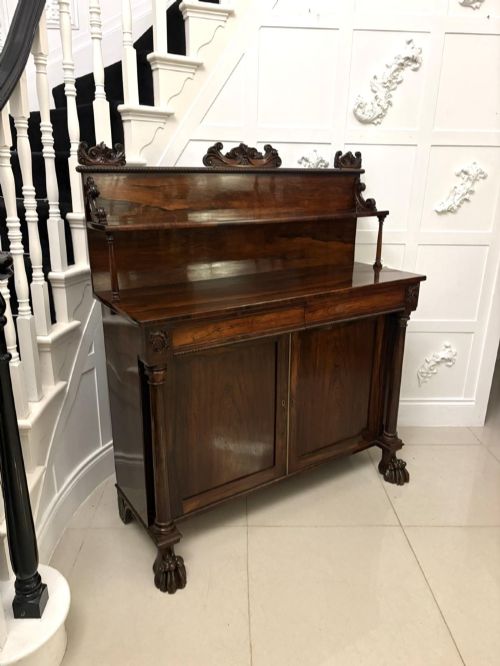
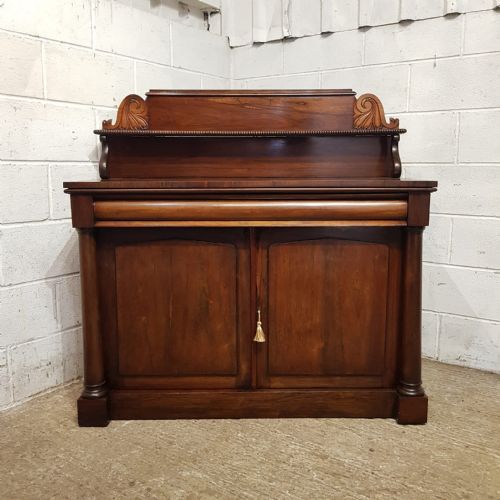
An antique dining room cupboard encompasses sideboards, chiffoniers, servers, buffets, and cabinets designed for hosting and storage. The pieces span periods from the eighteenth century through the Edwardian era, reflecting shifting domestic habits.
Mahogany and oak dominate the selection, appearing alongside walnut and rosewood. These timbers take the form of breakfront sideboards, mirror-back buffets, and low cabinets.
Victorian and Edwardian examples appear frequently, ranging from heavy carved oak to refined flame mahogany bowfronts. Pieces bridge formal dining rooms and everyday living spaces.
Materials and Technique
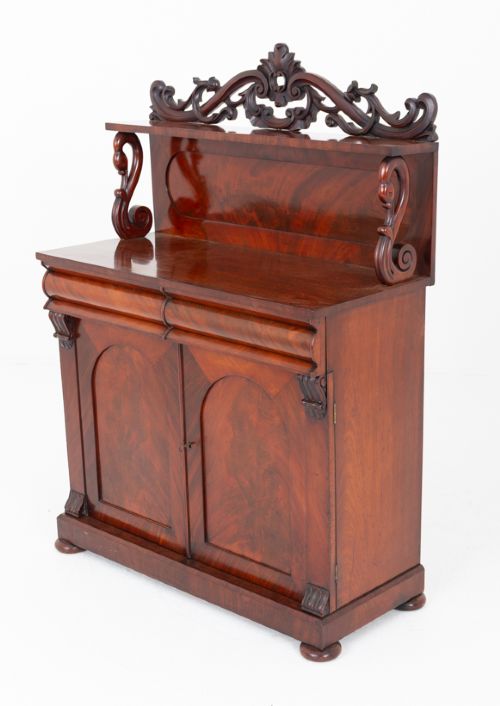
Cabinetmakers utilised solid timbers like oak and mahogany, often applying figured veneers or flame mahogany to principal surfaces for visual depth. Brass handles, glass panels, and iron hardware complete the construction.
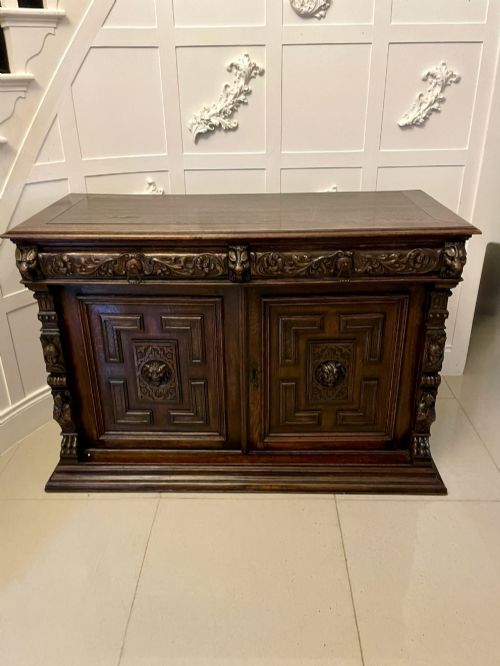
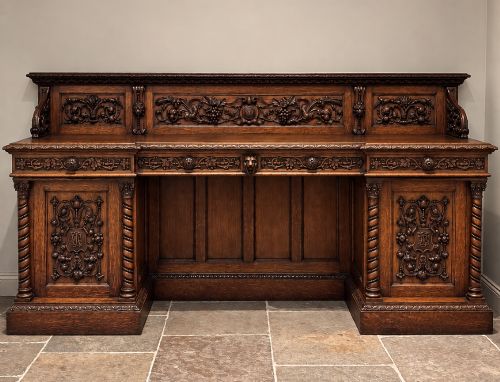
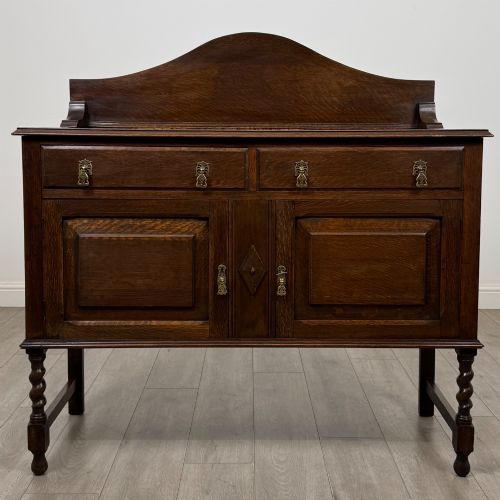
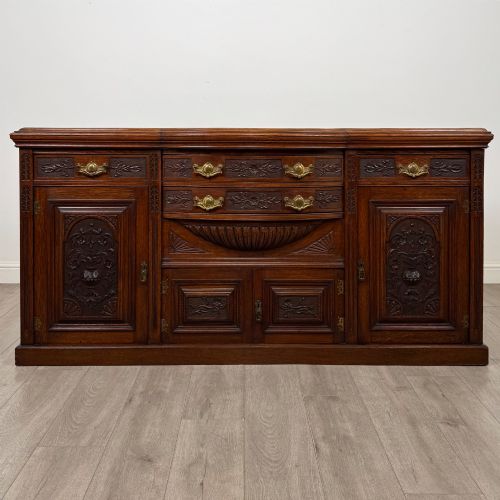
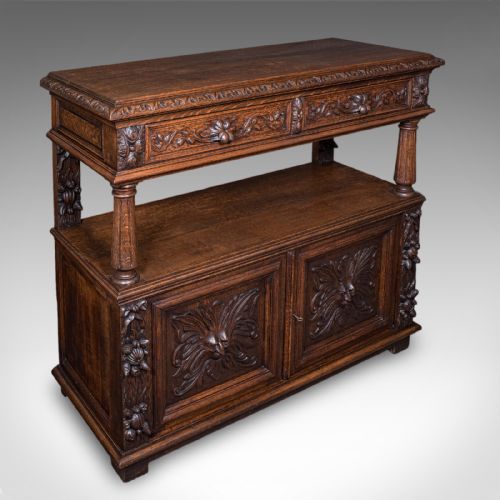
Carving, turning, and inlay work define the decorative vocabulary, from barley twist legs on Edwardian pieces to neoclassical stringing on earlier forms. Carved oak sideboards display deep relief work, while Regency and Georgian pieces rely on clean architectural lines and figured grain.
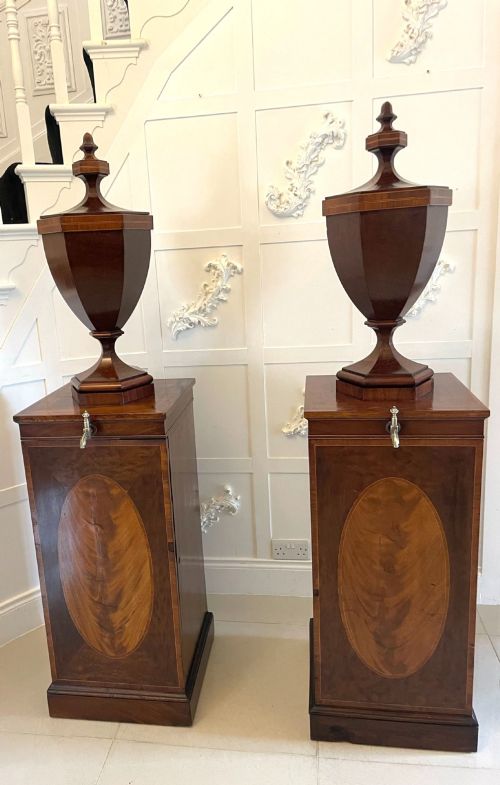
Several cupboards hide fitted cellaret drawers designed to keep wine bottles cool on ice during long Victorian dinners.
Design and Execution
The degree of hand-carving and the selection of timber dictate the standing of a piece. Figured mahogany or burr walnut veneers demonstrate careful selection by the cabinetmaker.
Proportion and the integration of secondary woods reveal the original purpose and workshop standards. Refined hardware, balanced joinery, and intact original finishes separate standard utility furniture from finer examples.
Maple and Co
The Antique Dining Room Cupboard Glossary
- Chiffonier
- A small sideboard featuring enclosed lower cupboards, sometimes surmounted by a shelf or mirror. These pieces served smaller dining spaces and parlours.
- Bowfront
- A curved front facade that swells outward in the centre. This shape softens the corners of dining room furniture.
- Breakfront
- A cabinet design where the central section projects forward from the flanking sides. This configuration creates visual rhythm across large sideboards.
- Barley twist
- A spiral turning technique used on table legs and supports. It became popular during the seventeenth century and saw revival in later periods.
- Flame mahogany
- Timber cut from the fork of the mahogany tree to produce a flickering, flame-like grain pattern. Cabinetmakers reserved this veneer for prominent drawer fronts and doors.
Antique Dining Room Cupboard: Frequently Asked Questions
What is an antique dining room cupboard used for?
These pieces provide storage for tableware, linen, and dining accessories while serving as a surface for serving food during meals.
Historically, they anchored the dining room and displayed silver or ceramic collections on their tops and shelves.
How do I identify Victorian sideboards?
Victorian pieces often utilise dark mahogany or heavy carved oak, featuring substantial proportions and panelled doors.
They frequently incorporate mirrors, raised backs, and robust turned feet that reflect the period's preference for solid domestic furniture.
What is the difference between a sideboard and a chiffonier?
A sideboard is typically a larger piece designed for grand dining rooms, offering extensive storage across multiple doors and drawers.
A chiffonier is generally smaller and lower, originally intended as a compact server for the parlour or smaller dining areas.
How do I care for antique wood furniture?
Keep wooden pieces away from direct heat sources and strong sunlight to prevent the timber and veneer from drying out or cracking.
Dust regularly with a dry cloth and apply natural wax occasionally to maintain the finish of the wood.