

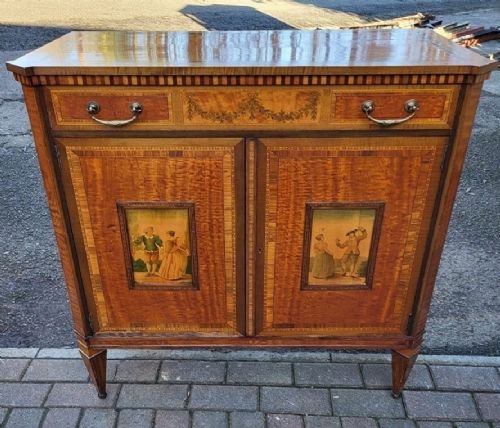


Small Victorian Credenza
A small victorian credenza brings compact architectural presence and figured timber into a room, offering display space without dominating the floor.

Small Victorian Credenza
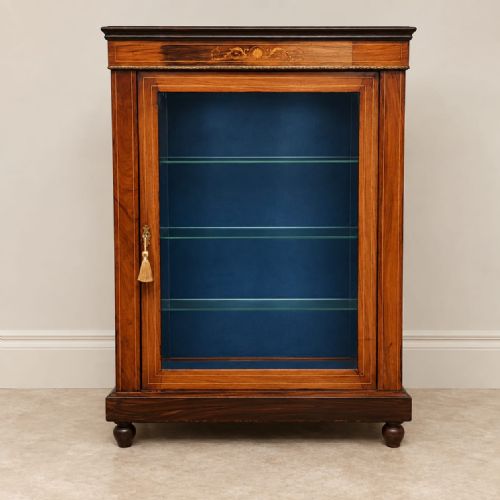
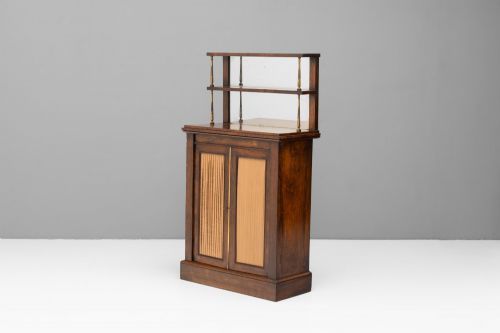
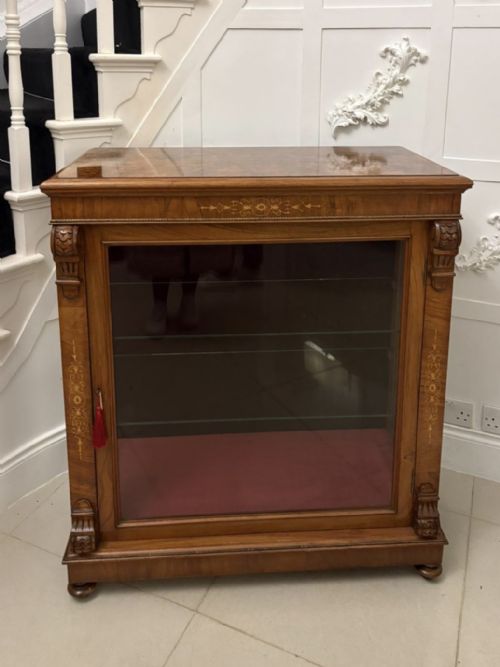
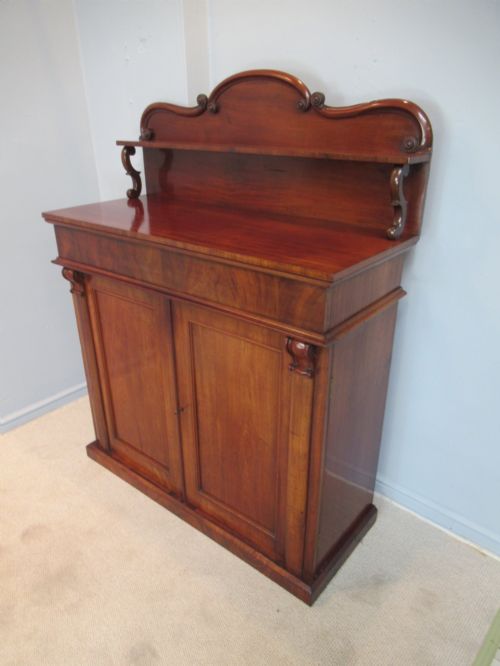
A small victorian credenza is a low-profile cabinet designed for display and storage, appearing in nineteenth-century interiors alongside closely related forms like chiffoniers and pier cabinets. These pieces often feature glazed doors, mirrored backs, or open shelving within compact footprints tailored for smaller reception rooms.
Buyers exploring this category encounter walnut, mahogany, and rosewood constructions spanning the mid to late nineteenth century. Many examples incorporate marquetry, ormolu mounts, or fine timber veneers that reflect the revival styles popular during the period.
Materials and Construction
Cabinetmakers built these pieces using solid foundations of mahogany, oak, or pine faced with figured veneers such as burr walnut and flame mahogany. Timber selection was central to the craft, setting smooth grain patterns against contrasting stringing and banding.
Decorative detailing relied on cast ormolu mounts, glazed panels, and meticulous marquetry or ebony inlay. Joints were traditionally dovetailed and pegged, reflecting nineteenth-century workshop practices suited to domestic furniture production.
Listings feature walnut, mahogany, rosewood, and pine pieces spanning the nineteenth century alongside revival styles including Adam and Jacobean.
Indicators of Quality
Quality rests primarily in the selection and bookmatching of the wood veneers, where lively grain patterns and symmetrical figuring elevate a piece above plain timber alternatives. The crispness of marquetry inlays and the weight of cast ormolu mounts also signal superior workmanship.
Structural integrity, original glass panels, and the retention of period hardware determine the grade of a cabinet. Finer examples display precise joinery in drawer construction and well-fitted doors that maintain alignment over time.
Maple and Co
The Small Victorian Credenza Glossary
- Credenza
- A low cabinet or sideboard, typically enclosed by doors, used in nineteenth-century interiors for display and storage. It sits lower than a traditional chiffonier.
- Chiffonier
- A compact sideboard featuring a lower cupboard section, frequently surmounted by a shelf or a mirror back. These domestic pieces served dining and drawing rooms alike.
- Pier Cabinet
- A narrow display cabinet designed to fit wall spaces between windows. They often feature glazed doors and velvet-lined interiors for china or books.
- Ormolu
- Gilt-bronze mounts applied to furniture for decorative effect. The technique involves mercury gilding on cast bronze.
- Marquetry
- Decorative patterns formed by fitting together contrasting pieces of veneer on a wooden ground. It creates pictorial or geometric designs across the surface.
Small Victorian Credenza: Frequently Asked Questions
What is a small victorian credenza used for?
These cabinets served primarily to display porcelain, silver, and decorative objects while providing enclosed storage for household items below. Their low stature kept sightlines open in Victorian drawing rooms.
Today, they function well as media consoles or statement side tables in modern living spaces, combining surface display capability with concealed storage.
Are these cabinets suitable for small rooms?
Their compact proportions make them ideal for narrower spaces where full-sized sideboards would overwhelm the room. The inclusion of glass doors and mirrored backs also helps reflect light and creates a sense of openness.
Careful measurement of depth and door swing ensures the piece fits comfortably in alcoves or hallways without obstructing movement.
How do I care for nineteenth-century wood?
Maintain timber surfaces by dusting with a soft, dry cloth and applying traditional beeswax sparingly to nourish the grain. Avoid chemical sprays or silicone polishes that can degrade nineteenth-century finishes.
Keep pieces away from direct heat sources and strong sunlight to prevent veneer lifting and timber shrinkage in centrally heated homes.