



Carved Backboard Cabinet
A carved backboard cabinet brings grounded nineteenth-century presence to a room, offering both generous display space and disciplined storage.
Carved Backboard Cabinet
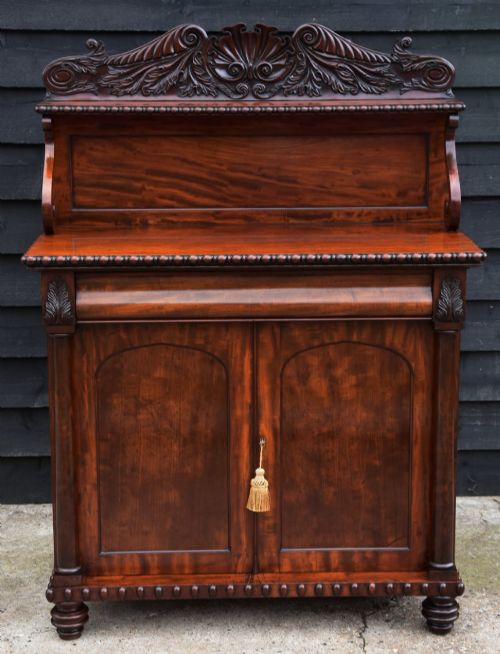
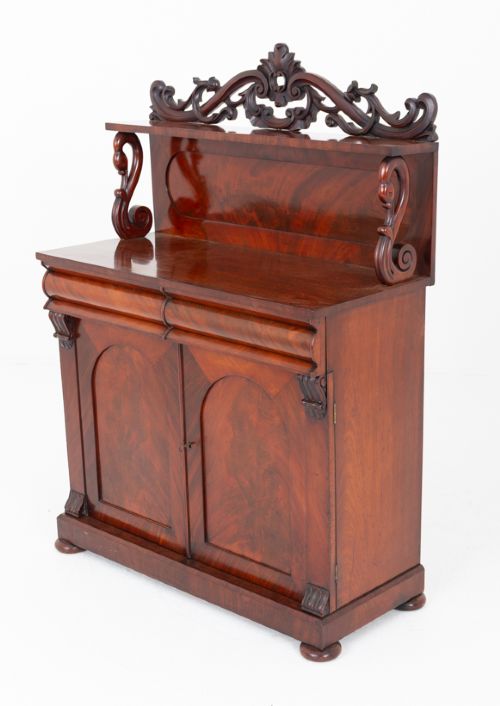
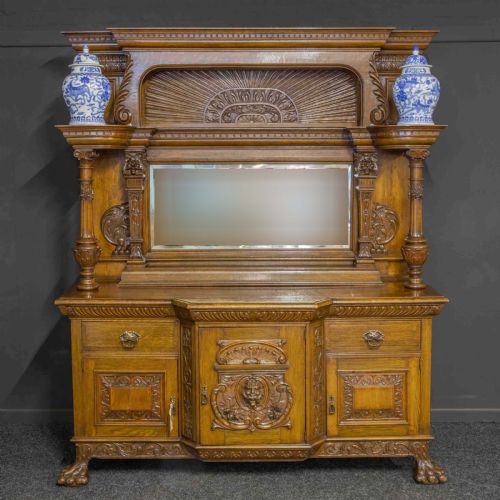
A carved backboard cabinet encompasses nineteenth-century storage forms, ranging from sideboards and side cabinets to chiffoniers. These pieces typically combine a substantial lower storage base with an upright timber backboard featuring carved detail.
Buyers browsing this selection most frequently encounter Victorian and Regency examples rendered in mahogany or oak. The forms serve primary functions in dining rooms and living spaces, anchoring the interior with period character.
How they were made
Cabinet makers constructed the primary carcases using solid timbers such as mahogany and oak, often applying flame mahogany veneer to prominent surfaces for visual depth. Brass hardware secures doors and drawers while adding metallic contrast to the dark timber.
Carved elements on the backboards demand precise hand chiselling by skilled joiners, shaping floral or linear motifs directly into the solid wood. Glass panels appear in upper doors on select cabinet forms, requiring careful rebate fitting within the timber frame.
Current selections span the nineteenth century, featuring Victorian and Regency periods executed in mahogany, oak, and glass.
What varies in quality
The sophistication of the timber selection largely determines the standing of a piece, with figured mahogany and pollard oak marking the upper tier of construction. Grain matching across multiple doors and drawer fronts reveals the care taken in the workshop.
Carving depth and sharpness separate standard production from superior cabinet work, as deeper undercut foliage signals skilled hand execution rather than mechanical shaping. The integration of the backboard to the main carcase dictates structural stability over decades of use.
The Carved Backboard Cabinet Glossary
- Backboard
- The vertical timber panel rising behind the upper surface of a sideboard or chiffonier. It frequently carries decorative carving and protects the wall from wear.
- Chiffonier
- A compact sideboard variant popular during the nineteenth century, usually featuring enclosed lower storage beneath an upper shelf supported by pillars.
- Flame mahogany veneer
- A thin slice of timber cut from where a branch joins the main tree trunk, displaying a dramatic feather-like grain pattern applied to carcase fronts.
- Pollard oak
- Timber harvested from trees that have been pruned near the trunk to encourage dense, knotty growth with distinctive circular markings.
Carved Backboard Cabinet: Frequently Asked Questions
What is a carved backboard cabinet?
These items are nineteenth-century storage furniture pieces built from timbers like mahogany and oak. They combine enclosed lower cupboards with an upright decorated backboard.
Such furniture served dining rooms and parlours for storing tableware, linens, and documents while displaying decorative objects on top.
How do I date a sideboard?
Dating relies on observing stylistic markers, timber choices, and construction methods associated with periods such as the Regency and Victorian eras. Pieces from around eighteen-twenty often display lighter Regency proportions, while eighteen-sixty examples show heavier Victorian proportions.
Reference points include the presence of flame mahogany veneer, brass fittings, and the complexity of the backboard carving.
Where should I place it?
These cabinets suit dining rooms, hallways, and spacious living rooms where their substantial depth and height can be accommodated properly. The elevated backboard requires clearance from wall art or low-hanging pendant lights.
Positioning them away from direct heat sources prevents the timber and veneer from drying out or splitting.
How do I care for mahogany?
Maintenance requires regular dusting with a dry, soft cloth and occasional application of appropriate beeswax to nourish the polished timber surface. Avoiding moisture and direct sunlight preserves the rich colour of the mahogany and flame veneer.
Gentle cleaning protects the original polish and maintains the lustre of the brass mounts over time.