




Georgian Cutlery Sideboard
A georgian cutlery sideboard brings together the functional storage of dining implements and the rich figuring of period timber.
Georgian Cutlery Sideboard
A georgian cutlery sideboard encompasses sideboards, knife boxes, and cutlery urns from the Georgian, 18th Century, and 19th Century periods. These pieces serve the dining room by housing silver and steel utensils.
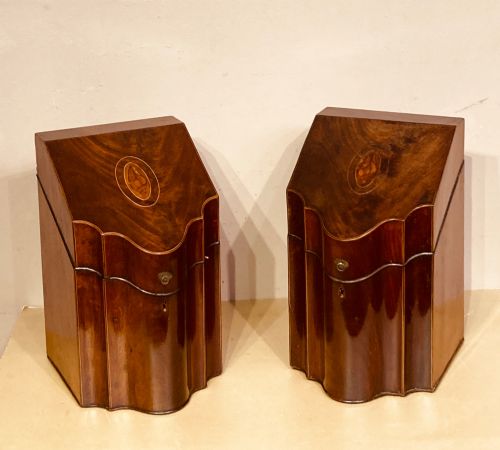
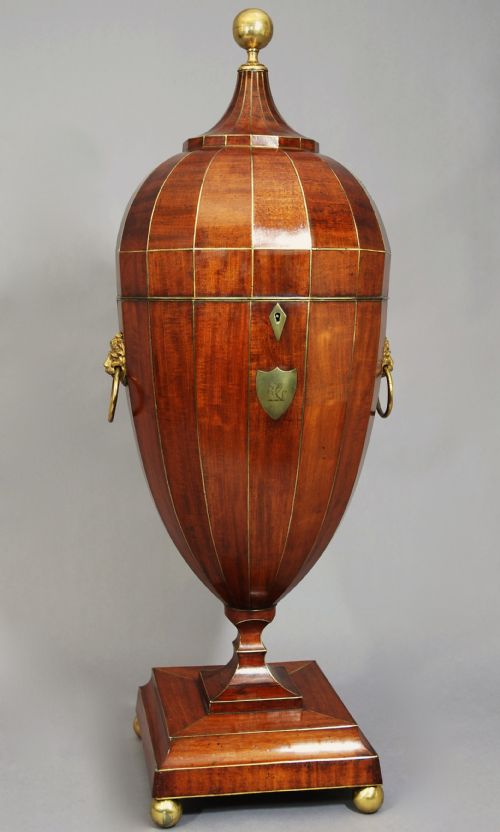
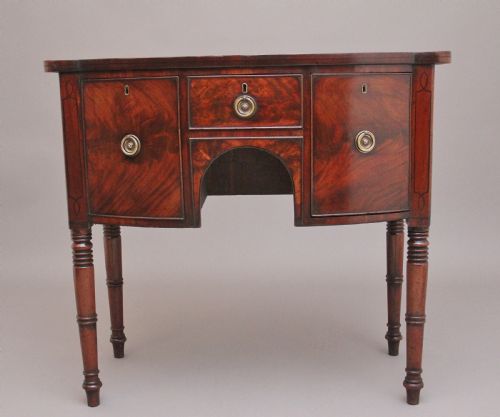
Buyers encounter bow front sideboards alongside matched pairs of knife boxes and lidded inlaid cutlery urns. The forms range from serpentine fronts to narrow proportions suited to period interiors.
Materials and construction
Constructed primarily from mahogany, these pieces utilise boxwood and satinwood inlay to create decorative contrast on fronts and lids. Solid silver mounts appear on select knife boxes.
Cabinetmakers shaped timber into curved bow fronts and serpentine outlines, incorporating fitted interiors designed specifically for holding cutlery securely.
Listings feature mahogany, walnut, and sterling silver across periods from the eighteenth century to the 1930s.
Judging quality and character
Quality rests in the figuring of the mahogany and the precision of the boxwood inlay. Superior examples display depth of patina and crispness in the carved or inlaid details.
Proportions dictate value, with narrow bow fronts and matched pairs of urns representing the finer tier of cabinetmaking from the period.
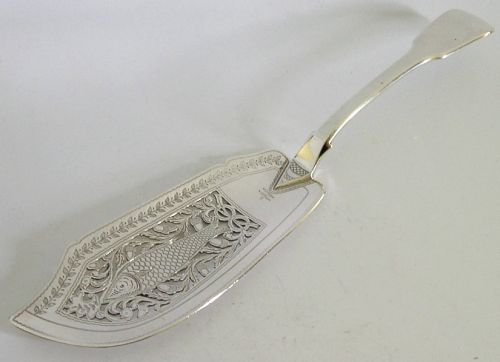
Elkington Co
The Georgian Cutlery Sideboard Glossary
- Bow front
- A cabinet front that curves outward in a convex shape. This profile softens the corners of dining room furniture.
- Serpentine front
- A furniture front curving outward at the centre and inward at the sides. It demands high skill from the cabinetmaker.
- Cutlery urn
- A vase-shaped wooden vessel designed to hold table knives on a sideboard. Lidded versions keep the steel protected.
- Boxwood inlay
- Contrasting light wood inserted into recesses in a dark timber surface. It creates geometric or floral patterns.
- Patina
- The surface sheen and mellowing developed by wood over long periods of handling and age. It signals authentic age.
Georgian Cutlery Sideboard: Frequently Asked Questions
What fits inside a knife box?
Original knife boxes feature internal wooden dividers and slotted blocks pierced to hold individual blades and handles upright. These fitted interiors kept steel and silver separate to prevent scratching.
Today, collectors use these compartments for smaller modern items or simply preserve them as historical examples of dining storage.
How do I spot a matched pair?
Matched pairs of knife boxes or cutlery urns share identical timber grain patterns, dimensions, and inlay motifs. Makers built them together to flank a sideboard or centre table in a grand dining room.
Slight variations in the brass hardware or wood colour usually indicate pieces assembled together at a later date rather than originally paired.
Where were cutlery urns placed?
Cutlery urns sat atop sideboards or dedicated pedestal tables flanking the main dining table during formal meals. Servants retrieved knives from them as each course was served.
By the nineteenth century, lower sideboard designs integrated storage drawers, and the standalone urn fell out of daily fashion.
How do I care for mahogany?
Mahogany requires stable room temperatures and protection from direct sunlight to prevent the timber and boxwood inlay from drying out. Periodic waxing maintains the natural patina without building up a heavy gloss.
Avoid placing these items near direct heat sources or damp walls to preserve the structural integrity of the curved veneers.