
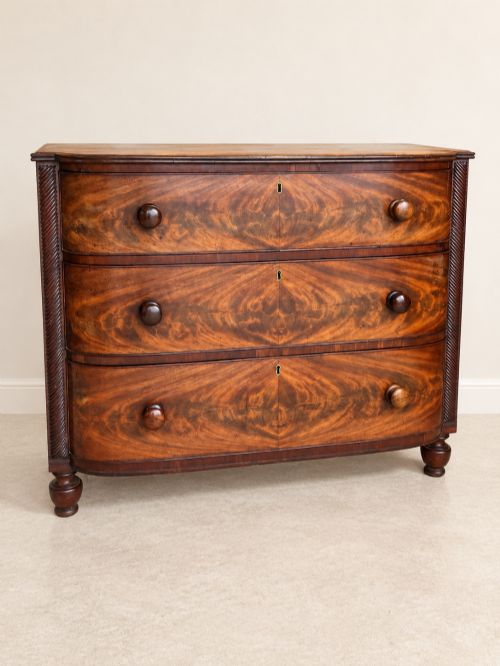
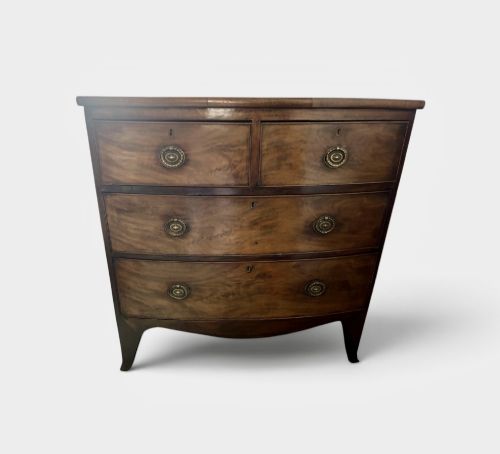

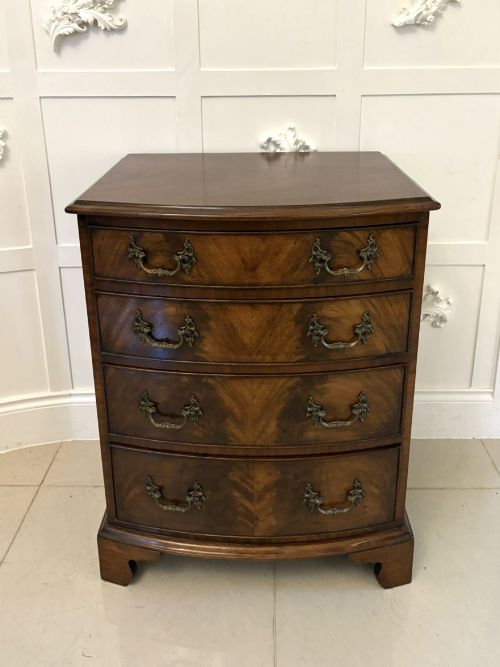
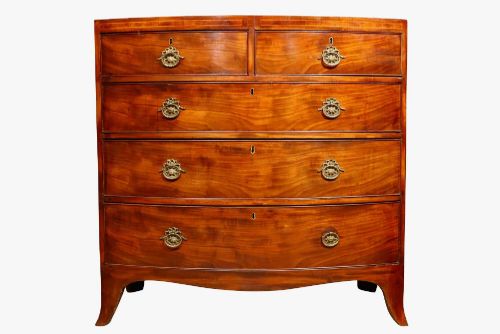
Bow Front Dresser
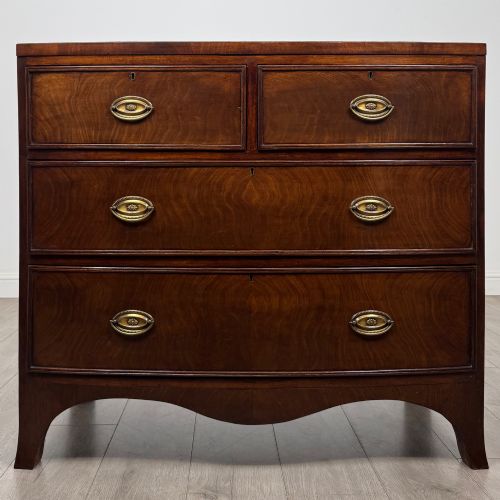
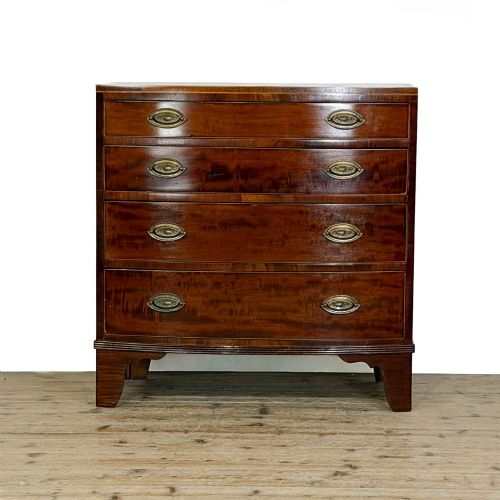
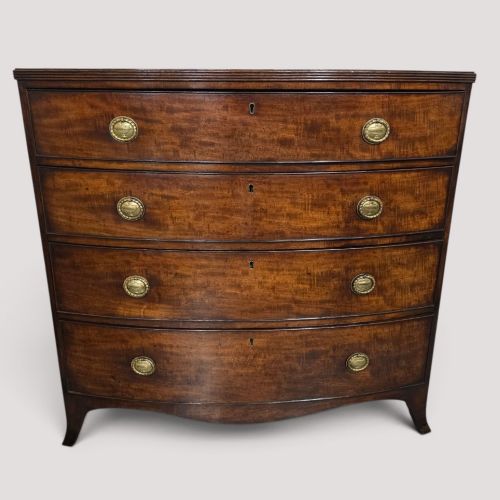
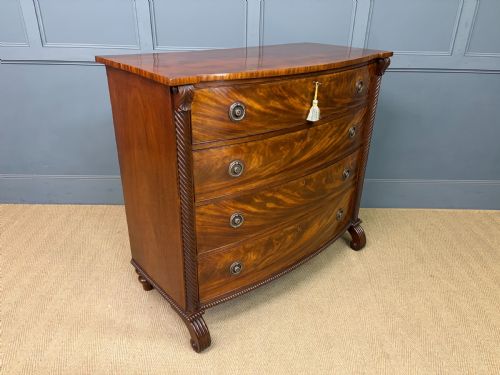
A bow front dresser brings curved elegance to a room, offering generous storage through its sweeping silhouette.
Bow Front Dresser
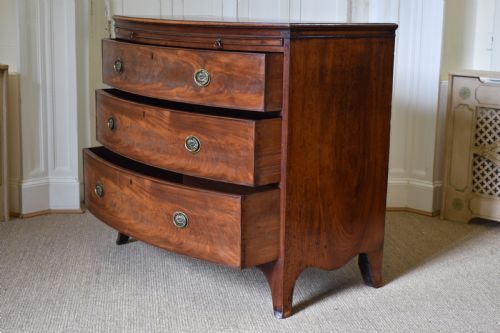
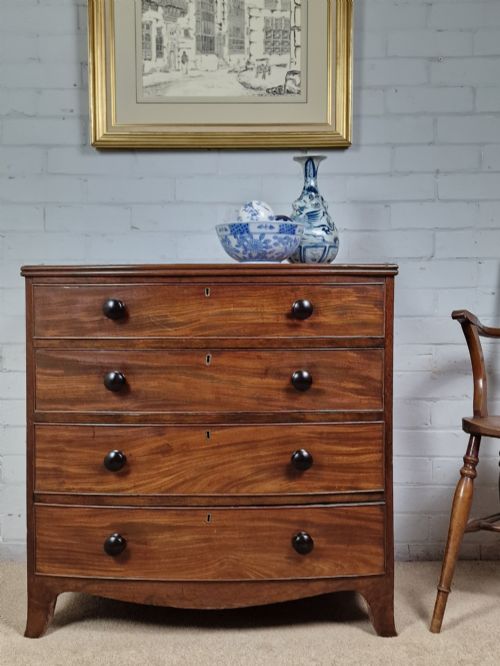
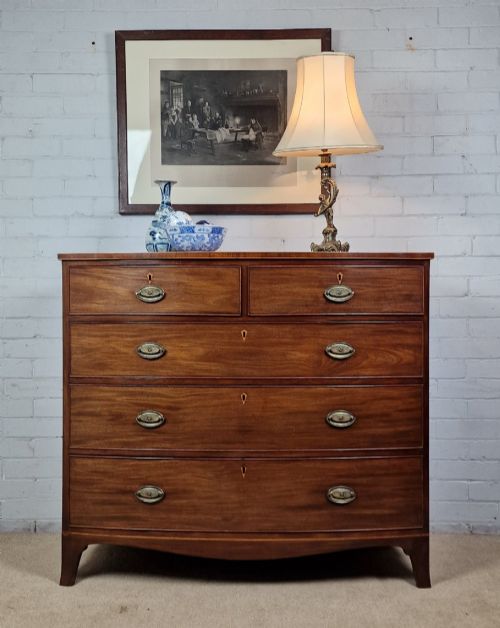
A bow front dresser combines the practical drawer space of a chest with a convex curved front that softens traditional furniture lines. The pieces available span the Georgian, Regency, Victorian, and Edwardian eras, alongside later twentieth-century interpretations.
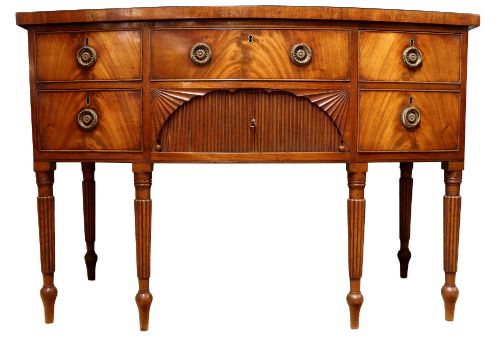
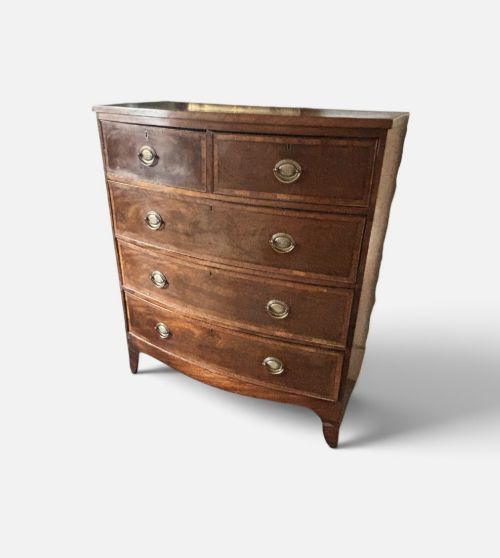
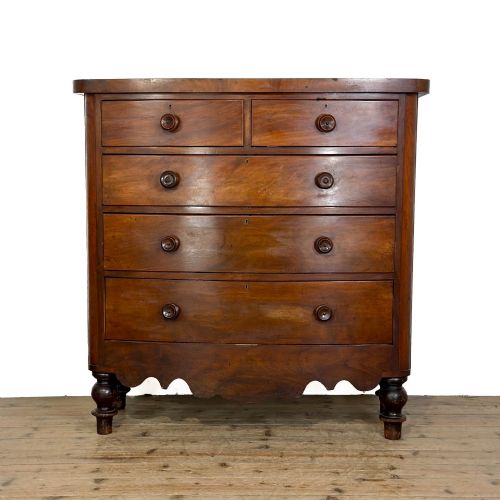
Most examples encountered here are mahogany chests of drawers, constructed with multiple graduated tiers. Sideboards and chiffonier dresser bases also appear, bringing dining room utility and varied internal layouts to the selection.
Origins range across English workshops and Scottish cabinets, showing regional preferences in timber selection and proportions. Smaller compact sizes frequently emerge, alongside larger formal pieces designed for grander reception rooms.
Timber and Construction
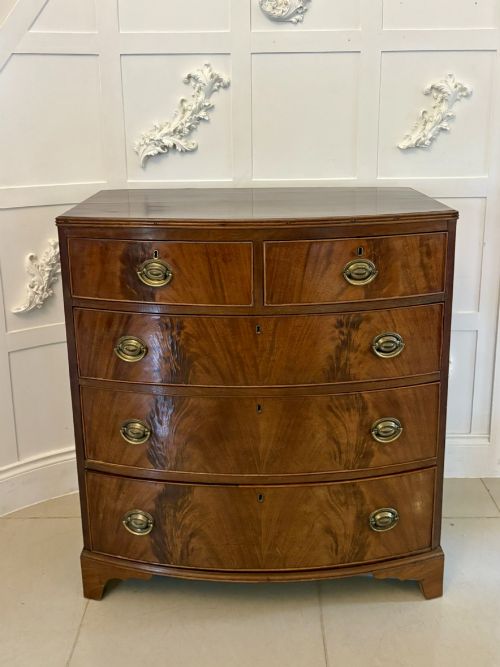
Makers relied primarily on solid mahogany and pine carcassing, enhanced with flame mahogany veneer to create striking figure patterns across the curved drawer fronts. Satinwood crossbanding and walnut frequently provide contrasting borders and decorative detail.
Constructing a successful curved front required precise carpentry, particularly when joining drawer sides to curved rails and shaping solid brass hardware to fit the convex contours.
Certain Welsh workshops concealed secret drawers within the upper mouldings, offering a hidden space for family valuables.
Assessing Quality and Finish
Superior examples display careful timber selection, where flame veneer grain matches continuously across multiple drawer fronts rather than appearing mismatched. Fine patination develops naturally over centuries on better pieces, showing deep warmth in the polished mahogany.
Drawer construction dictates overall standard, with hand-cut dovetails and secret compartments marking out workshop production above standard output. The crispness of satinwood stringing and the retention of original brass handles further separate standard items from finer works.
Maple and Co
The Bow Front Dresser Glossary
- Crossbanding
- A narrow strip of veneer laid perpendicularly to the surrounding grain, often in satinwood to frame mahogany drawer fronts.
- Flame Mahogany
- Timber cut from the fork of the mahogany tree, producing a distinctive flickering flame pattern used on high-grade drawer faces.
- Graduated Drawers
- A set of drawers decreasing in depth from bottom to top, creating balanced visual proportions on a chest.
- Secret Drawer
- A concealed compartment built into the upper section of a chest, accessed by removing a concealing panel or moulding.
- Patina
- The surface sheen and softening of colour developed through age, handling, and polishing over generations.
Bow Front Dresser: Frequently Asked Questions
What is a bow front dresser?
A bow front dresser is a storage piece featuring a convex curved front, most commonly built as a chest of drawers or sideboard.
These pieces emerged during the Georgian period and remained popular through the Regency and Victorian eras.
How do I spot a Georgian piece?
Georgian pieces display hand-cut dovetails, oak or pine secondary woods, and proportions that prioritise elegance over heavy ornamentation.
Timber choice often includes figured mahogany with subtle satinwood stringing rather than later machine veneers.
Where should I place one?
Their curved profile makes them suitable for hallways, living rooms, and bedrooms where sharp corners would obstruct movement.
The shallow sides and deeper centre allow them to sit flush against walls while offering deep central storage.
Are these pieces made of solid mahogany?
Most pieces combine solid mahogany frames with fine mahogany veneers applied to secondary woods like pine or oak.
This technique prevented the curved drawer fronts from warping while presenting a decorative outer grain.