
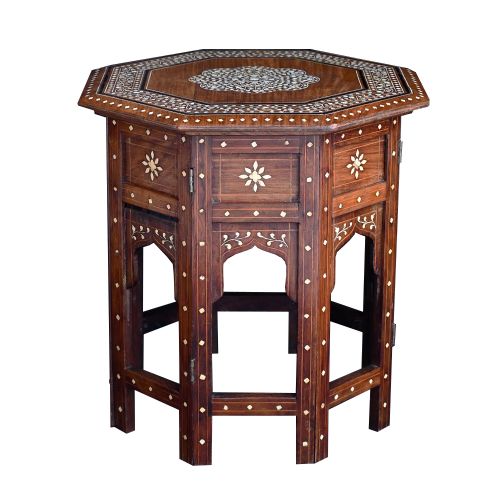
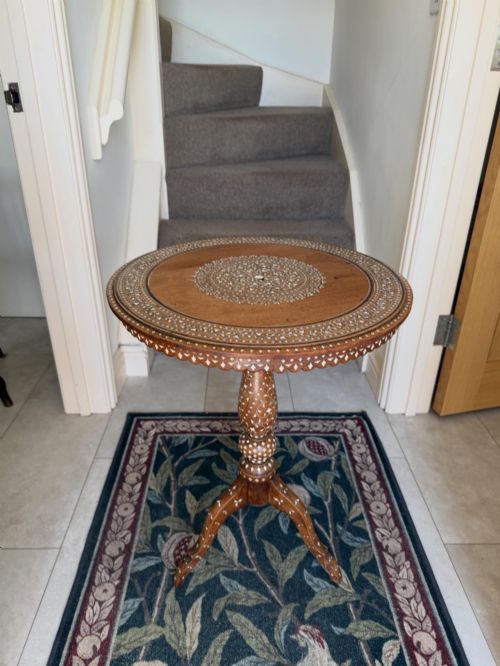
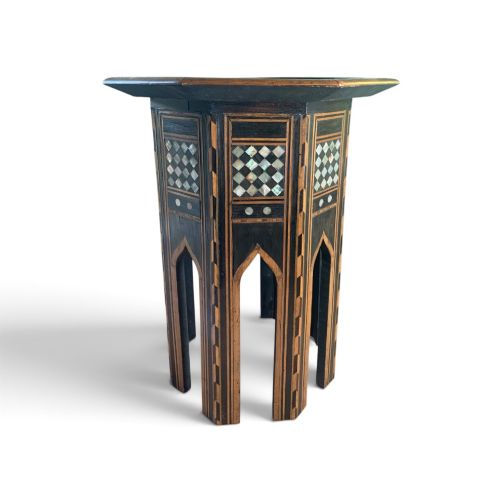
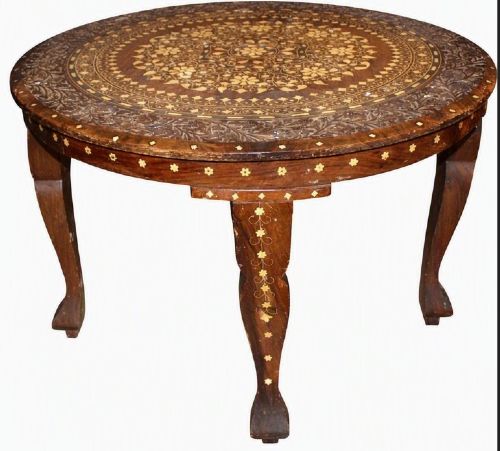

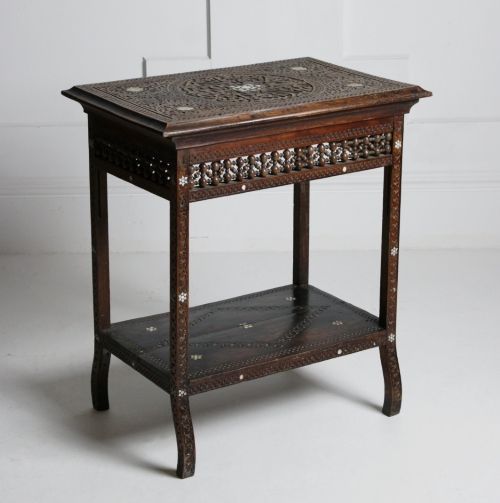
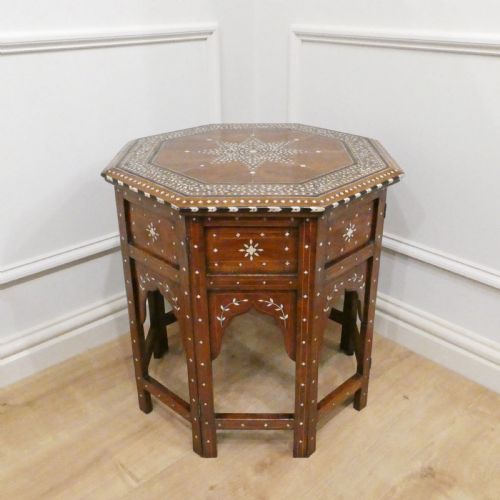
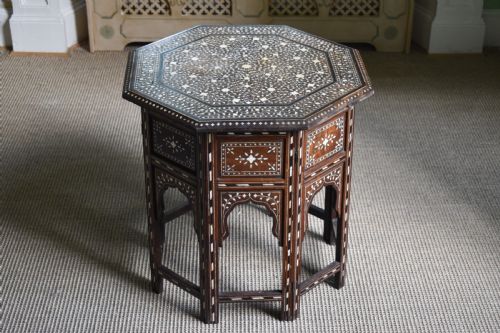
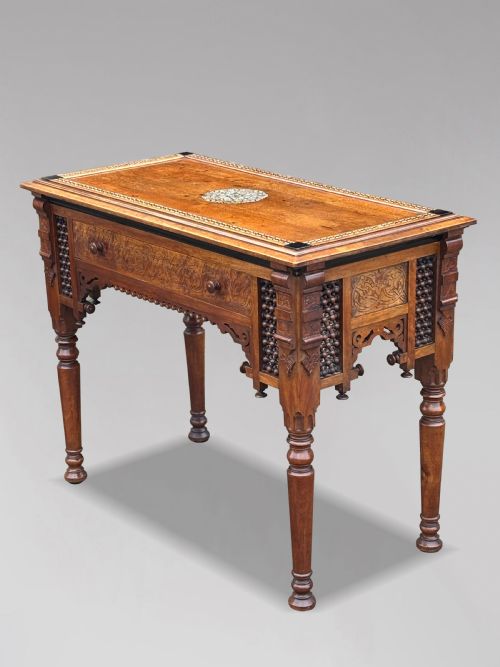
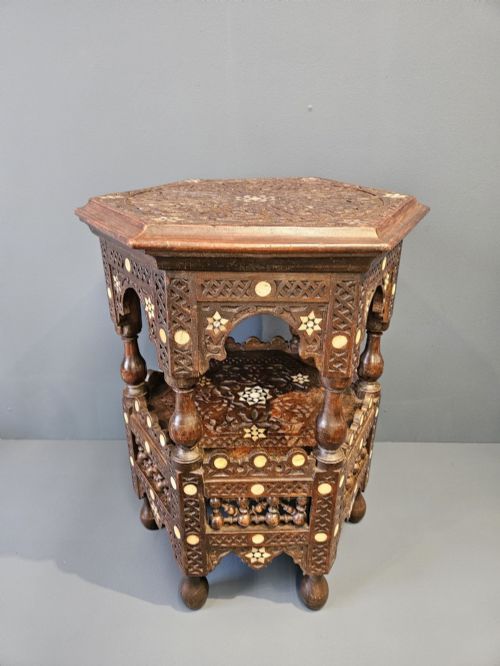


Bone Inlay Occasional Table
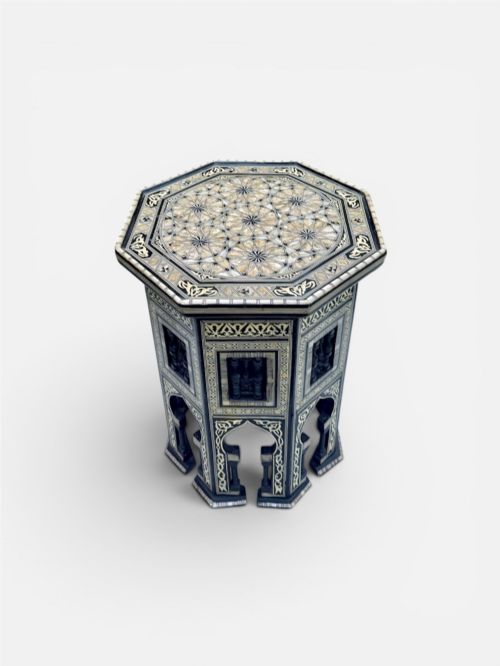
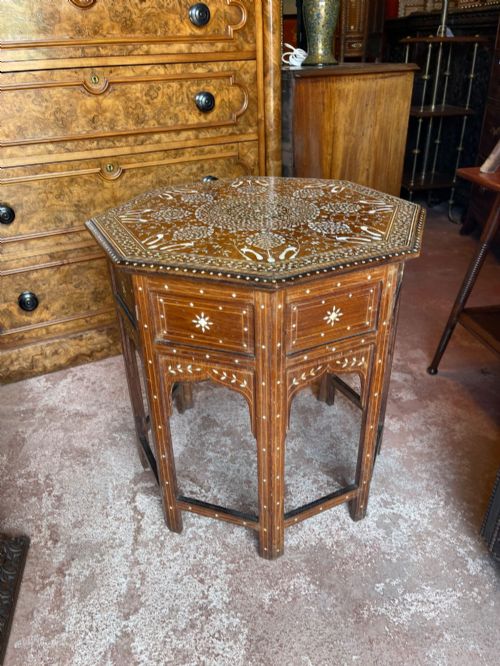
A bone inlay occasional table brings intricate craftsmanship and geometric pattern into a room, serving as a striking accent piece.
Bone Inlay Occasional Table
When you search for a bone inlay occasional table, you encounter pieces originating primarily from the nineteenth and early twentieth centuries, spanning periods such as the Victorian era, 1890, 1900, 1910, 1920, and 1930. These items function practically as side tables, lamp tables, or plant stands while displaying complex decorative surfaces.
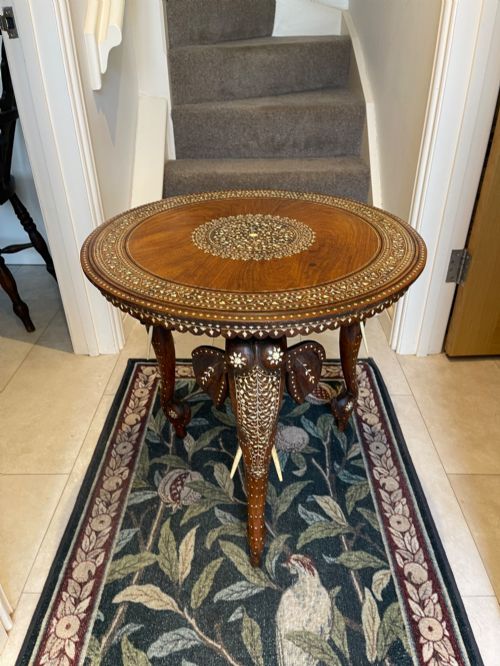
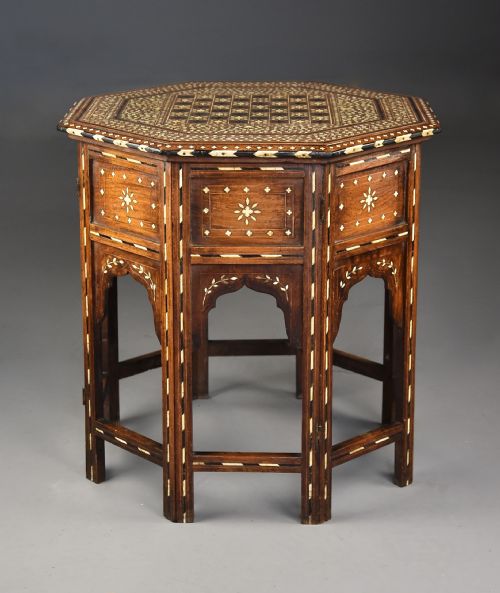
The versions you are most likely to meet on this page include octagonal forms, folding tables, pedestal designs, and specific regional styles such as Anglo-Indian Hoshiarpur work, Moorish Revival, Syrian, and Ottoman pieces. Forms range from compact lamp tables to larger statement pieces featuring carved elephants or complex star shapes.
Materials and construction
Artisans built the framework using dense timbers such as teak, rosewood, hardwood, walnut, sandalwood, padauk, and sheesham wood. Into these wooden bases, they set small, precisely shaped fragments of bone and mother-of-pearl to create elaborate geometric or floral surface designs.
Many examples incorporate detailed wood carving alongside the inlay work, utilising folding mechanisms or multi-tiered structures. Some pieces combine the bone and pearl elements with brass wire work or contrasting dark woods to accentuate the intricate patterns.
Listings feature periods from the Victorian era through the 1930s, alongside materials like bone, teak, rosewood, and mother-of-pearl.
Distinctions in quality
The standard of a bone inlay occasional table is determined by the density and precision of the inlay work and the crispness of the surrounding wood carving. Finer examples display tightly fitted bone segments with minimal filler, maintaining sharp geometric alignment across octagonal or complex multi-sided surfaces.
Another factor is the choice of underlying timber and the overall structural integrity of the piece, particularly in folding tables and pedestal supports. Pieces produced by established retailers or specific workshops often demonstrate superior joinery and more ambitious decorative schemes.
Liberty Co
The Bone Inlay Occasional Table Glossary
- Hoshiarpur
- A style of woodwork and inlay originating from the Punjab region of India, known for dense floral carving and intricate bone work. These pieces often feature octagonal or folding configurations.
- Moorish Revival
- An architectural and decorative style popular in the nineteenth century that incorporates Islamic design motifs, horseshoe arches, and geometric inlay patterns into domestic furniture.
- Octagonal
- Having eight sides. This geometric form is frequently utilised for the tops of side tables and occasional stands in Anglo-Indian and Middle Eastern furniture design.
- Etagere
- A piece of furniture consisting of a set of open shelves for displaying small objects. These tables often incorporate multiple tiers for practical display use.
Bone Inlay Occasional Table: Frequently Asked Questions
How were bone inlay tables used historically?
These tables served as decorative accent pieces in nineteenth and early twentieth-century interiors, holding lamps, plants, or small ornaments. Their portable nature, particularly the folding variants, allowed them to be moved easily between rooms.
Today, they function well in similar roles as eclectic side tables that add texture and historic character to contemporary living spaces.
How do I identify a Hoshiarpur table?
Hoshiarpur tables are characterised by dense, all-over wood carving combined with intricate bone inlay, often rendered in geometric or floral motifs. They frequently appear in octagonal shapes or as clever folding tables designed for compact storage.
Examining the woodwork reveals detailed chisel work across the entire surface of the timber frame, distinguishing them from simpler inlaid furniture.
What woods are commonly found beneath the inlay?
Artisans utilised a variety of dense regional and imported timbers, including teak, sheesham wood, sandalwood, rosewood, and walnut. The choice of wood often relates to the region of manufacture, with denser hardwoods providing a stable base for the intricate bone and mother-of-pearl segments.
Darker woods were frequently selected to create a strong visual contrast against the pale, creamy tones of the bone inlay.
Are these tables sturdy enough for daily use?
Most occasional tables from this era are structurally sound for light daily duties such as holding a cup, a book, or a table lamp. However, their intricate carved surfaces and delicate inlay require thoughtful placement away from excessive moisture or direct heat sources.
Folding versions should be opened and closed with care to preserve the original hinges and surrounding wooden joints.