
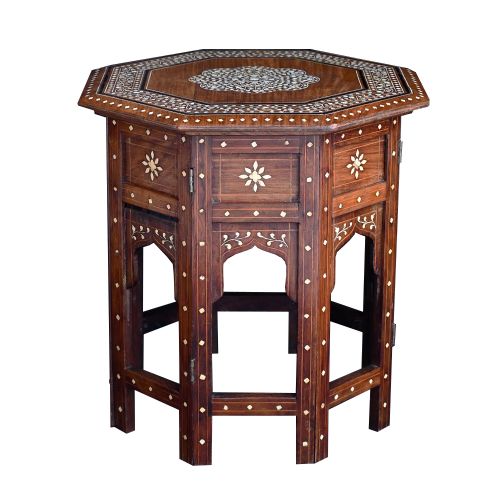
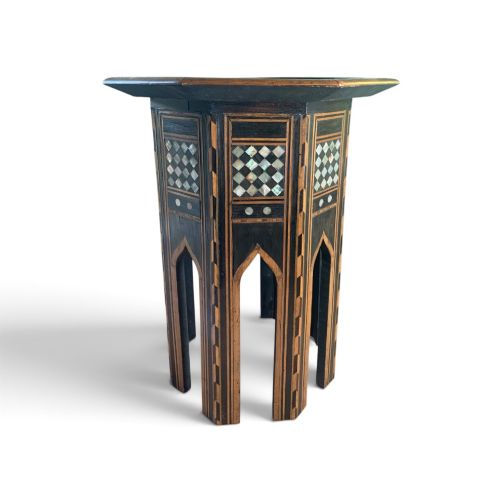
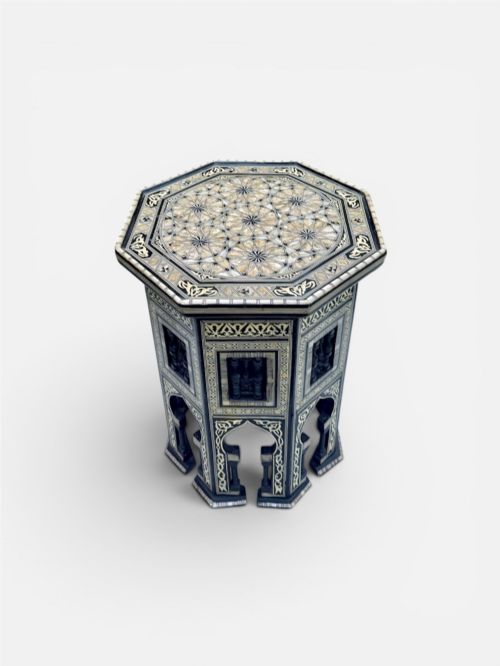
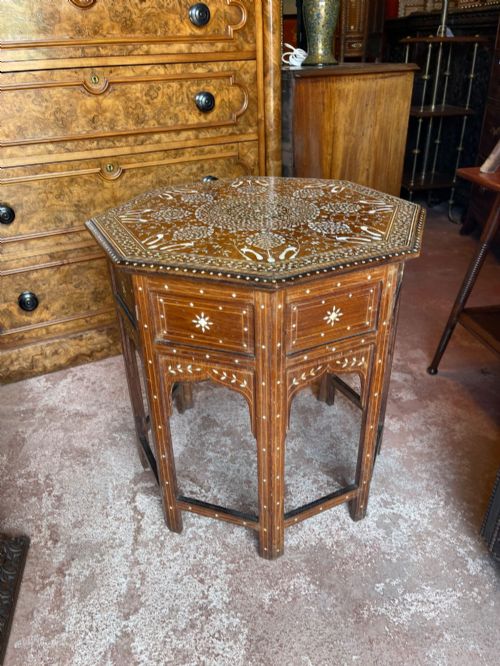



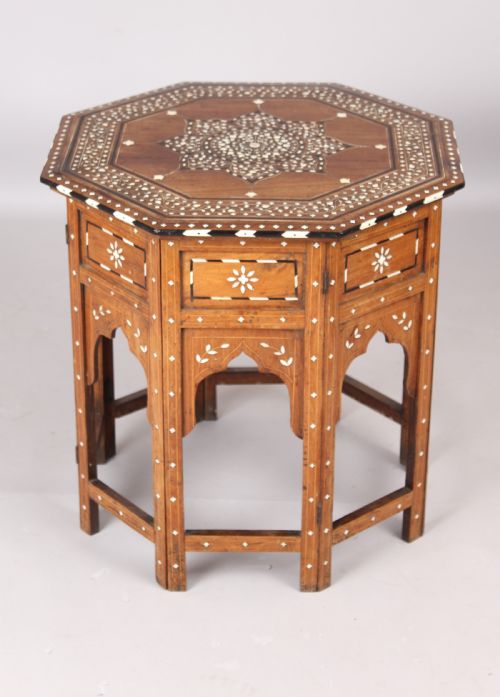


Bone Inlaid Octagonal Table
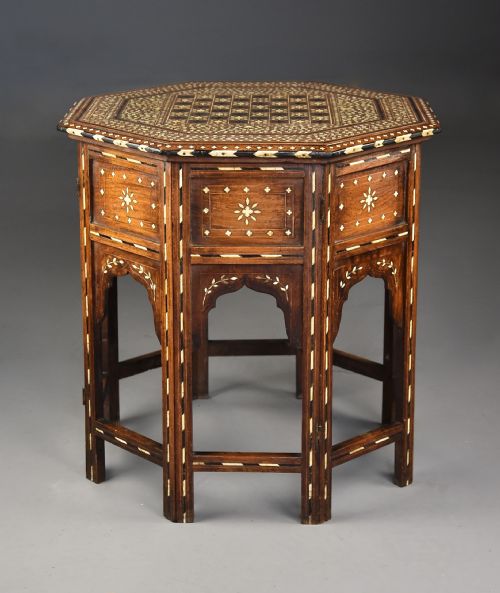
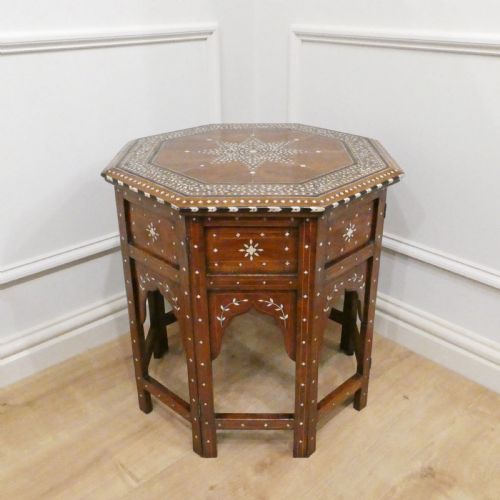
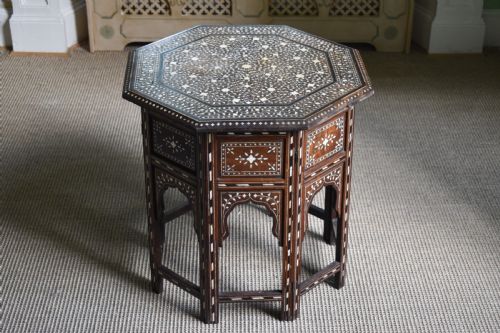
A bone inlaid octagonal table brings intricate geometry and historic craftsmanship to a room.
Bone Inlaid Octagonal Table
A bone inlaid octagonal table is a distinctive eight-sided item typically used as an occasional, side, coffee, or lamp table. These pieces emerge predominantly from nineteenth-century and early twentieth-century workshops, spanning periods from the Victorian era to the nineteen-thirties.
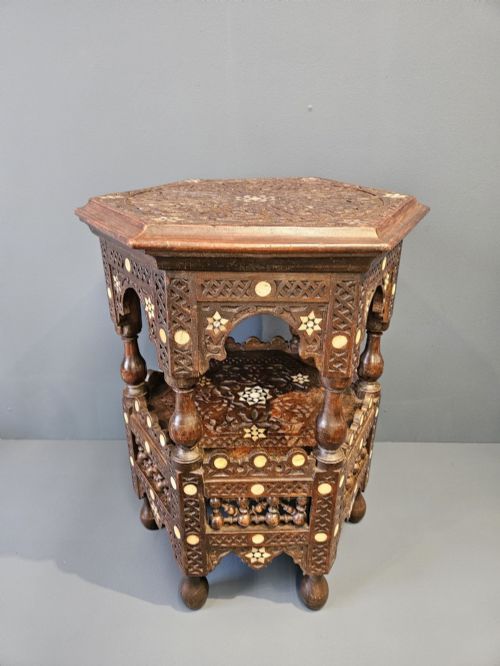
The items seen on this page largely originate from Anglo-Indian production centres, particularly Hoshiarpur in northern India, alongside Moorish Revival and Syrian styles. Buyers most frequently encounter folding or rigid occasional tables constructed with multi-sided tops and intricate geometric forms.
Makers utilised various regional furniture types, including chess tables and small folding stands. These surfaces serve practical functions while introducing elaborate decorative traditions into domestic interiors.
Materials and Techniques
Artisans constructed these tables using a foundation of dense timbers such as rosewood, teak, shisham wood, sandalwood, padauk, and ebonised hardwood. They then hand-carved intricate floral and geometric patterns directly into the wooden framework.
Workers shaped fragments of animal bone and mother-of-pearl into minute geometric tesserae, pressing and gluing them tightly into recessed channels within the wood. Ebony stringing often frames these bone sections to accentuate the contrasting light and dark surfaces.
Several portable examples fold completely flat like giant wooden books, designed for Victorian travellers who refused to sacrifice interior decor.
Quality Variations
Quality rests in the density and precision of the surface decoration, where superior examples exhibit dense, unbroken geometric arrays covering nearly every square inch of wood. Lesser pieces display sparse inlay patterns with wider expanses of plain timber.
The refinement of the underlying woodwork dictates the standard of the piece, distinguishing finely turned folding mechanisms and crisp, deep carving from simpler, coarser construction. The choice of base wood also marks distinction, with fragrant sandalwood and richly grained rosewood sitting above basic utility hardwoods.
Liberty And Co
The Bone Inlaid Octagonal Table Glossary
- Hoshiarpur
- A city in Punjab, northern India, renowned historically for its intricate wood-carving and bone-inlay furniture production. Pieces from this centre often feature dense foliar and geometric motifs.
- Octagonal
- Having eight sides and eight angles. This geometric form defines the shape of the table tops found across these listings.
- Shisham
- A durable Indian rosewood species commonly used as the primary timber frame for inlaid tables. Its dark grain provides a strong visual contrast to white bone inlay.
- Mother-of-Pearl
- The iridescent inner layer of mollusc shells. Artisans inset these shimmering fragments alongside bone to create highlights within the decorative schemes.
Bone Inlaid Octagonal Table: Frequently Asked Questions
How were these tables used originally?
These pieces functioned primarily as occasional, coffee, or lamp tables within nineteenth-century drawing rooms and reception spaces. Many folding variants allowed owners to pack them away easily when not in daily use.
Their sturdy eight-sided surfaces also accommodated board games like chess, making them versatile furniture items for entertaining guests.
How do I care for bone inlay?
Maintain these surfaces by dusting gently with a dry, soft cloth to prevent particulate buildup within the recessed joints. Avoid exposing the timber and bone to direct sunlight or sudden humidity changes.
Applying occasional light wax keeps the wooden frame nourished without harming the delicate bone and mother-of-pearl segments.
What defines Anglo-Indian style?
Anglo-Indian design blends traditional British furniture forms with indigenous Indian carving and inlay techniques. British patrons and manufacturers commissioned these items during the nineteenth century for export.
The resulting pieces merge familiar European table shapes with intricate Eastern ornamentation and dense botanical motifs.
How do I distinguish regional styles?
Hoshiarpur pieces generally feature dense floral and geometric bone inlay set into shisham or sandalwood. Moorish Revival and Syrian items often incorporate mother-of-pearl alongside bone within arch-patterned or heavily carved frameworks.
Examining the primary wood species and the specific layout of the mosaic work helps clarify the geographical origin.