






Bombe Marquetry Bureau
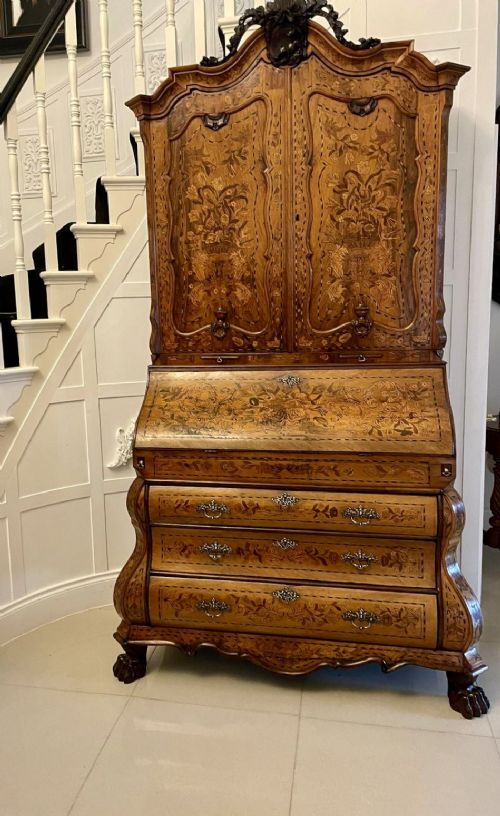
A bombe marquetry bureau brings together sweeping, swollen curves and intricate floral inlay, offering a commanding workspace rooted in eighteenth-century continental cabinet-making.
Bombe Marquetry Bureau
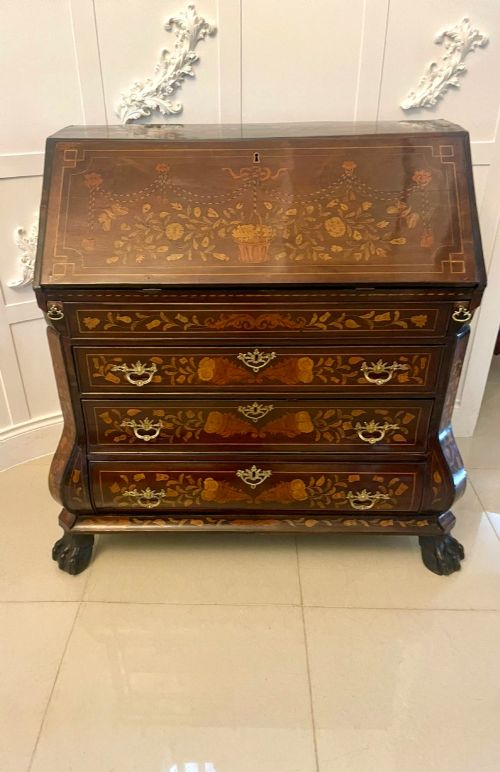
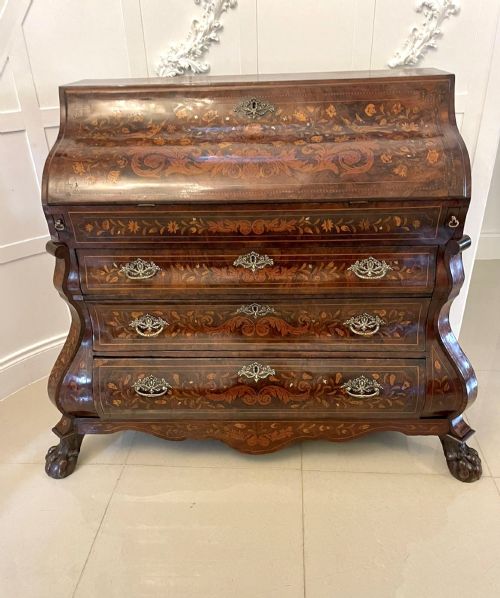
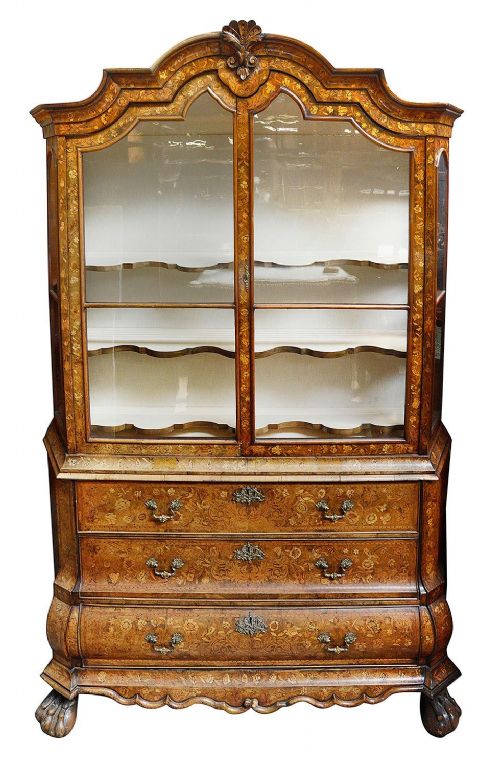
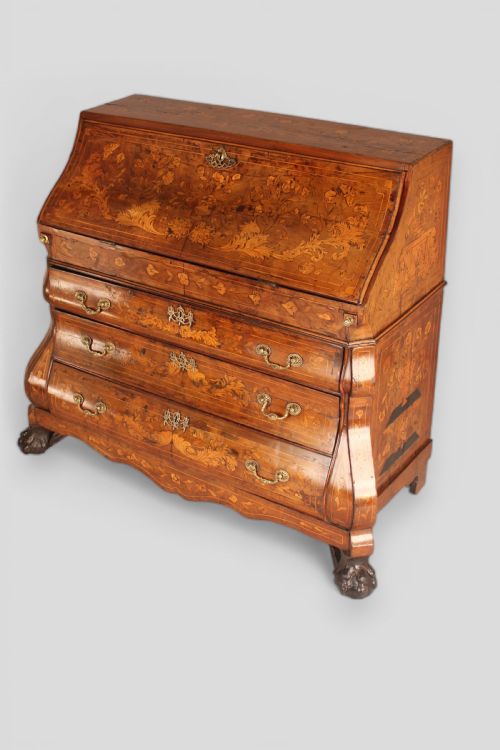
When you search for a bombe marquetry bureau, you encounter substantial writing furniture defined by swelling, convex front and side profiles paired with elaborate wood-inlaid floral patterns. These pieces trace their origins primarily to eighteenth-century Dutch workshops, where cabinet-makers mastered the challenging bulging form alongside revival periods in the nineteenth and early twentieth centuries.
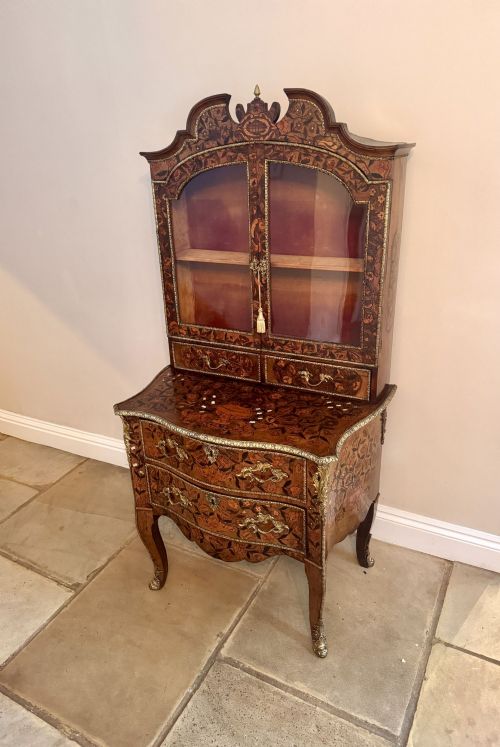
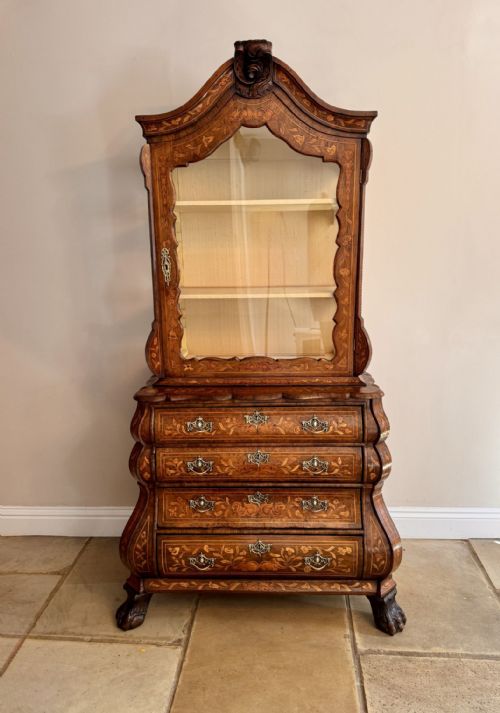
The most common examples you meet on this page are walnut and burr walnut desks featuring detailed fruitwood inlay depicting urns, flowers, and foliage. Alongside standard drop-front writing desks, you occasionally encounter grander bureau bookcases, vitrines, and display cabinets sharing the same pronounced serpentine shaping.
While many examples date firmly to the seventeen-hundreds and the Georgian era, later nineteenth-century revival pieces and nineteen-twenties interpretations also appear. Each variation retains the characteristic sloping fall-front desk lid that conceals an interior arrangement of small drawers and pigeonholes.
What varies in quality
The distinction between ordinary and exceptional pieces rests upon the ambition of the timber selection and the precision of the cabinet work. Highly figured burr walnut veneers and dense, multi-toned fruitwood inlay covering the sides as well as the front indicate superior workshop output.
Proportion and the execution of the swollen bombe profile dictate visual success, where gentler, balanced curves outclass clumsy shaping. The complexity of the interior fitments, including secret compartments and shaped pigeonholes, further separates standard writing desks from exhibition-grade examples.
Bombe Marquetry Bureau Retail Price Guide 2026
Typical asking prices for bombe marquetry bureau among the pieces listed under this phrase on Sellingantiques today, from the lower quarter to the upper quarter. They describe what is for sale here now, not the wider market.
Recorded periods span the Georgian era and the eighteenth, nineteenth, and early twentieth centuries.
Morison of Edinburgh
The Bombe Marquetry Bureau Glossary
- Bombe
- A French term describing furniture with outward-swelling, convex fronts and sides. This bulging contour demands advanced woodworking skill to construct successfully.
- Marquetry
- The art of forming decorative patterns by fitting together thin slices of various coloured woods, veneers, and occasionally bone or ivory.
- Burr Walnut
- Timber taken from a walnut tree outgrowth or burl, prized for its highly twisted, swirling grain patterns that create rich visual depth.
- Bureau
- A sloping-lidded desk used for writing, typically enclosing a fitted interior of small drawers and pigeonholes above a set of larger lower drawers.
- Vitrine
- A glass-fronted cabinet designed for the display of fine porcelain, curiosities, and decorative objects.
Bombe Marquetry Bureau: Frequently Asked Questions
What is a bombe bureau?
A bombe bureau is a writing desk characterised by its swollen, convex curved front and sides, combining a sloping fall-front workspace with storage drawers below.
These pieces often feature elaborate floral wood inlay and stand as substantial statements of eighteenth-century and revival cabinet-making.
How do I use a bureau desk?
The sloping front lid hinges downwards to rest on supporting wooden lopers, creating a sturdy flat surface for writing and correspondence.
Inside, small compartments and drawers provide dedicated storage for writing materials, letters, and personal documents.
Where were these bureaus made?
The majority of these pieces originate from Dutch workshops spanning the eighteenth and nineteenth centuries, though French and Italian variations also exist.
Dutch cabinet-makers became particularly renowned for combining the difficult bombe shape with intricate floral marquetry inlay.
How do I live with a bureau?
Position your bureau in a principal room where its curving silhouette and detailed wood inlay can be admired from multiple angles.
Keep the piece away from direct sunlight and strong heat sources to protect the delicate fruitwood veneers and prevent timber movement.