
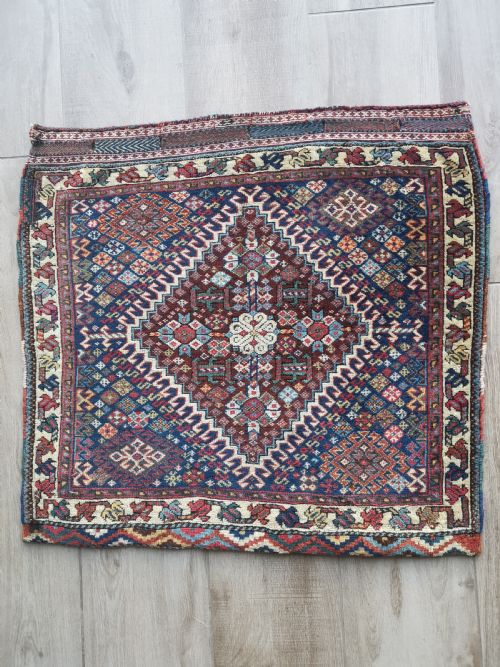
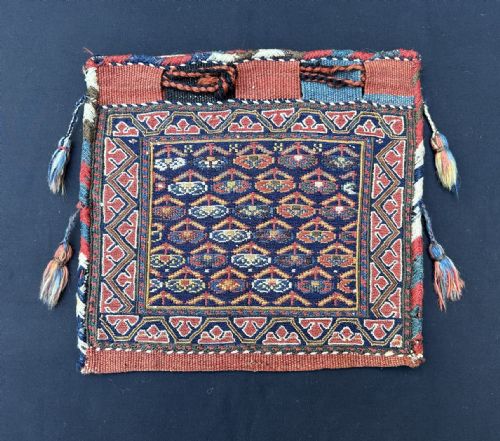
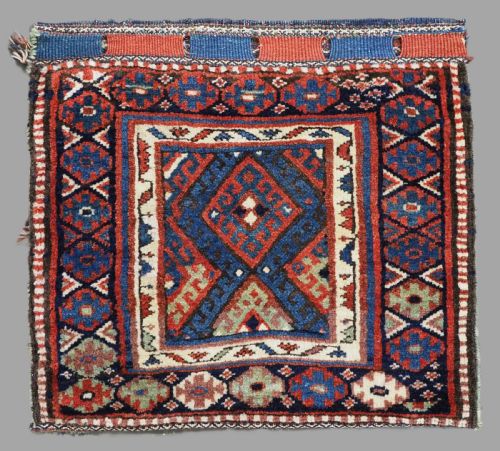


Blue Wool Saddlebag Face
A blue wool saddlebag face is a woven tribal textile fragment built for utility and patterned with regional tribal designs.
Blue Wool Saddlebag Face
A blue wool saddlebag face represents the front panel of a traditional nomadic storage bag, woven to carry possessions on pack animals. These pieces originate from various tribal groups including the Qashqai, Shahsavan, Afshar, and Kurdish weavers across Persia and Central Asia.
Collectors encounter individual bag faces as well as surviving halves and complete examples retaining plain weave backs. Dating spans from the mid-nineteenth century through to the early twentieth century.
The format typically presents square or rectangular proportions featuring central medallions, boteh motifs, or banded designs. These textiles reflect the distinct nomadic weaving traditions of their specific regions.
How they were made
Weavers utilised hand-spun wool combined with natural dyes to create durable structures intended for daily nomadic life. Cotton and sumac or soumac techniques also appear alongside standard hand-knotted pile construction.
The construction balances resilience with decorative expression, incorporating techniques like banded weft work and flatweave backs. Artisans sourced local materials to produce lustrous pile surfaces designed to withstand rigorous handling.
Listings feature pieces from the nineteenth and early twentieth centuries, spanning the 1850s to the 1930s.
What varies in quality
Quality rests upon the fineness of the weave and the clarity of the tribal motifs. Superior examples display exceptional wool quality and precise geometric or figurative drawing within the design.
The depth and brilliance of the natural dye palette also distinguish finer pieces. Surviving structural integrity, such as complete borders and intact pile, further elevates an individual textile.
The Blue Wool Saddlebag Face Glossary
- Khorjin
- A traditional double-sided saddlebag used by nomadic groups for transport and storage. These bags were often separated over time into individual faces.
- Sumac
- A warp-wrapping flatweave technique that creates a durable, textured surface without pile. It appears frequently on Shahsavan tribal weavings.
- Boteh
- An almond-shaped or paisley motif representing a floral shoot or cypress tree. This symbol occurs often in Afshar and Persian tribal designs.
- Bag face
- The decorative front panel of a utilitarian storage bag preserved independently after the back section wore away or was cut.
- Hand-spun wool
- Yarn spun manually by nomadic craftspeople, resulting in variable thickness and high lanolin content that absorbs natural dyes richly.
Blue Wool Saddlebag Face: Frequently Asked Questions
What is a blue wool saddlebag face?
A blue wool saddlebag face is the decorative front panel of a nomadic pack bag, woven by tribal groups in regions such as Persia and Central Asia. These textiles served practical transport functions while displaying distinct cultural patterns.
Over time, many double saddlebags were divided into single panels. Today, collectors preserve these surviving textile fragments as independent works of tribal art.
How were these bags used originally?
Nomadic tribes utilised these bags strapped across pack animals to transport personal belongings, household goods, and provisions during seasonal migrations. The robust construction protected contents from weather and friction.
Once settled or when the bags wore out, families often separated the decorative faces from the plain backs. The remaining panels survived as durable textile examples of nomadic craftsmanship.
How do you date a tribal bag face?
Dating relies on assessing material characteristics like hand-spun wool and natural dye palettes, alongside structural construction techniques. Pieces from the nineteenth century often exhibit specific regional motifs and softer dye maturity.
Comparing structural details against documented tribal groups helps narrow the period of origin. Stylistic evolution within specific weaving traditions provides further chronological markers.
How should I display a bag face?
These textile fragments mount well on stretched backing fabrics or specialist conservation supports for wall display. Proper mounting distributes the weight evenly across the structure.
Keep displayed pieces out of direct sunlight to protect natural dyes from fading. Gentle vacuuming through a mesh screen helps maintain the wool pile.