



Persian Khorjin Rug Panel
These persian khorjin rug panel pieces are historic woven fragments of nomadic saddlebags, prized for their dense geometric wool work and authentic tribal character.
Persian Khorjin Rug Panel
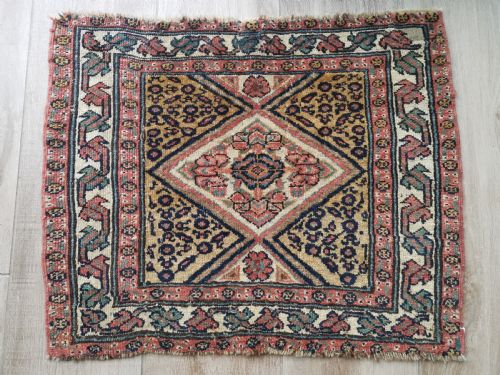
A persian khorjin rug panel represents the surviving face of a nomadic horse or camel storage bag, woven to carry personal possessions across the terrain of Persia. When you search for this phrase, you encounter authentic fragments and complete bagfaces originating from tribal groups such as the Qashqai, Shahsavan, Kurdish, and Afshar communities.
The examples gathered here span the nineteenth and early twentieth centuries, bringing together distinct regional aesthetics from southern and northwestern Persia. Most pieces on this page take the form of square or rectangular bag faces rather than full utilitarian sacks, preserving the most intricate decorative weaving for display.
Tribal weavers utilised durable wool foundations and hand-spun pile to create these practical textiles, which double as striking pieces of folk art. Collectors prize them for their unpretentious origins and the direct connection they offer to nomadic lifestyles of the past.
Materials and construction
The structure relies on sturdy hand-spun wool and cotton foundations, providing the heavy tensile strength required for nomadic daily use and transport. Weavers deployed rich natural dyes to colour the wool, yielding deep reds, indigos, and earth tones that mature gracefully over generations.
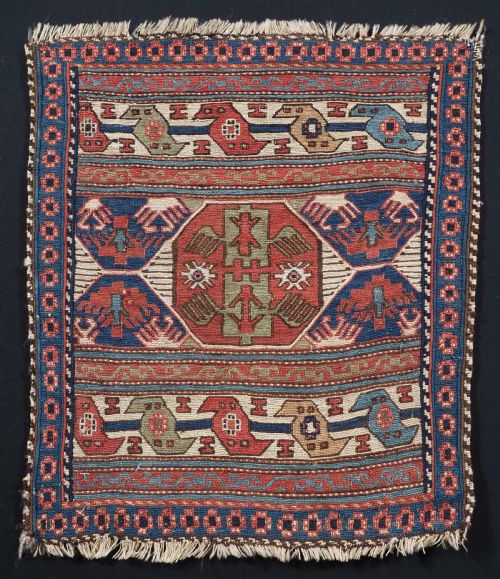
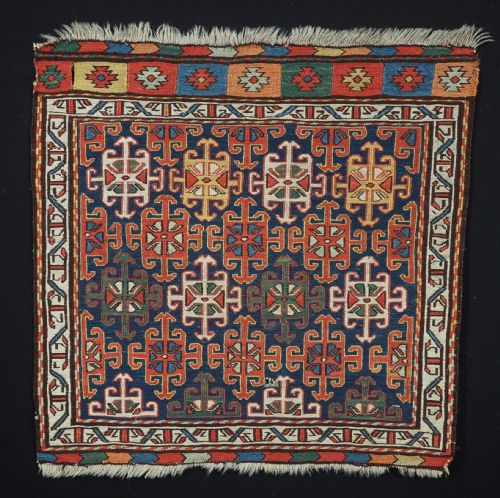
Techniques range from traditional pile knotting to flatwoven soumak work, particularly evident in the detailed panels produced by Shahsavan weavers. This combination of structural weave and surface texture accounts for the remarkable physical survival of these fragments.
Persian Khorjin Rug Panel Retail Price Guide 2026
Typical asking prices for persian khorjin rug panel among the pieces listed under this phrase on Sellingantiques today, from the lower quarter to the upper quarter. They describe what is for sale here now, not the wider market.
Current listings feature pieces dated from the mid-nineteenth century through the early twentieth century, utilising hand-spun wool and natural dyes across tribal regions.
Assessing quality and character
The distinction between ordinary and exceptional work lies in the handle of the wool and the precision of the tribal motifs. Superior pieces demonstrate a mastery of natural dye palettes, where colour variation adds depth rather than distraction.
The density of the weave and the complexity of the iconography - such as animal forms, birds, and stylized dragons - elevate certain bagfaces above standard domestic utility work. Preservation of the original borders and complete design fields further marks out the more accomplished survivals.
The Persian Khorjin Rug Panel Glossary
- Khorjin
- The Persian term for a double saddlebag used by nomadic tribes for transport and storage. These panels represent the surviving faces of those functional items.
- Soumak
- A flatweaving technique that wraps supplementary weft threads over the warp to create a durable, textured surface resembling embroidery. Shahsavan weavers frequently employed this method.
- Bagface
- The decorative front panel of a storage sack, which survived long after the plain back and connecting strips deteriorated or were cut away.
- Warp
- The stationary vertical threads stretched on the loom that form the structural skeleton of the textile. Wool and cotton serve this purpose in these tribal pieces.
- Natural dye
- Colourants derived from plants, insects, and minerals before the widespread adoption of synthetic alternatives in the late nineteenth century. They impart the characteristic soft patination seen on older Persian weaving.
Persian Khorjin Rug Panel: Frequently Asked Questions
What is a khorjin rug panel?
A khorjin rug panel is the decorative face of a traditional Persian nomadic saddlebag. These woven sections were cut or preserved from larger utility bags used during seasonal migrations.
They function today as small wall hangings or collector's textiles, displaying the distinct geometric patterns of specific tribes.
How do I identify a Shahsavan panel?
Shahsavan panels frequently utilise the soumak flatweaving technique and often incorporate precise geometric motifs, bird forms, or stylized dragons. Their colour palettes tend to feature crisp contrasts.
Examining the reverse side reveals the characteristic wrapping technique unique to this northwestern tribal group.
Where were these bags made?
These pieces originated among nomadic and semi-nomadic confederations across Persia, including the Qashqai in Fars province and various groups in the northwest. Each region developed distinct colour combinations and motif repertoires.
Makers worked within traditional tribal patterns handed down through generations rather than urban workshops.
How should I display a panel?
Many collectors mount these panels on neutral fabric backing or hang them securely using non-damaging textile display methods. Keeping them away from direct sunlight preserves the natural dyes.
Allowing the wool to breathe prevents moisture accumulation and maintains the integrity of the historic fibres.