


Antique Kurdish Rug Face
An antique kurdish rug face is a nomadic textile fragment offering rich tribal geometry and saturated wool pile.
Antique Kurdish Rug Face
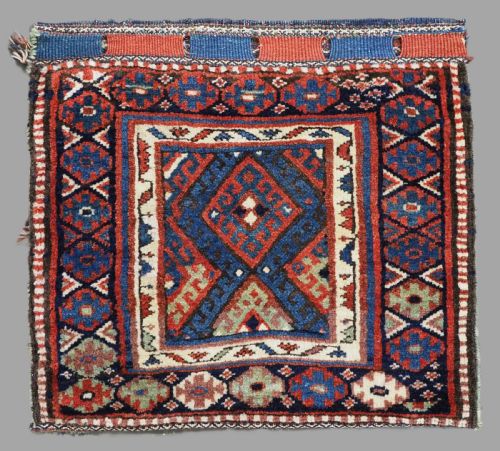
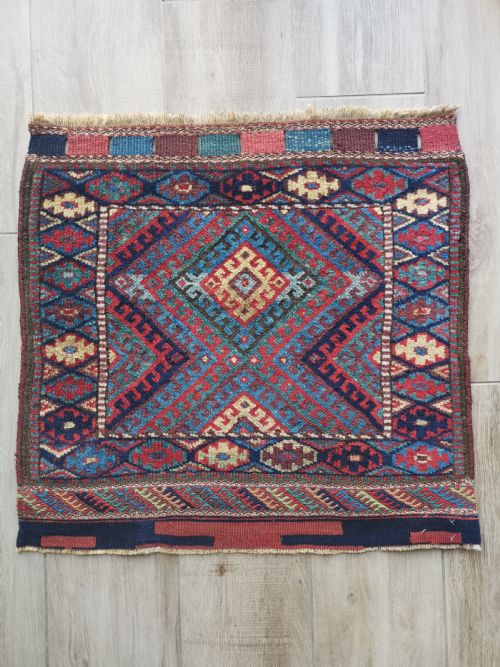
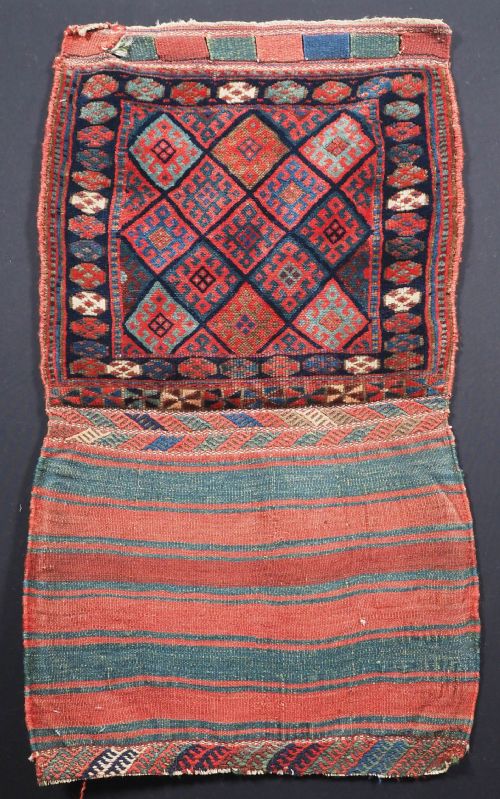
An antique kurdish rug face represents the front panel of a traditional storage sack, saddlebag, or grain container woven by tribal makers. These fragments survive from periods spanning the late nineteenth century to the early twentieth century.
The items found here include complete Jaf Kurd bag examples with plain weave backs, small chantehs, saddlebagfaces, and cushions or pillows adapted from larger pieces. Persian tribal and Anatolian tribal origins shape the aesthetic of these textiles.
Buyers will most frequently encounter Jaf Kurd bag faces and Kurdish juvals on this page. These pieces showcase distinctive nomadic motifs passed down through generations of weavers.
How they were made
Weavers utilised hand-spun wool and standard wool for the dense pile, providing durability for nomadic daily life. Cotton foundation threads appear alongside wool in these traditional constructions.
The creation of an antique kurdish rug face involved knotting wool onto a sturdy warp and weft grid. Plain weave techniques were employed for the backs of complete bags and structural borders.
Listings span from eighteen eighty to nineteen twenty, featuring wool, hand-spun wool, and cotton materials.
What varies in quality
The fineness of the knotting and the crispness of the tribal design separate superior examples from simpler ones. Tighter construction yields a sharper geometric definition across the field.
The vibrancy and condition of the wool pile dictate the visual impact of the textile. Pieces retaining their original plain weave backs or complete structural integrity hold greater interest for collectors.
The Antique Kurdish Rug Face Glossary
- Chanteh
- A small traditional carrier or bag used by nomads for personal belongings. These small textiles often feature single face panels preserved as decorative items.
- Juval
- A large storage bag utilised within nomadic tents for bedding and household goods. They display elaborate tribal patterns across the primary face.
- Jaf Kurd
- A specific tribal subgroup known for distinctive diamond lattice designs and repeated hooked motifs. Their weaving style is easily recognised by structured geometric layouts.
- Plain weave
- A simple unpiled textile technique where warp and weft threads cross under and over each other. This method forms the flat sections on the backs of bags.
- Saddlebag
- A paired set of storage sacks designed to drape over the back of a pack animal. Surviving fragments typically consist of one separated face.
Antique Kurdish Rug Face: Frequently Asked Questions
What is an antique kurdish rug face?
An antique kurdish rug face is the decorative front section of a nomadic storage bag. These textile pieces preserve traditional tribal patterns woven during the nineteenth and early twentieth centuries.
Nomads used these bags for practical storage in tents and during seasonal migrations. Today, collectors frame or display them as textile art.
How were these bags used?
Tribal groups utilised these woven containers for storing grain, clothing, and bedding inside tents. Paired bags were also loaded onto pack animals for transport during migrations.
Over time, worn bags were cut down, leaving the durable pile faces intact. These surviving panels became valued for their dense wool and bold geometric designs.
How do I care for a rug face?
Protect your textile from direct sunlight to prevent fading of the natural wool fibres. Gentle vacuuming without a beater bar removes dust safely.
Keep the wool dry and consult a specialist in antique textiles for professional cleaning. Proper mounting on a breathable support helps preserve fragile foundation threads.
How can I tell the age?
Age is assessed through the materials, dyes, and structural characteristics visible in the weave. Hand-spun wool and traditional construction methods point towards nineteenth-century production.
Comparing the motifs to established tribal weaving traditions helps narrow down the period. Pieces typically date from the late 1800s through the early 1920s.