


Blue White Tea Bowl
A blue white tea bowl brings centuries of porcelain trade and domestic ritual to your fingertips in a remarkably tactile form.
Blue White Tea Bowl
When searching for a blue white tea bowl, you encounter small, handleless drinking vessels produced across various periods including the eighteenth century and the Regency era. The listings here predominantly feature English and Chinese ceramics, ranging from simple domestic cups to elaborate tea bowls and saucers.
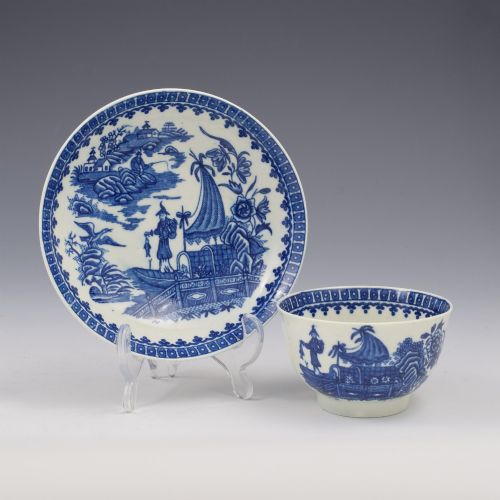
Many examples stem from domestic factories like Worcester and Lowestoft, alongside Chinese export wares bearing marks from dynasties such as the Qing. These pieces reflect diverse stylistic influences, from traditional Chinese motifs to Georgian chinoiserie interpretations.
Materials and production methods
Potters shaped these vessels from porcelain and soft-paste porcelain, often applying cobalt glaze and cobalt underglaze pigments before firing. Certain pieces incorporate additional decorative elements such as gold leaf and enamel over the initial glaze.
The combination of delicate ceramic bodies and hand-painted blue pigments required precise kiln temperature control. Artisans achieved the characteristic blue and white surface through cobalt application beneath a clear protective glaze.
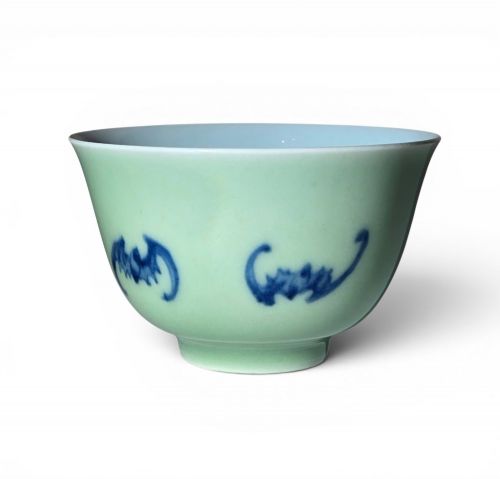
Bats flutter across eighteenth-century surfaces to bring good fortune, landing permanently on Qianlong-marked cups.
Assessing craftsmanship and finish
Quality reveals itself in the crispness of the cobalt painting and the evenness of the glaze application across the porcelain body. Finer vessels display precise brushwork in patterns like the Fisherman or Chrysanthemum designs rather than hasty execution.
The purity of the ceramic paste and the subtlety of moulded details distinguish standard domestic production from exceptional factory output. Early porcelain bodies show varying degrees of translucency and surface smoothness that set individual pieces apart.
Lowestoft Porcelain·Ridgway Porcelain·Derby
The Blue White Tea Bowl Glossary
- Cobalt underglaze
- A blue pigment applied to the ceramic body before glazing and firing, which reacts with high heat to produce a permanent colour. This technique protects the painted design beneath a glossy vitreous layer.
- Soft-paste porcelain
- A ceramic composition containing glass frit and white clay, fired at lower temperatures than true hard-paste porcelain. English factories utilised this material extensively during the eighteenth century.
- Sucrier
- A covered sugar bowl designed to match tea bowls and saucers within a service. These lidded vessels form part of larger matching teaware sets from the Georgian and Regency periods.
- Chinoiserie
- European artistic interpretations of Chinese and East Asian decorative styles, popular on domestic porcelain during the eighteenth century. Artisans applied these fantasy oriental motifs to tea bowls and slop bowls.
Blue White Tea Bowl: Frequently Asked Questions
How do I use a tea bowl safely?
Handle these delicate porcelain vessels gently with both hands, supporting the base rather than the rim.
Wash them by hand in warm water without harsh detergents to protect the historic glaze and cobalt pigments.
Did eighteenth century tea bowls have saucers?
Many tea bowls were produced as part of matching sets that included saucers for resting the cup.
Some listings offer matched tea bowl and saucer pairs, while others present individual cups or slop bowls separately.
What is a slop bowl?
A slop bowl served as a receptacle for discarded tea dregs and spent tea leaves during formal service.
These larger bowls match the patterns of the accompanying tea bowls and saucers on the tea table.
How do I distinguish Chinese export from English porcelain?
English factories like Worcester and Lowestoft utilised soft-paste porcelain bodies with distinct glaze characteristics.
Chinese pieces often display Kangxi or Qianlong period markers and specific stylistic motifs associated with Qing dynasty production.