




Vintage Porcelain Display Bowl
A vintage porcelain display bowl brings bold pattern and history to a room, offering a striking centrepiece for a table or cabinet.
Vintage Porcelain Display Bowl
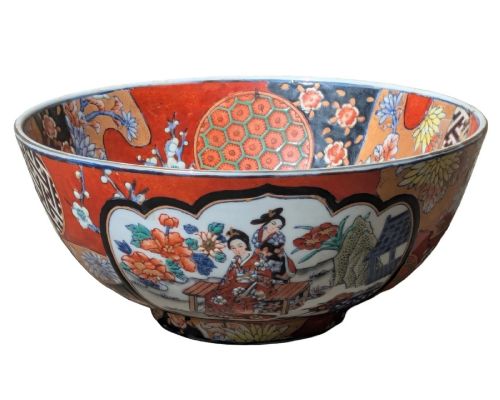
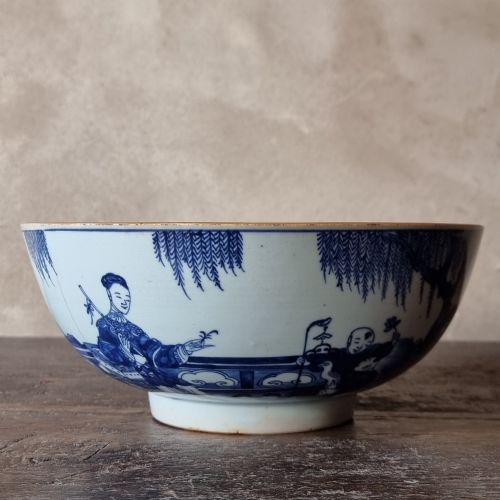
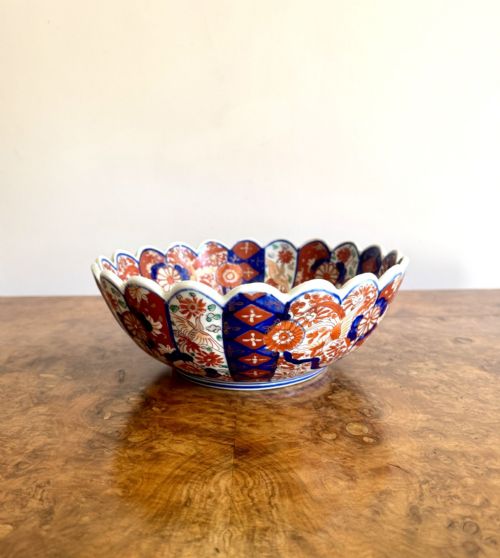
The objects take various forms beyond the standard round vessel, including scalloped edges, hexagonal shapes, tripod bases, and shallow bowls or chargers designed specifically for presentation. These items originate from periods ranging from the seventeenth century through to the mid-twentieth century, showing both Asian export aesthetics and British manufacturing history.
Assessing quality and execution
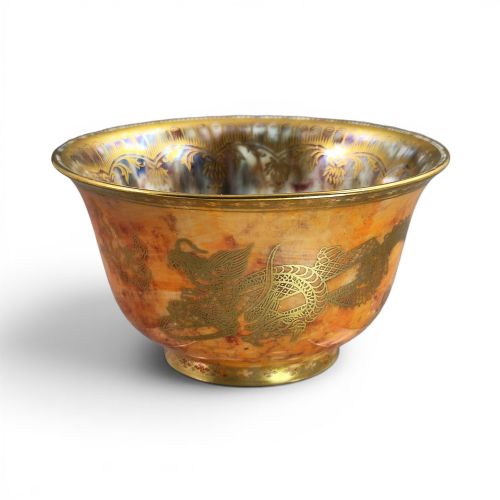
Quality reveals itself in the crispness of the hand-painted detail and the depth of the cobalt and enamel colours. Superior pieces display precise brushwork, balanced composition, and careful application of gold leaf or gilding.
The sophistication of the form also dictates distinction, such as complex scalloped edges, hexagonal symmetry, or specialised tripod supports. Furthermore, works carrying signature marks from recognised designers or major factories demonstrate higher artistic ambition.
Listings feature porcelain, earthenware, enamel, gold leaf, glaze, gilt, cobalt glaze, and gilding across multiple centuries.
Wedgwood·Royal Worcester·Royal Doulton·Kinkozan Kyoto
The Vintage Porcelain Display Bowl Glossary
- Imari
- A style of Japanese porcelain decorated in underglaze blue, iron red, and gilt. It originated in the Edo period and became widely exported to Europe.
- Famille Rose
- A Chinese palette of opaque enamel colours dominated by pink or rose hues. It gained prominence during the Qing dynasty.
- Arita
- The Japanese town and surrounding region famous for being the cradle of Japanese porcelain production. Kilns here produced substantial quantities of export ware.
- Lustre
- A type of ceramic glaze that imparts a metallic sheen. Wedgwood famously employed this technique on decorative bowls.
- Charger
- A large decorative plate or shallow bowl intended for display rather than dining. These items often hang on walls or sit centrally on furniture.
Vintage Porcelain Display Bowl: Frequently Asked Questions
How do I display a vintage bowl safely?
Place the vessel on a stable surface away from busy household traffic where it might suffer accidental knocks. For shallow dishes or plates, sturdy wire or acrylic display stands hold them securely upright.
Avoid positioning porcelain in direct, harsh sunlight for prolonged periods to protect fragile enamel colours and gold leaf from fading. Regular dusting with a soft, dry brush keeps the surface clean without risking abrasion.
What is the difference between Imari and Arita?
Arita refers to the geographical production centre in Japan where the porcelain body was fired and created. Imari is the port from which these wares were shipped to the West, which gave its name to the distinct blue, red, and gold decorative style.
Consequently, many Imari pieces are technically Arita porcelain. Collectors use both terms to describe the vibrant palette and traditional Japanese motifs found on these historical vessels.
Can I use these bowls for serving food?
Display bowls from earlier centuries are generally intended for decorative presentation rather than practical dining use. Older glazes and metallic decorations such as gold leaf can wear away or react poorly with modern foods and dishwashers.
It is best to treat these items as works of art for your cabinet or table. Gentle dry cleaning preserves the historical surface far better than active kitchen use.
How do I identify the age of a porcelain bowl?
Examine the base of the vessel for factory marks, maker signatures, or reign characters that point to specific periods of manufacture. The style of the painting, the weight of the porcelain, and the type of glaze also offer strong clues to whether a piece belongs to the eighteenth, nineteenth, or twentieth century.
Comparing the physical characteristics with documented examples from known kilns helps confirm the date. Subtle signs of age, such as slight wear on the gilding, often corroborate the historical timeline.