


Blue White Delftware Charger
A blue white delftware charger brings centuries of painted earthenware and cobalt pigment into a room.
Blue White Delftware Charger
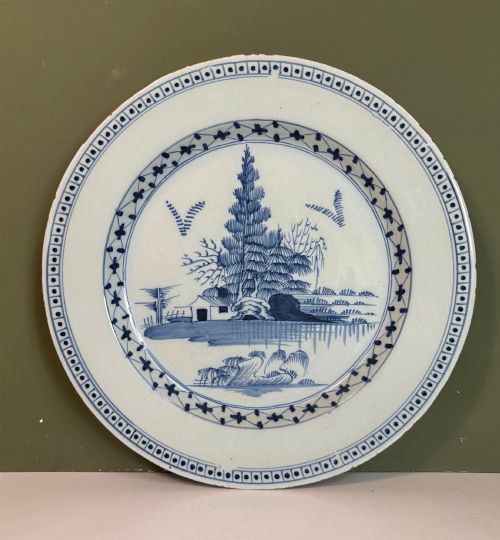
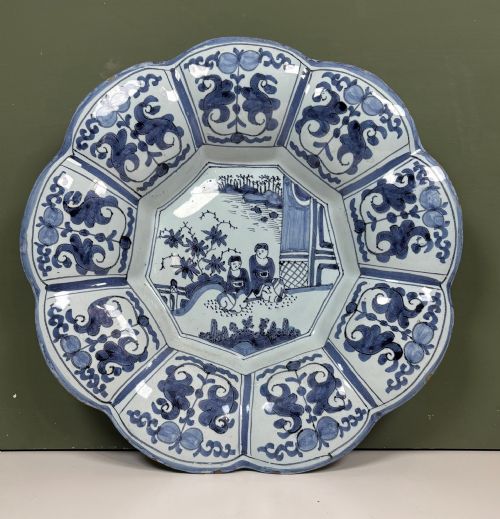
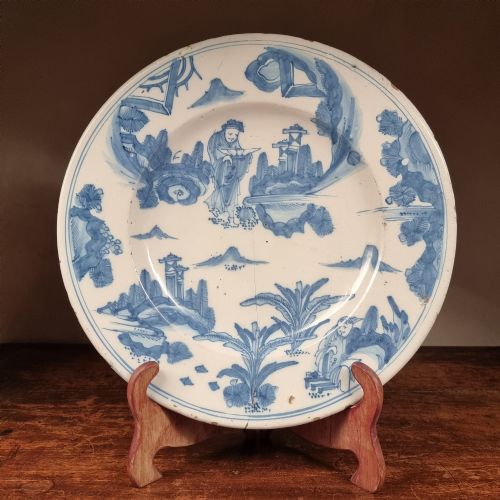
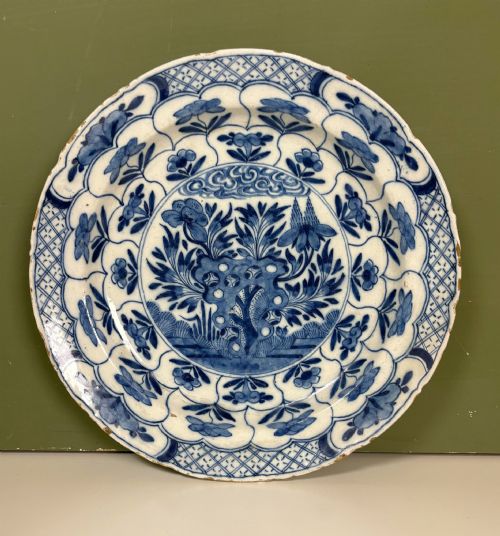
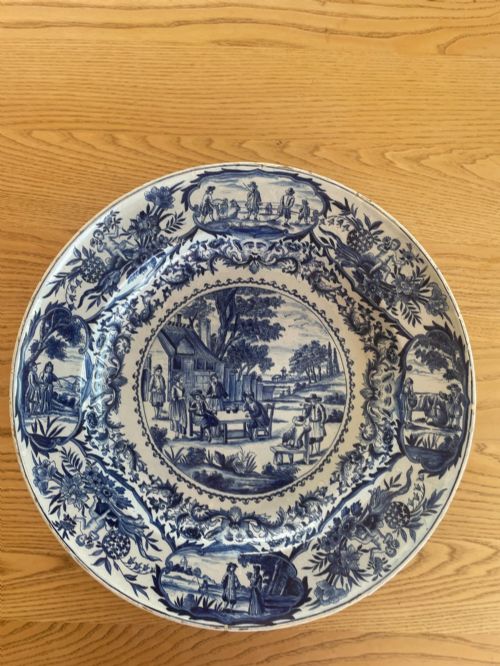
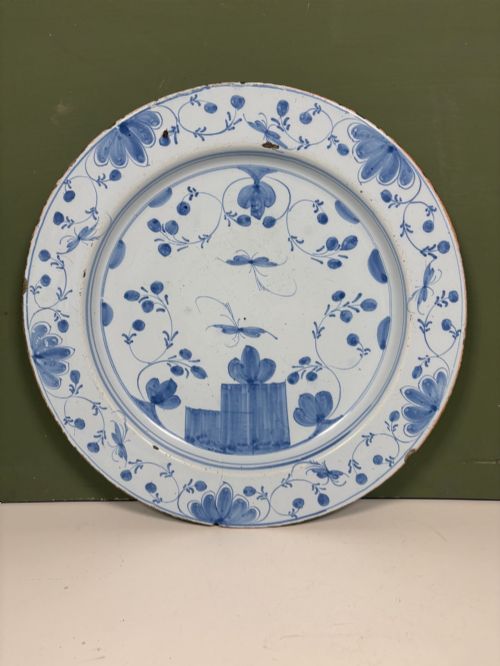
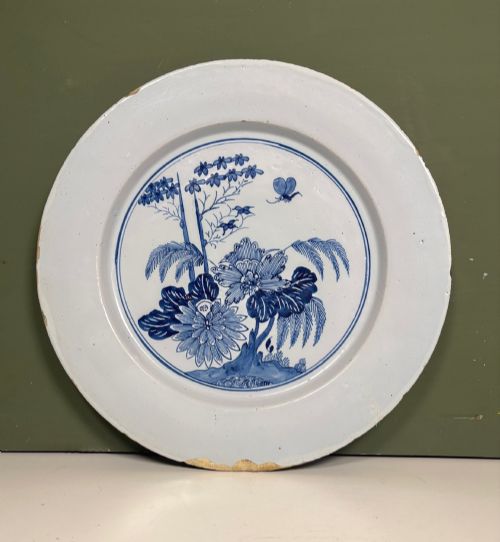
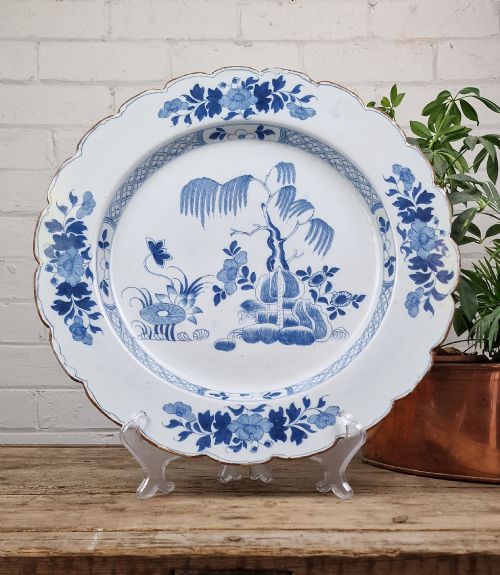
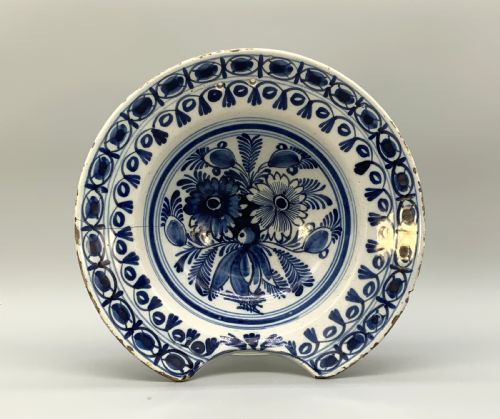
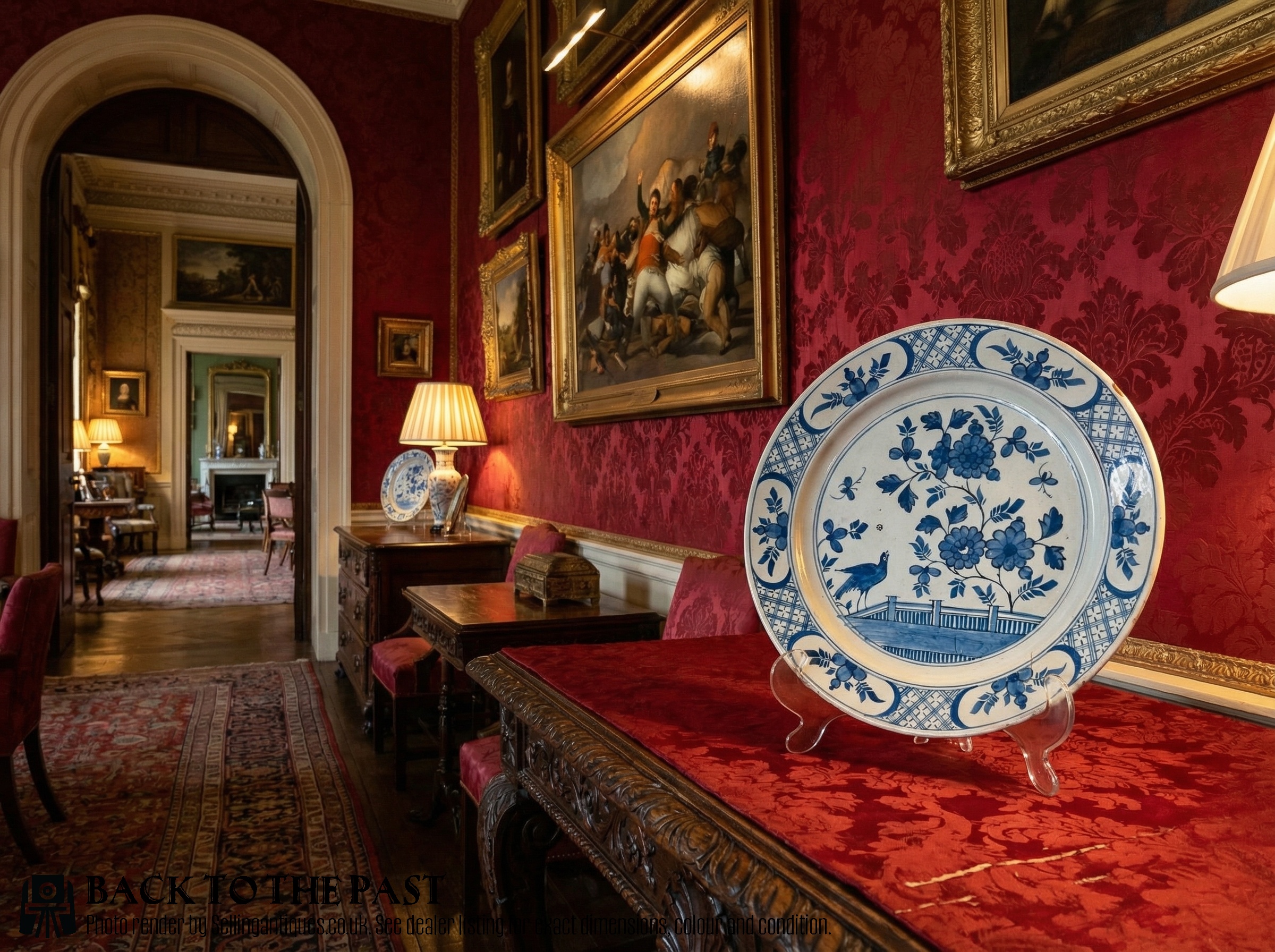
A blue white delftware charger is a large decorative dish meant for display, typically taking the form of a broad, shallow platter. The versions most commonly met on this page date from the seventeenth and eighteenth centuries, originating from English, Dutch, or continental European workshops.
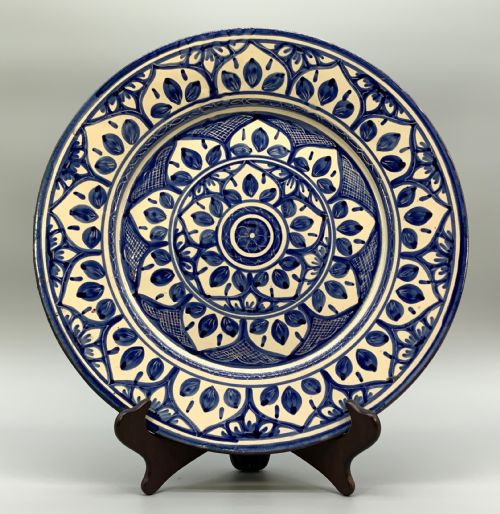
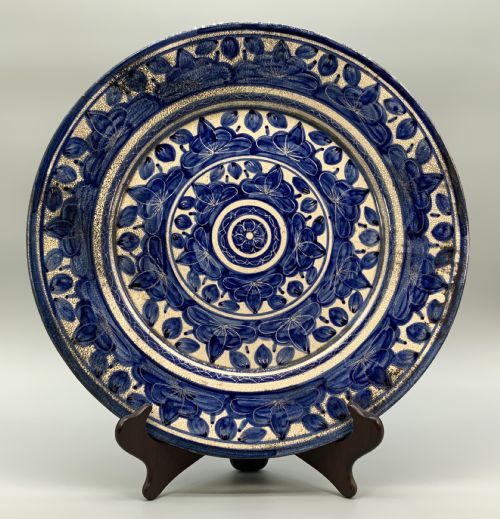
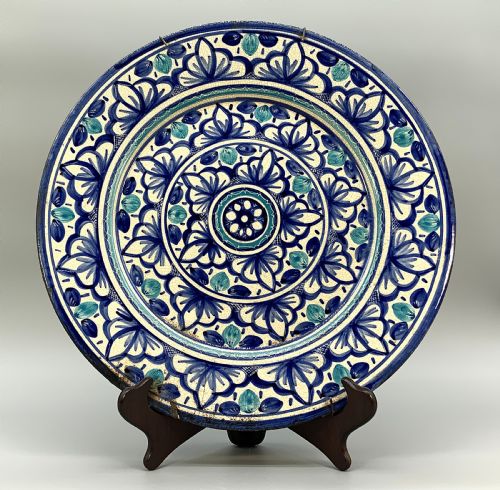
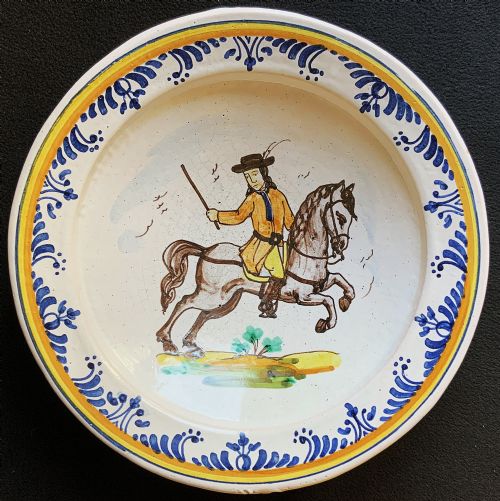
Makers shaped these items as chargers, plates, bowls, and barber's bowls. Alongside standard blue and white pieces, occasional examples show Moorish Revival or polychrome styles with yellow, green, and orange pigments.
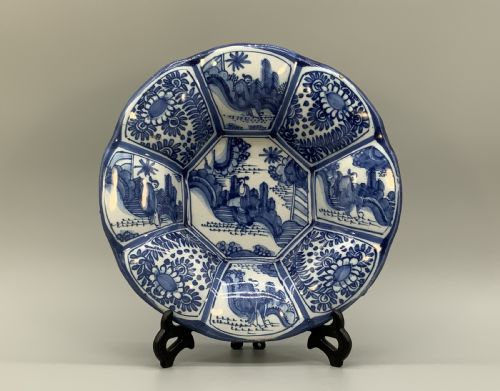
The aesthetic draws heavily on Dutch Baroque and Kraak porcelain traditions, often adapting Chinese Chinoiserie motifs into European earthenware forms.
How They Were Made
Potters formed these items from earthenware clay, coating the fired body in an opaque tin glaze that provided a smooth, white surface for painting. Artisans then applied cobalt pigment directly onto this porous glaze before a final firing fused the colours.
The combination of tin-glazed earthenware and cobalt oxide produced the characteristic blue and white palette seen across Dutch and English delftware production.
Listings span seventeenth-century Kraak plates and eighteenth-century English chargers alongside twentieth-century continental Moorish style interpretations.
What Varies in Quality
The clarity of the cobalt painting and the control of the brushwork separate finer examples from simpler provincial output. Sharpness in the execution of Kraak-style panels or floral motifs indicates a more skilled hand at the easel.
The consistency of the tin glaze and the trueness of the circular earthenware body during firing determine the physical integrity and visual balance of the dish.
The Blue White Delftware Charger Glossary
- Charger
- A large decorative plate or platter traditionally used for display on sideboards or walls rather than for dining.
- Tin Glaze
- An opaque white earthenware glaze containing tin oxide, which creates the pale ground required for painted decoration.
- Cobalt Pigment
- A metallic oxide used to produce the deep blue colour applied beneath the glaze on earthenware.
- Kraak Style
- A decorative scheme originating on Chinese export porcelain characterised by panelled borders and central landscape motifs.
- Faience
- A European term for tin-glazed earthenware, particularly that produced in France, Italy, Spain, and other continental regions.
Blue White Delftware Charger: Frequently Asked Questions
How were chargers displayed?
These large dishes were traditionally hung on walls or stood upright on dresser shelves to showcase their painted cobalt decoration.
Their substantial diameter made them prominent decorative focal points in period interiors.
What is a barber's bowl?
A specialised shallow vessel featuring a semicircular cutout on the rim that rested against a customer's neck during shaving or bleeding.
These pieces share the same tin-glazed earthenware body and blue and white palette as standard chargers.
How do I distinguish English and Dutch pieces?
English delftware often exhibits softer pinkish or buff earthenware bodies beneath the tin glaze, whereas Dutch pieces tend towards a harder, lighter fabric.
Brushwork styles and palette nuances also help separate Bristol or Lambeth production from workshops in Rotterdam or Delft.
Can these plates be hung on walls safely?
Specialist spring-loaded plate hangers designed for heavy earthenware can support the weight of these chargers securely.
Care must be taken to select hangers with protective tips to prevent chipping the tin glaze along the rim.