
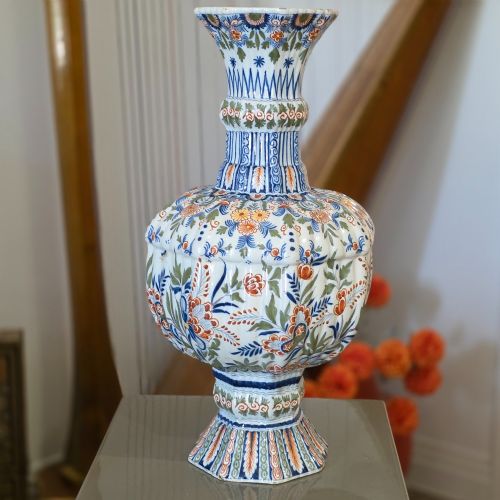
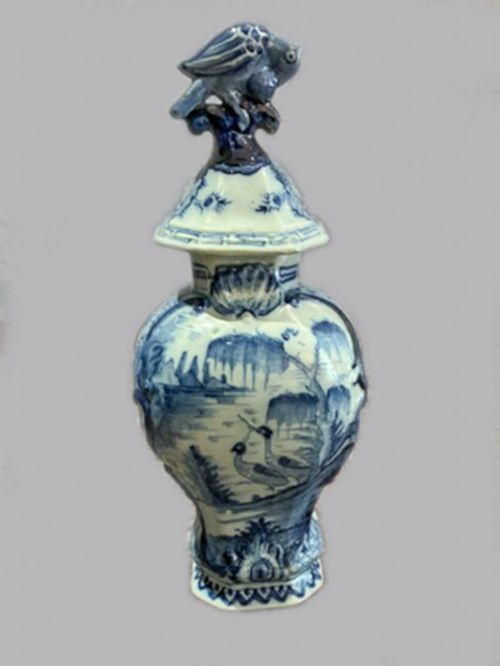
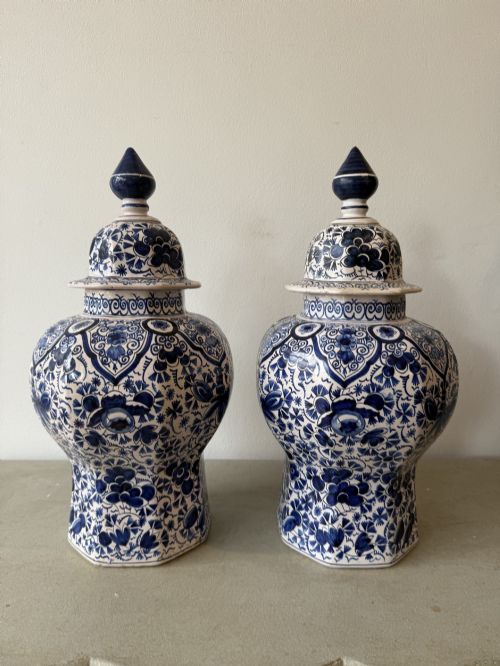


Blue White Delft Urn
A blue white delft urn brings heavy earthenware pottery and hand-painted cobalt pigment straight into a room, offering classic Dutch form and historic charm.
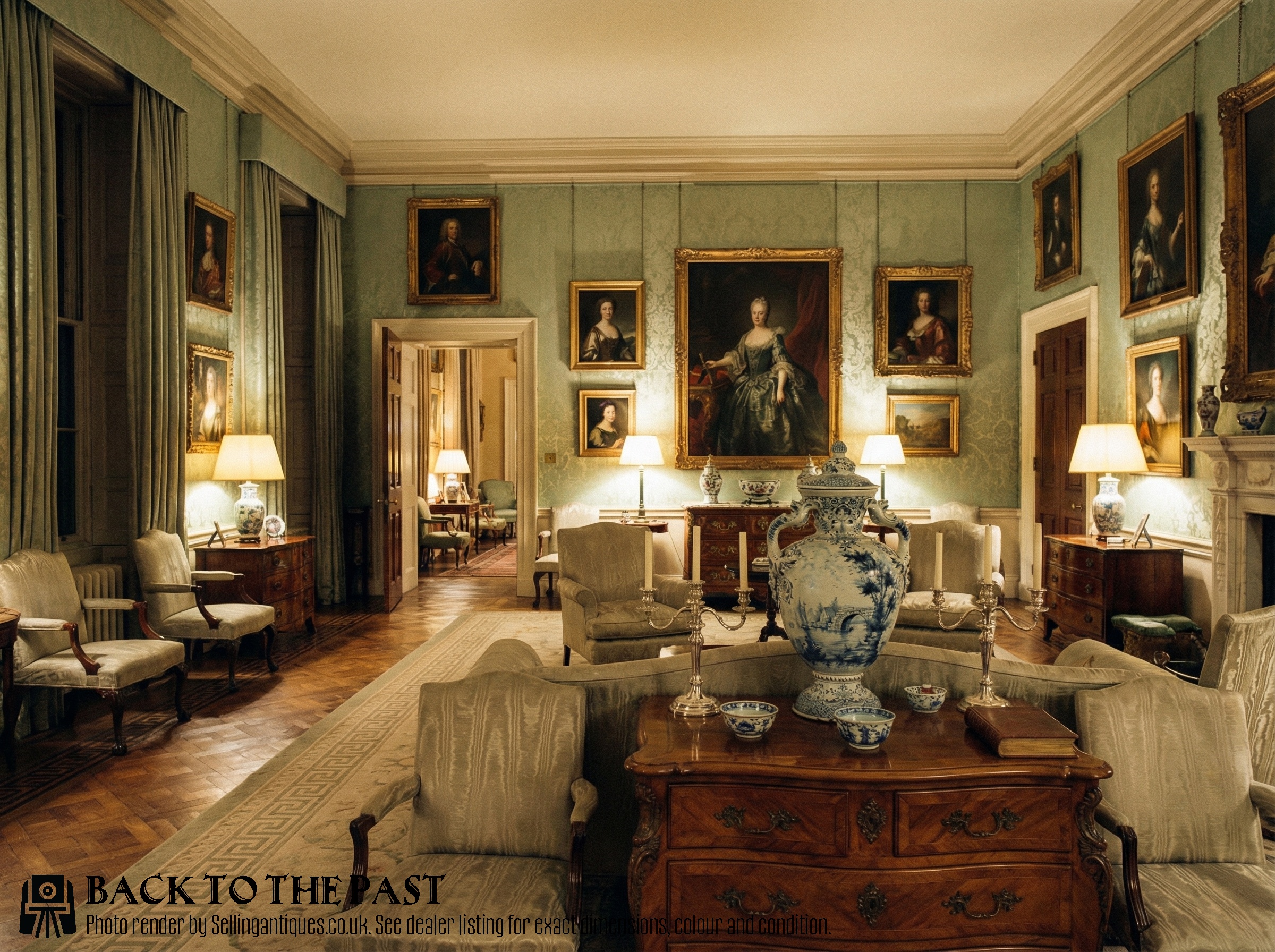
Blue White Delft Urn
When you search for a blue white delft urn, you encounter earthenware vessels shaped into garden planters, lidded jars, and handled vases. These objects span from the seventeenth century through the nineteenth century, reflecting centuries of European pottery production.
The most common examples on this page are eighteenth-century lidded jars and baluster vases, alongside later table lamps and garden planters. Many pieces show strong ties to Dutch Delftware traditions, often featuring Chinoiserie scenes.
Makers shaped these vessels as decorative items, storage jars, and table lamps, drawing on Dutch Baroque and Rococo Revival styles. Collectors value them for their substantial earthenware bodies and historic blue and white decoration.
How they were made
Potters shaped earthenware bodies on the wheel or in moulds, creating heavy walls for large urns and vases. They applied a tin glaze over the clay to form an opaque white surface suitable for painting.
Painters used cobalt pigment to apply blue designs directly onto the unfired tin glaze, capturing birds, flowers, and architectural motifs. Firing in the kiln fixed the pigment into the glaze, producing the characteristic deep blue contrast against the white background.
Listings feature earthenware vessels from the seventeenth, eighteenth, and nineteenth centuries, alongside mid-twentieth-century examples.
What varies in quality
The clarity and detail of the cobalt painting set the best pieces apart from simpler production. Skilled painters achieved subtle tonal variations and precise brushwork across floral and Chinoiserie scenes.
The condition of the tin glaze and the proportion of the earthenware body dictate the strength of the piece. Well-balanced forms with intact lids and minimal glaze loss represent the higher end of the range.
The Blue White Delft Urn Glossary
- Tin-Glazed Earthenware
- Pottery fired with a lead glaze made opaque by the addition of tin oxide. This coating provided a smooth white ground for painting in imitation of Chinese porcelain.
- Cobalt Pigment
- A metallic oxide used by painters to create deep blue decoration on ceramics. It withstands high kiln temperatures without losing its colour intensity.
- Chinoiserie
- European artistic styles reflecting Chinese motifs and decorative themes. Painters applied these imaginative landscapes and figures extensively to early pottery.
- Baluster Vase
- A vessel with a rounded body that tapers toward a narrow neck and flares at the base. This classic silhouette appears frequently among large storage jars and urns.
- Tin Glaze
- The opaque white surface layer applied to earthenware before painting. It creates the characteristic canvas for traditional blue and white designs.
Blue White Delft Urn: Frequently Asked Questions
What is a delft urn?
A delft urn is a tin-glazed earthenware vessel decorated with blue cobalt pigment on a white background. These pieces range from garden planters to lidded vases created in European workshops.
Potters produced them primarily for display and storage, incorporating styles from Dutch Baroque to Chinoiserie. Their substantial earthenware bodies give them considerable weight and presence.
How are old delft pieces dated?
Dating relies on examining the clay body, the thickness of the tin glaze, and the style of the painted decoration. Earlier pieces often display thicker earthenware and looser brushwork.
Comparing the potting technique and form against documented examples helps narrow down the period. Details like ribbed bodies or specific maker motifs also provide useful clues.
Were these urns used outdoors?
Larger forms served as garden urns and planters, while smaller vessels remained indoors as decorative jars and table lamps. Earthenware absorbs moisture, so outdoor placement requires caution in colder weather.
Historic garden pieces were designed to withstand general use, though collectors today often keep them indoors to preserve the tin glaze.
What causes crazing in the glaze?
Crazing occurs when a network of fine cracks develops in the tin glaze over long periods. This happens as the earthenware body and the glaze layer expand and contract at different rates.
Age and environmental changes contribute to this natural process in older ceramics. It appears as a web of faint lines across the white surface.
How should I clean my vase?
Cleaning requires a soft, dry cloth to remove dust from the surface of the earthenware. Avoid using harsh chemical cleaners or submerging wired lamp bases in water.
Gentle care preserves the fragile tin glaze and the cobalt pigment underneath. Regular dusting is usually sufficient for pieces kept on display.