


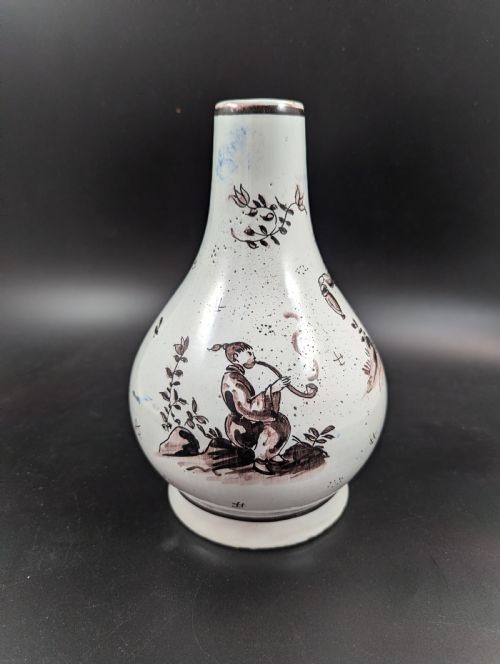


Antique Delft Pot
These antique delft pot examples are tin-glazed earthenware vessels shaped for storage, serving and display across past centuries.
Antique Delft Pot
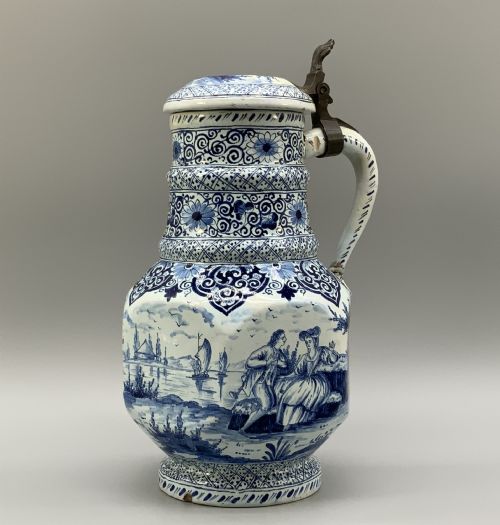
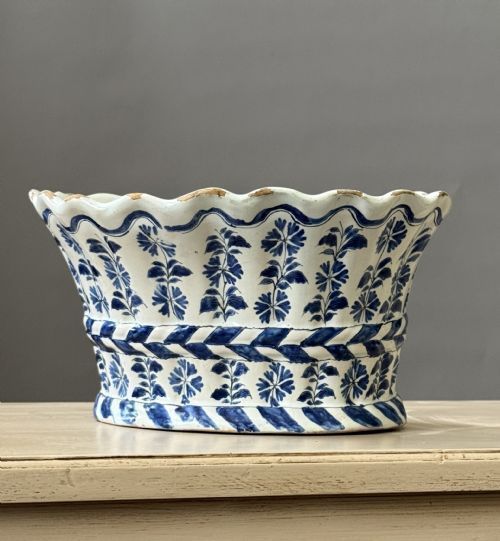
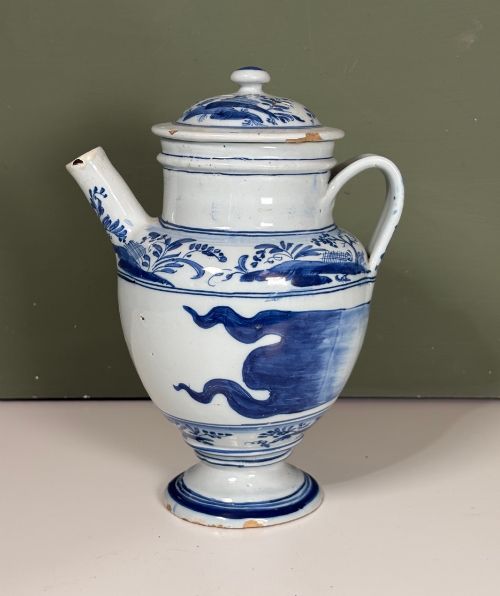
When you search for an antique delft pot, you encounter hollow ceramic vessels primarily originating from seventeenth-century and eighteenth-century workshops in England, Holland, and France. The selection includes apothecary jars, tobacco jars, posset pots, coffee pots, and garden urns designed for practical domestic or medicinal containment.
Most items meeting this description date to the eighteenth century, presenting either cobalt blue and white decoration or polychrome palettes. Forms range from lidded vessels with pewter mounts to large storage jars and bough pots intended for indoor greenery.
How they were made
Potters formed these pieces using earthenware bodies coated in an opaque tin glaze that created a smooth white surface suitable for painting. Artisans then applied metal oxides, predominantly cobalt pigment for blue designs alongside manganese and other colours for polychrome schemes, directly onto the unfired glaze.
Certain vessels incorporate fitted metal elements such as brass or pewter lids and mounts attached to the ceramic body. The coated clay underwent kiln firing to fuse the metallic oxides into the porous glaze layer.
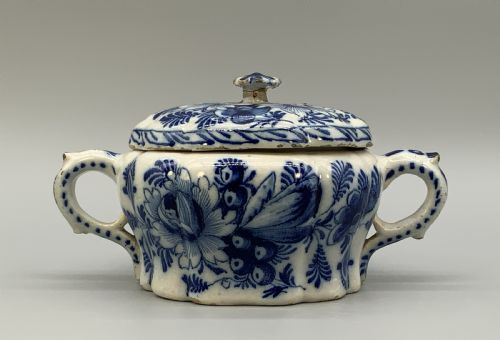
Object types include apothecary jars, posset pots, garden urns, coffee pots, and lidded jugs.
What varies in quality
Quality in these ceramics rests upon the precision of the hand-painted brushwork and the clarity of the tin glaze over the earthenware body. Finer examples display confident pictorial or floral motifs with minimal blurring of the cobalt pigment or manganese details.
The sophistication of the vessel form and the intact survival of original components, such as matching lids or pewter mounts, distinguish superior pieces from utilitarian wares.
The Antique Delft Pot Glossary
- Tin-glazed earthenware
- Earthenware pottery covered with a white glaze containing tin oxide to produce an opaque surface for painted decoration. This technique forms the foundation of all delftware production.
- Apothecary jar
- A cylindrical or bulging ceramic container utilised by chemists and pharmacies for storing dried herbs, medicines, and ointments. These often feature painted cartouches naming specific contents.
- Posset pot
- A two-handled vessel used for serving posset, a historical hot drink made of curdled milk mixed with wine or ale and spices. Surviving examples frequently include lids and spouts.
- Bough pot
- A decorative container specifically designed to hold branches of flowers or greenery for interior display. They typically incorporate perforated lids to keep stems upright.
- Polychrome
- Decoration employing multiple colours rather than a single pigment such as blue. In these ceramics, this involves manganese, green, yellow, and orange alongside cobalt.
Antique Delft Pot: Frequently Asked Questions
What were antique delft pots used for?
These vessels served various domestic and commercial functions, ranging from medicinal storage in pharmacies to holding liquids like coffee and posset at the table. Garden urns and bough pots accommodated plants and cut foliage within wealthy households.
Many jars held dry goods or tobacco, while others functioned as ornamental table wares for serving food and drink during the seventeenth and eighteenth centuries.
How do I distinguish English delft from Dutch delft?
English and Dutch pieces share tin-glazed earthenware bodies and similar cobalt painting styles, but subtle differences in clay composition and glaze tone help separate them. English factories such as those in London, Bristol, and Lambeth often produced wares with slightly softer bodies.
Dutch production centres, particularly in Delft, achieved notable mastery in replicating oriental porcelain styles using cobalt pigment on brilliant white glazes. Examining the palette and potting characteristics provides clues to geographic origin.
How should I clean my tin-glazed pot?
Tin glaze is a fragile, porous surface that requires gentle maintenance to preserve the painted decoration and underlying earthenware body. Dusting with a dry, soft cloth is normally sufficient for routine care.
Submerging these historic ceramics in water or using chemical cleaning agents risks damaging the glaze and penetrating old chips or hairline fractures. Keep them away from excessive moisture and direct sunlight.