
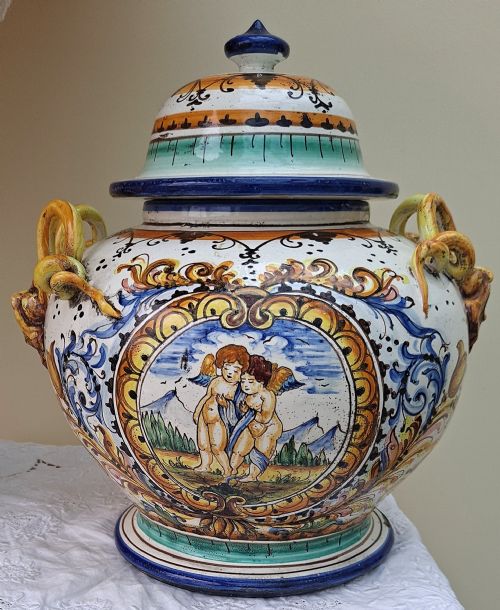
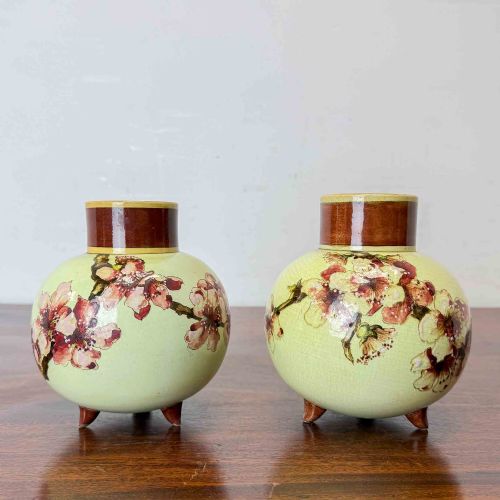


Antique Faience Urn
An antique faience urn brings tin-glazed earthenware and painted decoration to a mantelpiece, offering rich palettes spanning centuries of ceramic craft.
Antique Faience Urn
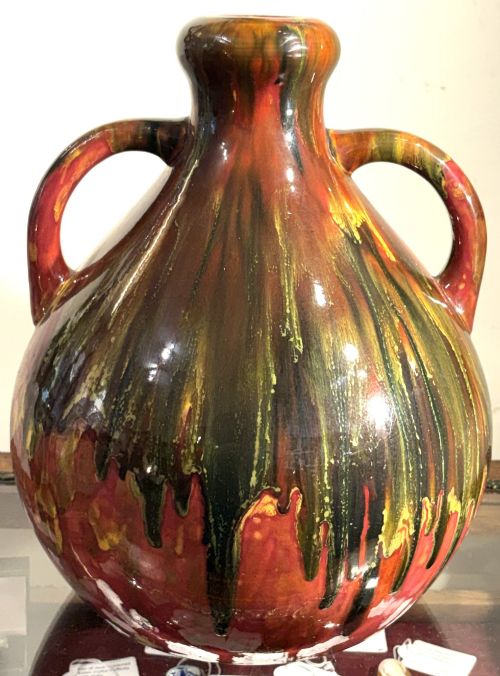
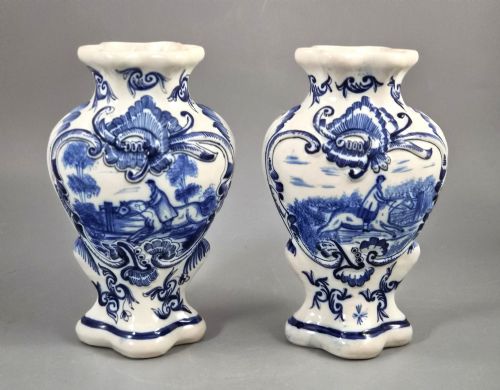
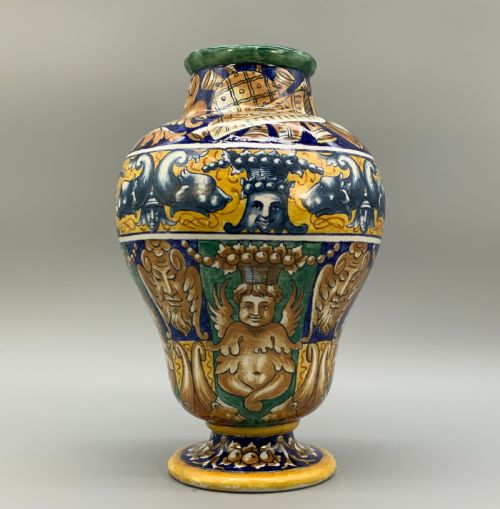
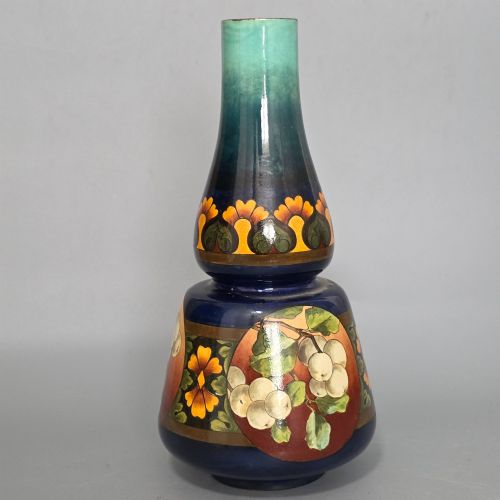
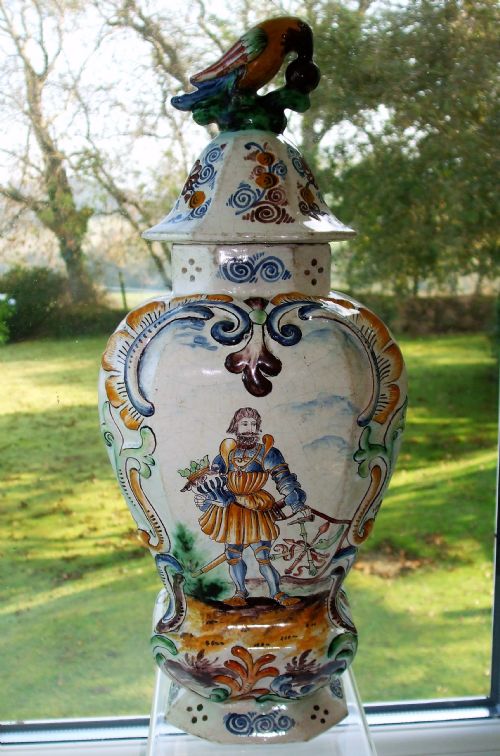
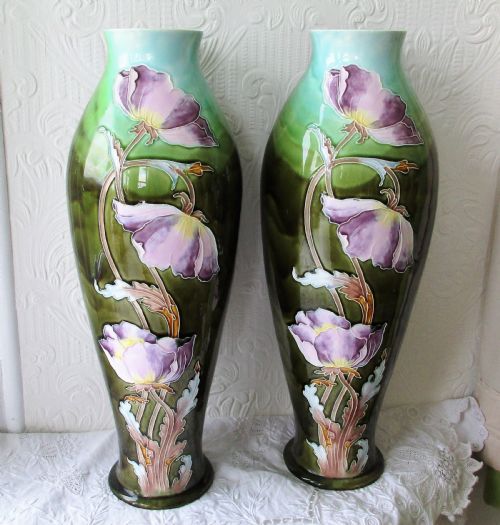
An antique faience urn appears in various traditional forms, from garden vessels and lidded jars to twin-handled vases. Buyers searching for an antique faience urn will encounter pieces originating from French, Dutch, English and Italian potteries. The selection spans centuries of production, capturing shifts in domestic ornament and display.
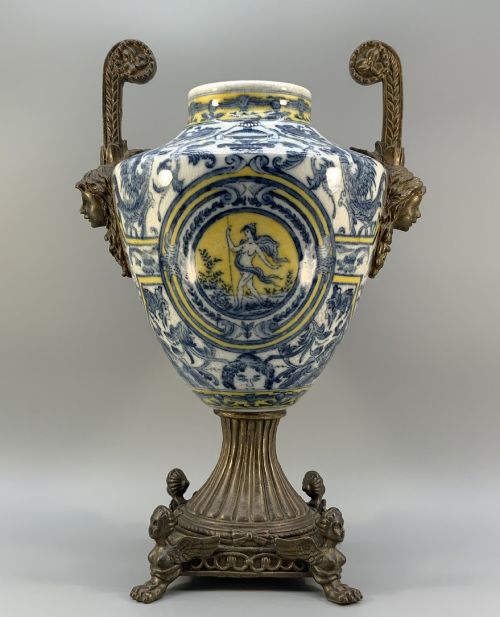
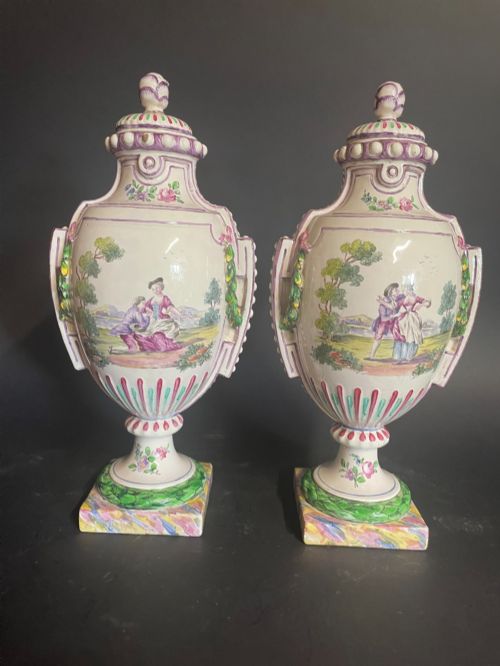
Many examples on this page date from the eighteenth and nineteenth centuries, reflecting revivals of earlier styles such as Renaissance, Baroque and Rococo. Forms range from simple baluster shapes to elaborate vessels fitted with bronze mounts or brass bases. Each piece demonstrates the enduring appeal of tin-glazed earthenware in historic interiors.
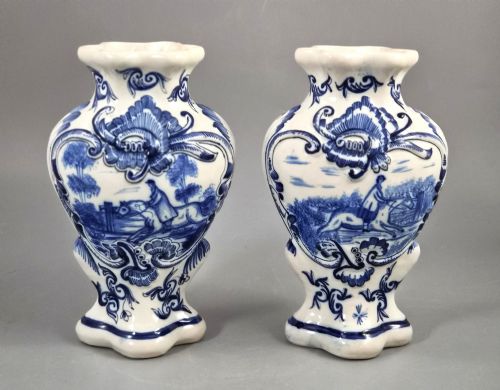
The category encompasses both dedicated garden urns and decorative vases adapted for interior display. Pieces frequently arrive in pairs, offering symmetry for architectural mantels or side tables. Surviving covers and lids remain present on several notable lidded jars and urns.
Materials and construction
Makers formed these vessels using earthenware clay, shaping the body on the wheel or pressing it into moulds. The unfired clay received a tin-glaze coating that dried to a chalky white surface, providing an opaque background for painted ornament. Artisans applied pigments directly onto this absorbent glaze before firing.
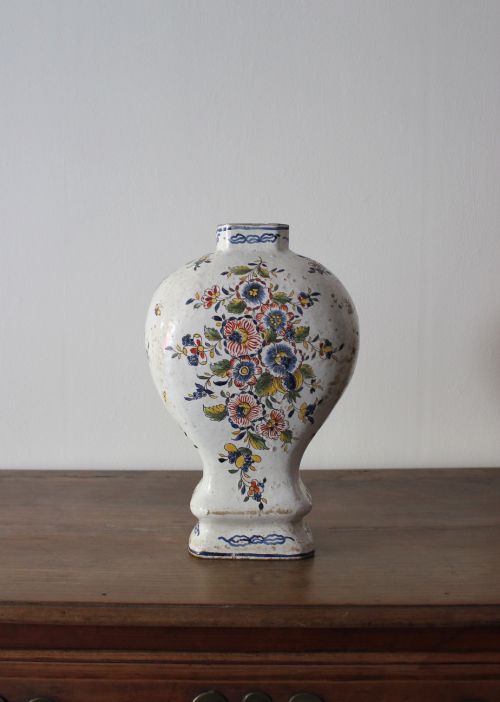
Decoration relied on cobalt blues, manganese purples and polychrome enamels, sometimes enhanced with lustre or intricate surface patterns. Certain nineteenth-century workshops incorporated patent glazing techniques or applied bronze and brass mounts to secure the ceramic bodies. Firing in traditional kilns fixed the mineral colours into the glassy surface.
Several Victorian decorators converted heavy ceramic urns into table lamps, wiring ancient flower vessels for modern illumination.
Evaluating the pieces
Quality rests in the crispness of the painted detail and the balance of the ceramic form. Superior examples display controlled brushwork, deep glaze opacity and harmonious proportions across handles, lids and bodies. Lesser items show hurried pigment application and muddy colour separation.
The integration of metal mounts, where present, distinguishes finer workshops from standard production. Well-fitted brass and bronze elements complement the ceramic weight without obscuring the tin-glazed surface. Preservation of original covers and lids adds significantly to the integrity of a surviving urn.
Burmantofts·Fourmaintraux-Courquin·Sceaux·Doulton Lambeth·Cantagalli·Jules Vieillard
The Antique Faience Urn Glossary
- Faience
- Tin-glazed earthenware originating in Europe, known for its opaque white surface and painted decoration. The term covers wares produced across France, England and other regions.
- Majolica
- Italian tin-glazed earthenware of the Renaissance and later revival periods, frequently decorated with rich polychrome pigments. It shares technical roots with broader European faience.
- Delftware
- Tin-glazed earthenware produced in the Netherlands, famous for blue and white Chinoiserie motifs and floral designs. Dutch potteries exported these wares widely across Europe.
- Polychrome
- Decoration employing multiple colours rather than a single hue like blue and white. Artisans used mineral pigments to create complex pictorial scenes across the ceramic body.
- Pilgrim flask
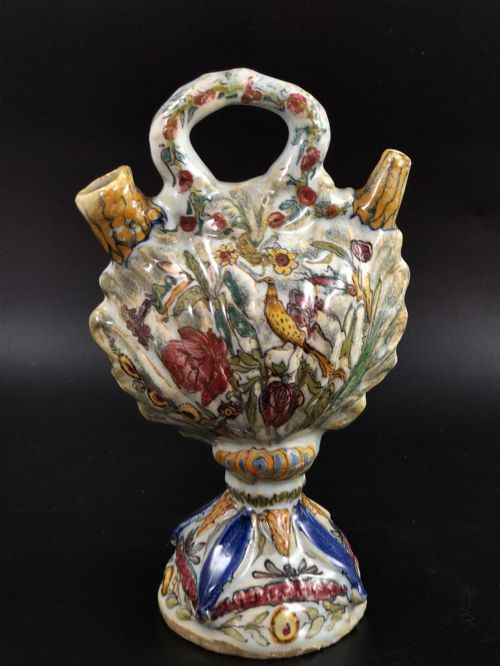
- A flat-sided bottle form with side lugs for suspension cords, adapted from leather and metal travel flasks. Ceramic versions served as decorative cabinet pieces.
Antique Faience Urn: Frequently Asked Questions
How do I clean an antique faience urn?
Dust the surface gently with a soft, dry brush to prevent dirt accumulation on the tin glaze. Avoid running water or liquid cleaners, as moisture can penetrate old earthenware through hairline fractures in the glaze.
Keep these vessels away from direct sunlight and damp environments to protect the historic pigments. Handle painted lids and delicate handles with care during routine maintenance.
Were these urns used outdoors?
Large garden urns and heavy jars functioned outdoors on stone plinths or terrace walls during warmer months. Earthenware remains vulnerable to frost expansion, so historic examples spent winters inside protected orangeries.
Smaller vases and lidded vessels remained strictly indoors for decorative display on tables and mantelpieces. Their delicate tin glaze was intended for interior domestic environments rather than permanent garden exposure.
What is the difference between an urn and a vase?
Urns traditionally feature a footed base, a tapering body and distinct handles, echoing classical stone and metal vessels. Vases encompass a broader range of vertical containers designed primarily for holding flowers or standing as decorative objects.
Many antique ceramic vessels combine elements of both forms, functioning as decorative urns while retaining internal cavity space. Lids frequently accompany urn forms, whereas vases more often remain open at the rim.