
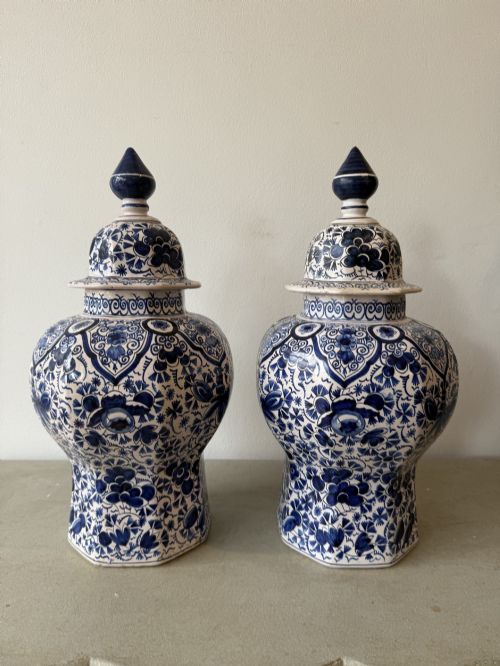


Delft Blue Ceramic Urn
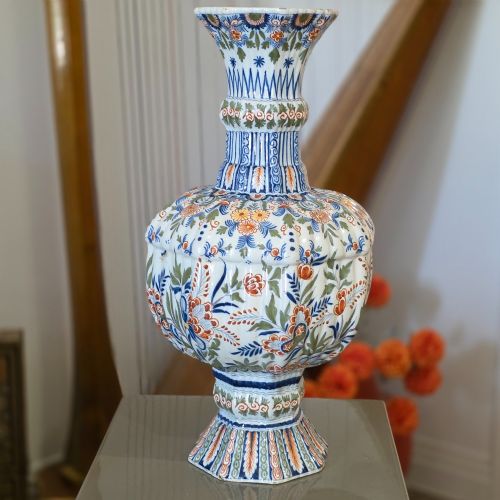
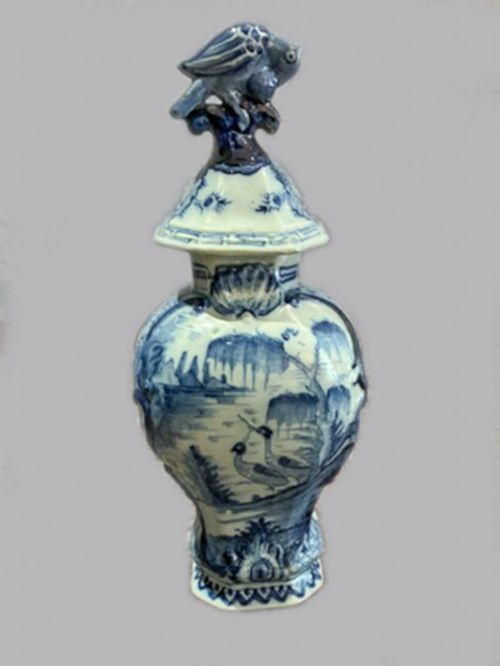
These delft blue ceramic urn objects bring tin-glazed earthenware into interiors with traditional cobalt pigment painting.
Delft Blue Ceramic Urn
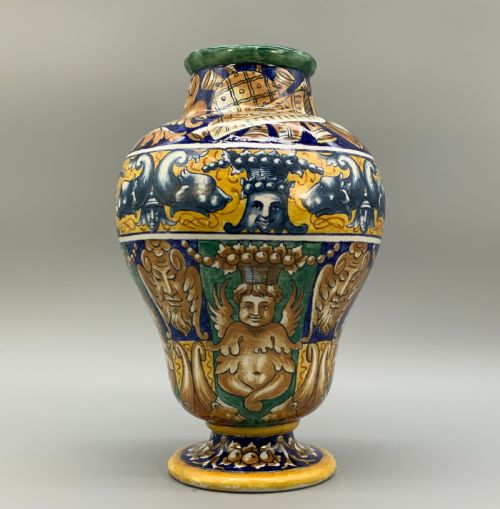
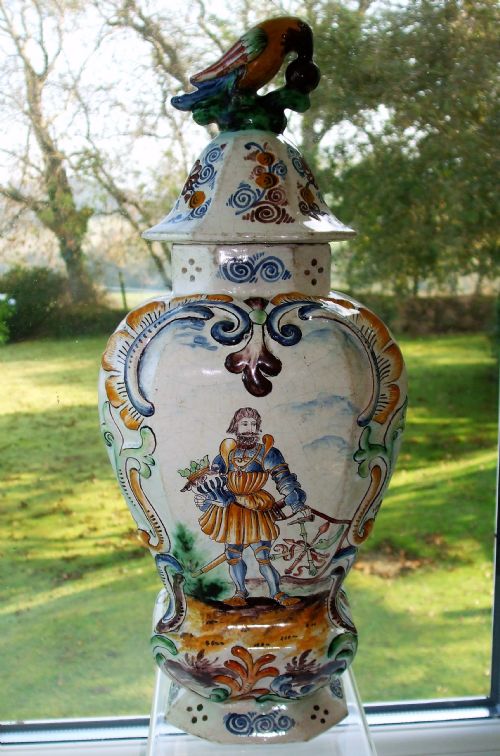
A delft blue ceramic urn encompasses baluster vases, lidded jars, garden planters, and table lamps spanning the seventeenth to twentieth centuries. These vessels display Dutch baroque, chinoiserie, and revivalist styles shaped by European earthenware traditions.
Buyers frequently encounter eighteenth-century examples alongside nineteenth-century revivals and twentieth-century interpretations. Forms range from large garden urns and lidded ginger jars to converted vase lamps mounted on bases.
How they were made
Makers shaped earthenware bodies on the potter's wheel or in moulds before applying an opaque tin glaze. This white surface provided a ground for painting with cobalt pigment.
The painted vessels underwent firing to fuse the metallic oxides into the porous glaze. Some pieces combined this tin glaze with brass fittings or gilt bases during later adaptations into lamps.
Object forms include baluster vases, garden urns, tobacco jars, and lidded ginger jars decorated with birds and floral motifs.
What varies in quality
The sophistication of the cobalt painting distinguishes finer vessels from simpler production. Crisp botanical or avian motifs indicate greater hand-painting skill than repetitive factory decoration.
Body thickness and the uniformity of the tin glaze determine structural success. Smooth glaze coverage without excessive pitting points to superior kiln control during production.
The Delft Blue Ceramic Urn Glossary
- Tin Glaze
- An opaque white ceramic glaze containing tin oxide. This surface creates the characteristic white ground required for traditional blue and white painting.
- Cobalt Pigment
- A metallic colorant used to achieve deep blue painting on ceramics. It remains stable at high kiln temperatures.
- Baluster
- An architectural form shaped like a tapering column with a swollen lower portion. This silhouette frequently defines large jars and vases.
- Faience
- A European term for tin-glazed earthenware. The designation covers Dutch delftware and related continental wares.
- Chinoiserie
- A European stylistic interpretation of Chinese artistic motifs. This aesthetic appears frequently in painted landscapes and floral scenes on pottery.
Delft Blue Ceramic Urn: Frequently Asked Questions
How old is my delft urn?
Dating relies on stylistic markers such as tin glaze opacity, potting weight, and painted motifs like chinoiserie birds or floral sprays. Eighteenth-century examples often exhibit heavier earthenware bodies and softer glaze tones compared to later revivals.
Changes in palette depth and base construction also help distinguish seventeenth and eighteenth-century production from nineteenth-century revival pieces.
Can I use these as lamps?
Many historical vases are converted into table lamps by mounting them onto gilt bases or fitting them with electrical components. This adaptation was often undertaken in the nineteenth or twentieth century.
Rewired lamp fittings allow these decorative ceramic bodies to function safely in modern domestic lighting schemes.
Where were these urns made?
Production centres were concentrated in the Netherlands, particularly Delft, alongside regional French faience workshops. Makers drew on local earthenware traditions while adapting Asian ceramic designs.
Later nineteenth-century revival pieces emerged from various European factories replicating historic Dutch styles.