


Blue Satsuma Pottery
Blue satsuma pottery brings together cobalt grounds and intricate hand-painted decoration from nineteenth and early twentieth-century Japan.
Blue Satsuma Pottery
When buyers search for blue satsuma pottery, they encounter earthenware ceramics featuring deep cobalt blue grounds combined with elaborate polychrome enamel and gilt decoration. These pieces originate primarily from the Meiji period through to the early twentieth century, spanning Japanese production and Victorian era imports.
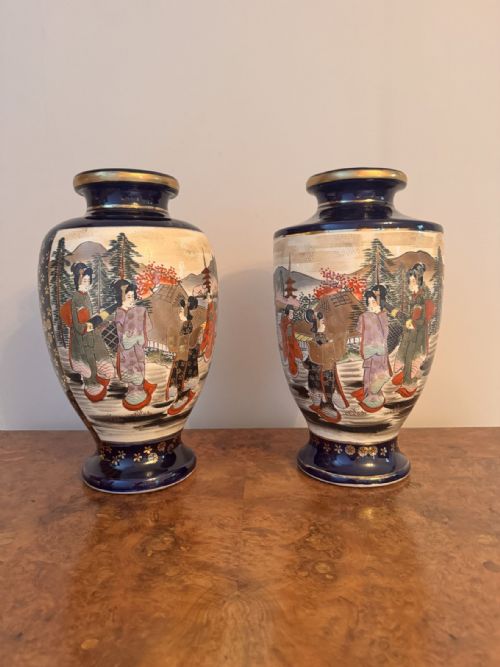
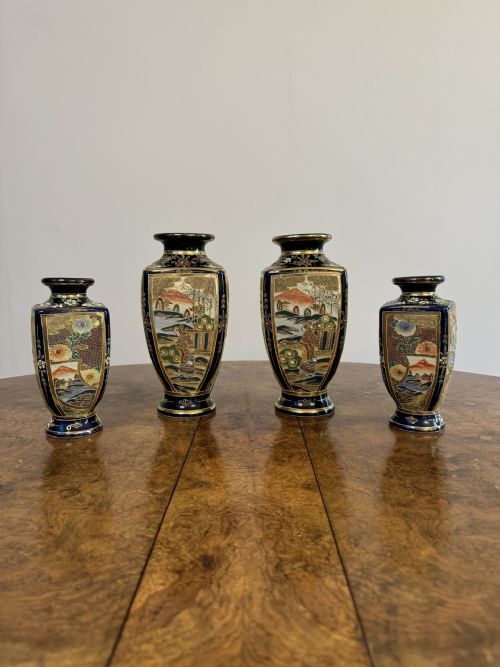
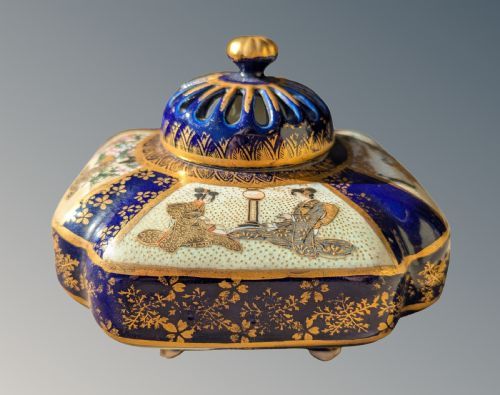
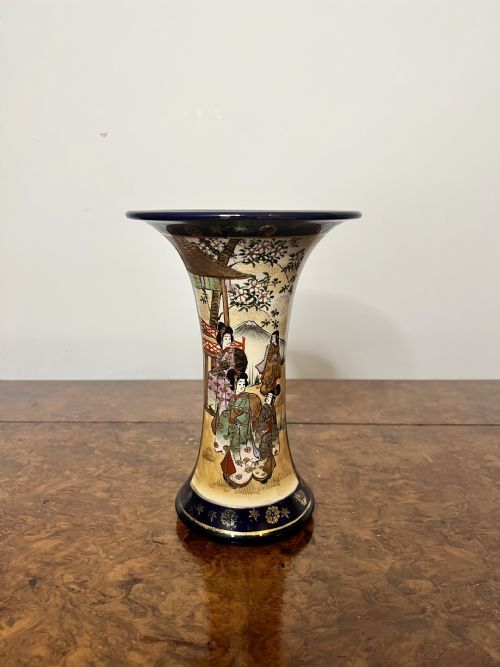
The objects available range from monumental bowls and pairs of vases to garnitures, incense burners, figures, and converted table lamps. Vases and decorative bowls dominate the selection, frequently displaying traditional motifs such as court figures, samurai battles, and landscape panels.
Most items reflect Kyoto production centres, with notable workshops such as Kinkozan appearing among the listings. Collectors find both single decorative vessels and matched pairs finished with heavy gilding and raised moriage details.
How blue satsuma pottery was made
Potters shaped these vessels from earthenware clay before applying distinctive glazes and cobalt blue grounds. Artisans then hand-painted intricate narrative and decorative scenes directly onto the ceramic surface using coloured enamels.
Gilt and gold leaf accents were meticulously added alongside raised moriage pastework to create textured relief details. Some pieces incorporate subsidiary wooden or fabric elements, particularly in lamps and display mountings.
Listings feature items from the Meiji period, Victorian era, and Taisho or early Showa period.
What varies in quality
The standard of blue satsuma pottery depends significantly on the precision of the hand-painted brushwork and the complexity of the narrative scenes. Pieces from recognised workshops like Kinkozan or bearing specific signatures often demonstrate superior execution in their court figures and landscapes.
The application of heavy gilding and the crispness of raised moriage work differentiate standard decorative wares from exceptional examples. Furthermore, the depth of the cobalt ground and the preservation of the enamel colours dictate the overall visual impact of each vessel.
Kinkozan·Nanzan·Tashiro
The Blue Satsuma Pottery Glossary
- Moriage
- A Japanese pottery technique using piped clay slip to create raised, textured decorative details before glazing and painting. This method produces tactile borders and ornamental highlights on the ceramic body.
- Koro
- A traditional Japanese incense burner typically supported on legs and fitted with a pierced cover. These vessels allowed fragrant smoke to escape during use.
- Garniture
- A set of matching vases designed to be displayed together on a mantelpiece or sideboard. Such sets usually comprise three, four, or five coordinated pieces.
- Shimazu Mon
- The heraldic crest or badge associated with the Shimazu clan who ruled the Satsuma domain. This emblem frequently appears on pottery originating from the region.
- Meiji Period
- The era in Japanese history spanning from 1868 to 1912, characterised by rapid modernisation and extensive export of decorative arts to Western markets.
Blue Satsuma Pottery: Frequently Asked Questions
What is blue satsuma pottery?
Blue satsuma pottery refers to Japanese earthenware ceramics characterised by rich cobalt blue backgrounds paired with detailed enamel painting and gilding. These pieces were produced mainly during the Meiji period and the early twentieth century for both domestic use and export.
They encompass a variety of forms including large vases, decorative bowls, incense burners, and figures. The style is distinct for its combination of deep blue glazes with elaborate figurative and landscape panels.
How do I identify Meiji period pieces?
Meiji period pieces can be identified through stylistic indicators such as intricate hand-painted court scenes, samurai battles, and heavy moriage decoration. Many works from this era also feature workshop signatures or artist marks on the base.
The materials typically consist of earthenware with enamel and gilt detailing, reflecting the prominent export manufacturing standards of late nineteenth and early twentieth-century Japan.
Were these items made for export?
A significant proportion of these ceramics was produced specifically for Western export markets during the late nineteenth and early twentieth centuries. European and American buyers developed a strong appetite for Japanese decorative arts following the reopening of trade ports.
As a result, many surviving vases, bowls, and garnitures reflect design preferences popular in Victorian households while retaining traditional Japanese motifs and craftsmanship.
How should I display table lamps?
Table lamps in this category are typically antique vases that have been converted for electrical use to suit modern interiors. They should be placed on stable surfaces where their cobalt grounds and gilt panels receive adequate ambient light.
Care must be taken with surrounding fabric shades and wiring to ensure the original ceramic body remains undamaged and the structural conversion is secure.