


Blue Porcelain Teapot
A blue porcelain teapot brings cobalt painting and refined ceramic form together, serving as both a functional vessel and a collector's centrepiece.
Blue Porcelain Teapot
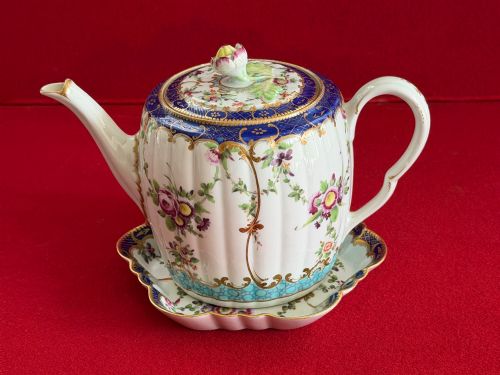
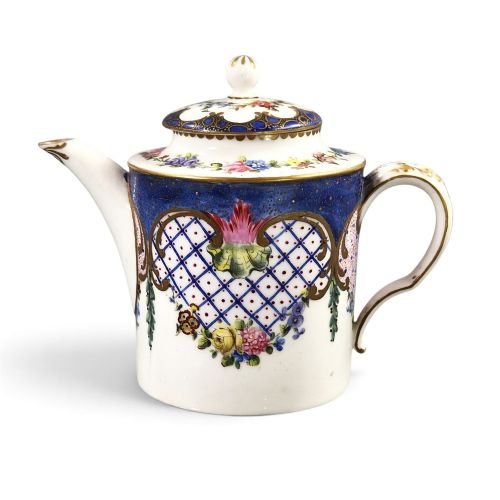
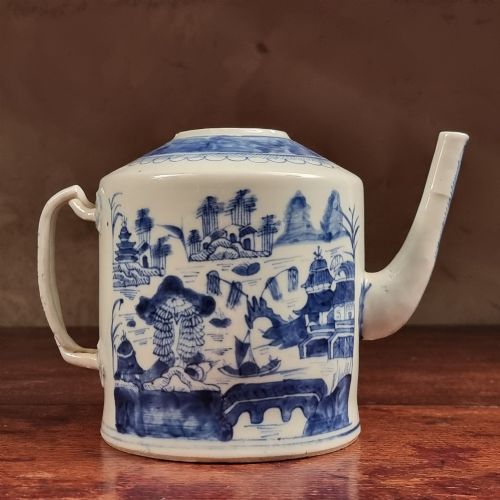
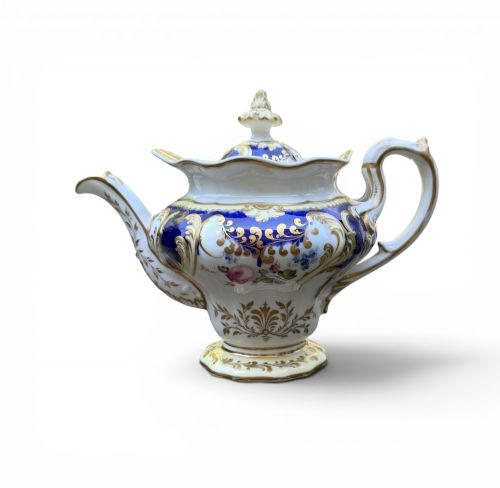
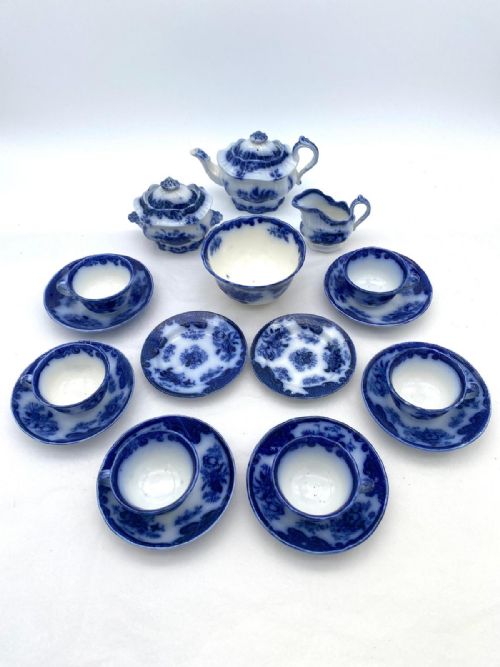
A blue porcelain teapot spans multiple centuries and manufacturing traditions, uniting English factories, French kilns, and Asian export works under one utilitarian form. When examining a blue porcelain teapot on this page, a buyer encounters domestic table vessels alongside miniature sets, ewers, and matched tea services.
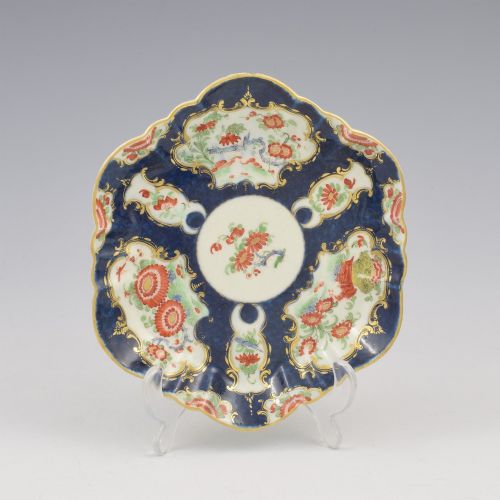
The selection ranges from eighteenth-century Georgian porcelain with hand-pencilled cobalt decoration to nineteenth-century flow blue wares and Meiji period Japanese examples. Production origins stretch across Worcester, Sèvres, Paris, and Staffordshire, alongside Chinese export commissions and Japanese kilns.
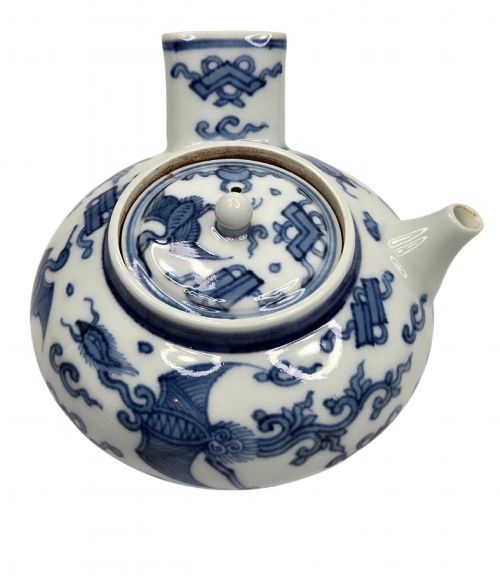
Forms vary from barrel shapes and octagonal bodies to traditional globular pots and side-handled kyusu designs. Buyers select these pieces for their decorative presence on a sideboard as much as for their historical connection to historic tea drinking habits.
How they were made
Makers shaped hard-paste and soft-paste porcelain bodies before applying cobalt underglaze or enamel painting directly to the ceramic surface. Kiln firing fixed the cobalt blue pigment beneath a clear or crackled glaze, producing deep tonal variations across the body.
Gold leaf and gilding were often applied over the glaze and fired a second time to highlight rims, spouts, and handles. Ironstone, soft-paste porcelain, and standard ceramic bodies provided the structural base for detailed patterns such as the fence motif, wheatsheaf designs, and foliate sprays.
Victorian children practiced pouring tea with miniature blue and white toy services scaled down to dollhouse proportions.
What varies in quality
Quality rests in the crispness of the cobalt painting, the fineness of the porcelain body, and the precision of the potting. Early Worcester and Sèvres pieces demonstrate superior control in high-temperature kilns, whereas later production runs utilise transfer printing methods.
The preservation of original gilding and the presence of matching covers or stands alter the desirability of a vessel. Pieces maintaining sharp underglaze definition without firing distortions represent the upper echelon of the market.
Royal Sèvres·Royal Davenport·Mintons·Spode·Wedgwood
The Blue Porcelain Teapot Glossary
- Soft-paste porcelain
- A glassy ceramic composition fired at lower temperatures than true hard-paste porcelain. It was widely utilised by eighteenth-century European factories like Sèvres and early English potteries.
- Cobalt underglaze
- A mineral pigment applied to the unfired ceramic body beneath a clear glaze. This technique allows the blue decoration to withstand high kiln temperatures without fading.
- Flow blue
- A nineteenth-century transfer-printing technique where cobalt pigment intentionally blurred during the firing process. This created a hazy, ethereal effect popular in Victorian earthenware and ironstone.
- Chinoiserie
- A European artistic style reflecting Western interpretations of Chinese motifs and garden scenes. It frequently appears on eighteenth-century porcelain tea wares.
- Kyusu
- A traditional Japanese side-handled teapot designed for brewing green tea. Examples range from earthenware to fine porcelain bodies.
Blue Porcelain Teapot: Frequently Asked Questions
How do I date a blue porcelain teapot?
Dating relies upon factory marks, paste composition, and stylistic clues inherent to the period of manufacture. Cobalt tones and glaze characteristics offer further indicators regarding the decade of production.
First Period Worcester pieces often display blue crescent marks, while nineteenth-century items utilise impressed stamps or printed registry marks. Comparing the potting technique and pattern style against documented factory archives confirms the era.
Are these teapots safe for daily use?
Historical porcelain vessels are generally acquired for display, collection, or gentle service rather than robust daily use. Thermal shock from boiling water can stress aged ceramic bodies.
Enamel decorations and delicate gilt highlights risk wearing away with frequent washing. Collectors prefer to preserve these antique items as decorative objects on a tea service or shelf.
What is the difference between hard-paste and soft-paste porcelain?
Hard-paste porcelain uses kaolin and petuntse, firing at very high temperatures to create a dense, vitrified body. Soft-paste incorporates glass frit and clay, resulting in a warmer tone.
European factories developed soft-paste formulations to replicate Chinese porcelain before discovering hard-paste deposits locally. Soft-paste pieces often display slight glaze pooling and a softer texture under magnification.
Why do some teapots include stands?
Teapot stands protected polished wooden tabletops from heat and stray drips during formal tea service. They were potted in matching patterns to complement the main vessel.
These small ceramic plates mirror the decoration of the teapot, featuring matching cobalt landscapes or floral sprays. Surviving together as a matched set, they represent complete tea service ensembles.