


Neoclassical Blue Stoneware
Neoclassical blue stoneware brings classical relief moulding and quiet tone to tea sets, biscuits barrels, and mantel pieces.
Neoclassical Blue Stoneware
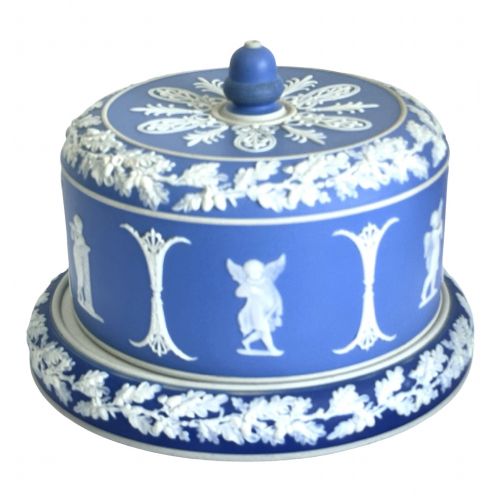
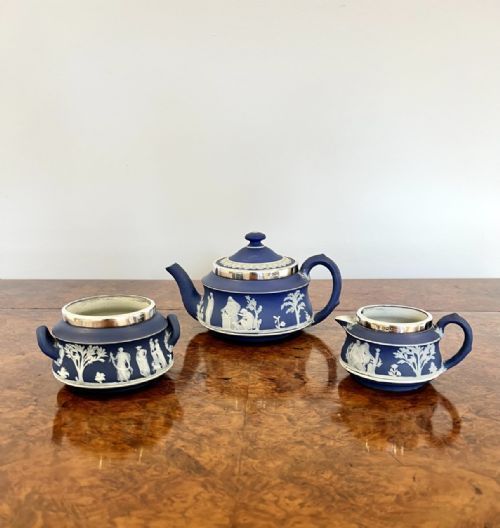
Neoclassical blue stoneware encompasses utilitarian vessels and decorative objects created in the nineteenth and twentieth centuries. Buyers search this phrase to find classic forms such as biscuit barrels, cheese domes, campana urns, and tea sets rendered in shades of blue. Most items encountered on this page originate from the Victorian era and bear the classical white bas-relief figures characteristic of the style.
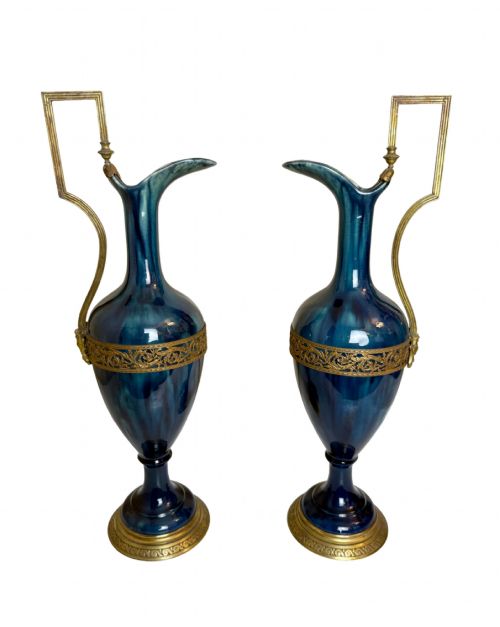
The objects take diverse shapes ranging from miniature teapots and patch boxes to large ewers, candlesticks, and portrait medallions. Serveware and decorative vases dominate the selection, often accented with silver collars, silver plate mounts, or gilt bronze trim. Pieces span the nineteenth century into the twentieth century, maintaining traditional motifs across every functional category.
Materials and construction
Stoneware and jasperware form the primary bodies of these pieces, providing a fine-grained, unglazed ceramic canvas in distinct blue hues. Applied white ceramic figures and classical motifs are moulded separately and applied by hand to the blue ground before firing. Silver, silver plate, and gilt bronze furnish structural mounts, rims, and collars on tea sets, biscuit barrels, and urns.
Makers utilised contrasting tones of blue stoneware, ranging from pale dips to deep dark blue bodies, paired with crisp white bas-reliefs. Metalwork components such as hinged lids and swinging handles are securely fitted to ceramic bodies using traditional hardware methods suited to Victorian serveware.
Some Victorian biscuit barrels required a firm click from their silver-plated lids to ensure the afternoon biscuits stayed crisp.
Assessing quality in blue stoneware
Quality rests upon the crispness of the applied classical reliefs and the precision with which white motifs adhere to the blue body. Superior examples display sharp detail in figures and foliage without blurring at the edges, alongside balanced placement across the ceramic surface.
The integration of metal mounts, such as silver collars or gilt bronze trim, separates standard production from finer decorative pieces. Weight, proportion, and the subtlety of the blue stoneware body determine the standing of individual tea sets, urns, and boxes.
Wedgwood
The Neoclassical Blue Stoneware Glossary
- Jasperware
- A fine-grained, unglazed stoneware developed in the eighteenth century, known for its matte surface and suitability for contrasting white bas-reliefs. It remains the defining material for most blue neoclassical ceramics.
- Bas-relief
- A sculptural technique where figures and ornaments project slightly from the flat background without being fully undercut. This method creates the signature white classical profiles seen on blue stoneware vessels.
- Campana urn
- A bell-shaped vessel with a flaring rim, footed base, and looped handles, modelled on classical antiquity. Pairs of these urns frequently appear in nineteenth century decorative selections.
- Biscuit barrel
- A cylindrical ceramic container fitted with a metal lid and handle, designed for storing dry biscuits at the dining table. They often feature silver or silver plate hardware.
- Dip
- A ceramic manufacturing method where a white or pale clay body is dipped into a coloured slip to produce a thin surface layer of blue. This technique allowed makers to save costly cobalt while retaining a rich exterior hue.
Neoclassical Blue Stoneware: Frequently Asked Questions
How do I clean blue stoneware?
Wash the ceramic body gently in warm water using a soft brush to clear dust from the raised white reliefs. Avoid harsh detergents or abrasive pads that might scratch the matte stoneware surface.
Keep silver or gilt bronze mounts polished separately with appropriate metal care cloths, ensuring liquids do not pool around ceramic joints.
Were these pieces used daily?
Many items served practical functions in nineteenth century households, such as storing cheese under domes, holding biscuits at tea, or serving hot water from teapots. Silver collars and mounted rims protected vulnerable ceramic edges from regular handling.
Other forms like portrait medallions and decorative vases served purely ornamental purposes on mantelpieces and in cabinets.
What is jasper dip?
Jasper dip describes a method where a white stoneware vessel is submerged in a coloured liquid clay slip before firing. This creates a uniform blue exterior while leaving the interior white.
Solid jasper, by contrast, maintains the same blue colour throughout the entire thickness of the ceramic wall.
How do I date these items?
Dating relies on impressed factory marks, style indicators, and accompanying metal mounts characteristic of Victorian and later periods. Nineteenth century pieces often show specific impressed letters or numbers beneath the base.
Silver collars and hallmarks on mounted tea sets and biscuit barrels provide precise chronological markers for when the piece was assembled.