





Blue Nautical Watercolour Painting
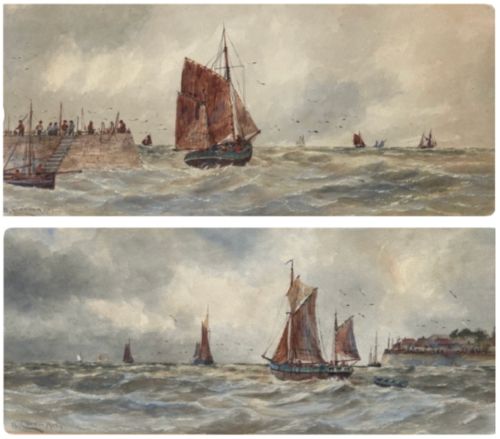
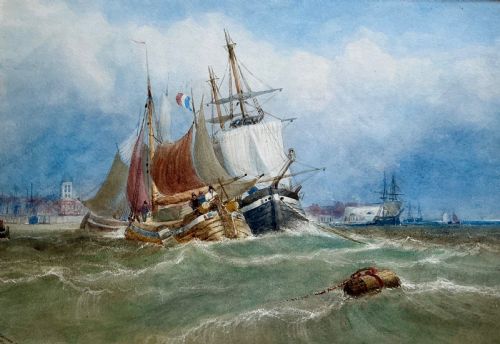
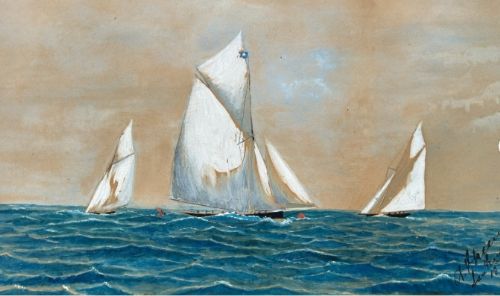
Blue nautical watercolour painting works on paper capture coastal harbours, fishing boats and shipping vessels through fluid pigments.
Blue Nautical Watercolour Painting
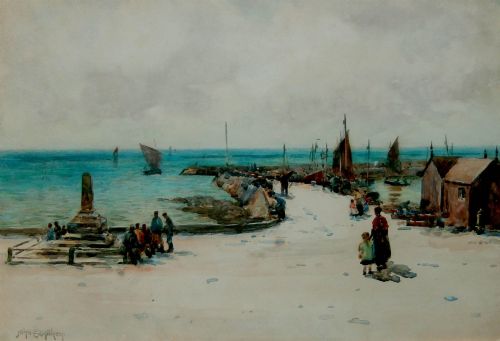
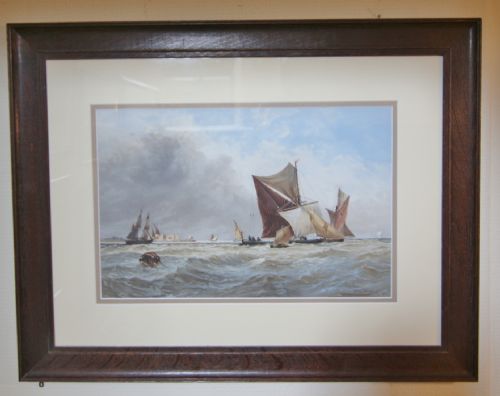
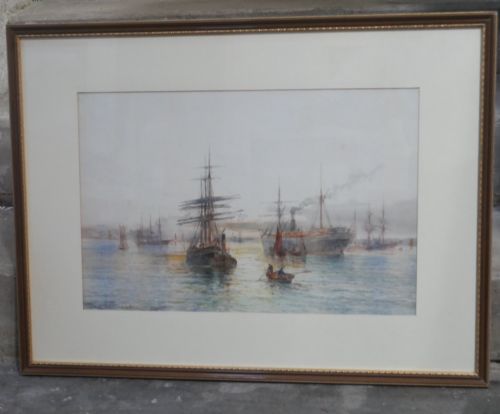
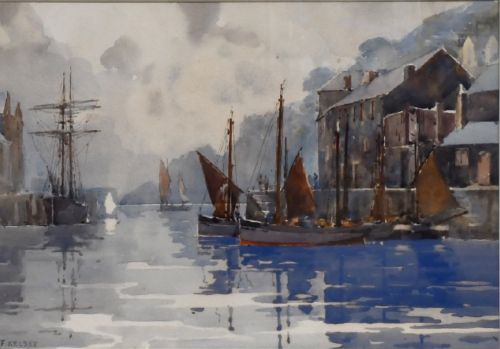
A blue nautical watercolour painting captures maritime scenes, coastal views and shipping vessels on paper supports. These works range from Victorian marine art to mid-century maritime studies, recording specific harbours, lighthouses and open sea passages.
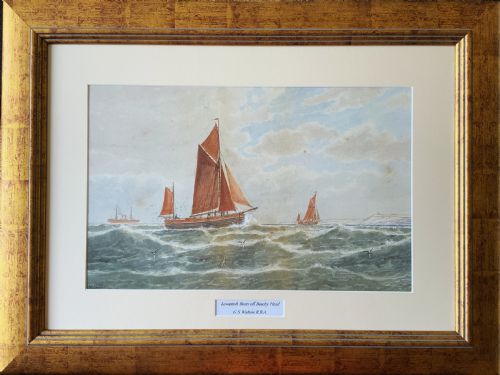
The most common examples on this page date from the nineteenth century through to the mid-twentieth century. Subjects include fishing boats off Scarborough, commercial clippers, naval vessels and quiet coastal anchorages painted by named British and continental artists.
How they were made
Artists apply watercolour pigment and ink onto paper sheets, often utilising the white of the unpainted paper to create highlights on breaking waves, sails and cloud formations. Washes of blue and grey pigment establish the depth of the sea and the atmospheric conditions of the sky.
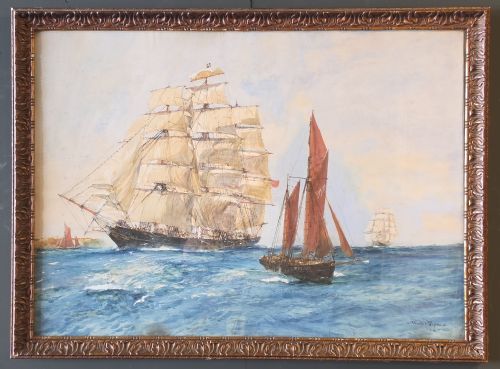
Finished works are typically mounted behind glass within wooden frames, occasionally with gilt wood mouldings, protecting the delicate paper support and water-soluble pigments from atmospheric moisture and handling.
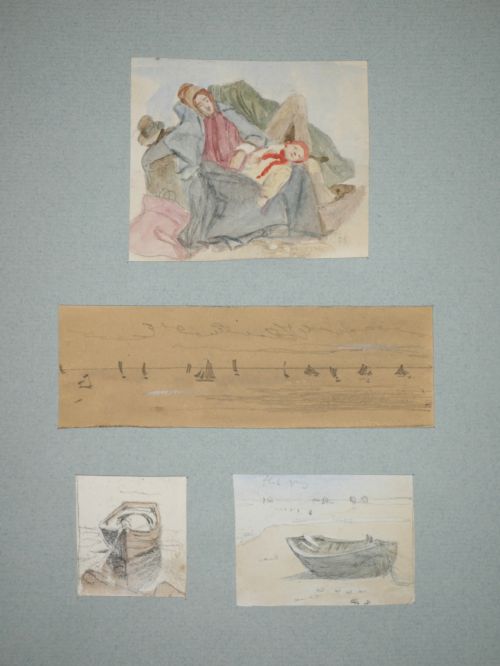
Sailors with wooden legs and historic naval vessels share the paper with quiet coastal lighthouses.
What varies in quality
Quality rests upon the artist's control of the medium and the precision of the maritime detail. Stronger examples demonstrate confident brushwork in rendering rigging, hull construction and the movement of water without excessive reworking of the pigment.
The condition of the paper surface and the retention of original pigment strength distinguish superior sheets. Works that maintain their original blue and tonal contrast without heavy fading or excessive acidic toning from early mounts represent the standard of the genre.
James Orrock·William Cannon·Charles Edward Dixon·John E Aitken·Thomas Bush Hardy·George Stanfield Walters·Frank Kelsey·Henry Barlow Carter·William Frederick Settle·Commander Eric Tufnell·Vincenzo D Esposito·William Lee Hankey·Ernest Dade·Robert Leslie Howey·William Tuck·Samuel Owen·Ernest F Hill·Don Wilson·William Kay Blacklock·Arthur Wilde Parsons·John McDougal·Frank Wood·Frank Wasley·Fred Mayor·Rowland Henry Hill
The Blue Nautical Watercolour Painting Glossary
- Watercolour
- A painting method in which the paints are made of pigments suspended in a water-based solution. The paper serves as the reflective ground for translucent washes.
- Seascape
- A painting, photograph or other work of art which depicts the sea. These scenes frequently focus on coastal views, harbours, cliffs and vessels underway.
- Gilt wood
- Wood that has been treated with gold leaf or gold paint to create a metallic finish. Such frames are common on period watercolours.
- Clipper
- A very fast sailing ship of the nineteenth century with three masts and a square rig. They appear frequently in marine art transporting cargo across oceans.
Blue Nautical Watercolour Painting: Frequently Asked Questions
How old are these watercolours?
The works listed span from the nineteenth century through to the mid-twentieth century. Most examples date from the Victorian and Edwardian periods up to the 1950s.
Dates are typically determined by artist signatures, period framing styles, contemporary inscriptions on the reverse, and the specific vessel types depicted in the maritime scenes.
Are these paintings original works?
Yes, the listings comprise original hand-painted watercolours on paper rather than modern prints or reproductions. Each sheet carries the individual brushstrokes and pigment variations of the artist.
Many examples bear the signature or studio monogram of the painter, alongside period gallery labels or handwritten titles identifying the specific coastal location.
How should I frame and display them?
Watercolours on paper require protection from direct sunlight to prevent the pigments and paper support from fading over time. Conservation-grade framing with acid-free mounts helps preserve the physical integrity of the sheet.
Displaying the works away from damp environments and high-humidity rooms ensures the paper remains stable and the framing materials do not trap moisture against the glass.
What subjects appear in these paintings?
The primary subjects involve coastal landscapes, harbour scenes, fishing vessels, lighthouses and deep-water shipping. Scenes range from calm estuaries to choppy open seas with naval ships and commercial barques.
Specific geographic locations are often recorded by the artist, covering British coastal towns, European ports and international harbours visited by trading fleets.