




Naval Watercolour Artwork
Naval watercolour artwork captures the storied history of ships, officers, and maritime engagements on paper through delicate washes.
Naval Watercolour Artwork
Naval watercolour artwork comprises maritime paintings, framed wall art, and portrait miniatures depicting ships, naval officers, and coastal scenes. These pieces span from the Regency and Victorian eras through the Edwardian period and into the mid-twentieth century.
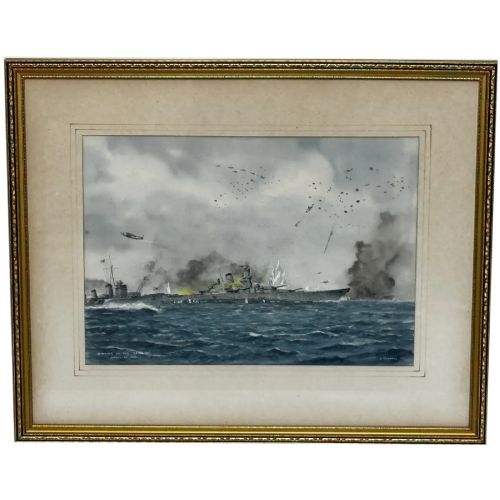
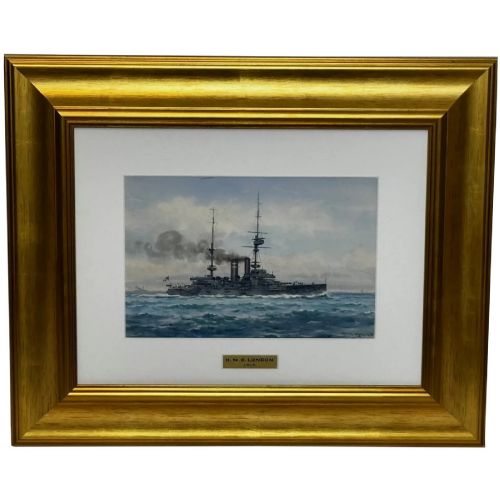
You are most likely to meet twentieth-century maritime watercolours and gouache paintings on this page, often featuring specific vessels like the HMS London or historical scenes of steam and sail. Works range from detailed operational depictions by naval commanders to sentimental sailor tributes.
The format typically involves paintings on paper, occasionally rendered with gouache, housed in gilt wood frames behind glass. Alongside full vessel portraits, the selection includes portrait miniatures of naval officers executed on paper or agate panels.
Materials and Technique
Artists executed these works primarily using watercolour and gouache pigments on paper, allowing for both translucent washes of sea and sky and opaque highlights on ship rigging. Selected pieces are set within gilt wood frames behind glass.
Miniature portraits utilise specialised supports such as paper or agate panels, framed in materials including gold. Signed works often combine pen and ink delineation with careful watercolour washes to record naval architecture precisely.
Naval Watercolour Artwork Retail Price Guide 2026
Typical asking prices for naval watercolour artwork among the pieces listed under this phrase on Sellingantiques today, from the lower quarter to the upper quarter. They describe what is for sale here now, not the wider market.
A French navy sailor created a sentimental gouache tribute to his ironclad battleship and shipmates around 1910.
Quality and Execution
The standard of naval watercolour artwork depends on the artist's command of maritime architecture, rigging accuracy, and atmospheric perspective. Works by professional marine painters or serving naval officers typically display superior precision in depicting hull forms and sea conditions compared to amateur sketches.
Framing and preservation also distinguish pieces, with original gilt wood frames and well-maintained paper surfaces under glass retaining greater integrity. Documented provenance, such as named vessels and identifiable dates, elevates the historical weight of the painting.
Eric Tufnell·Frank Watson Wood·Charles William Adderton·Vincenzo D’Esposito·Samuel Owen·Sir William Charles Ross
The Naval Watercolour Artwork Glossary
- Gouache
- An opaque watercolour paint that includes a white pigment binder, producing a heavier, matte finish suited for highlighting clouds and ship hulls.
- Maritime
- Pertaining to the sea, ships, and navigation, frequently serving as the primary subject for naval artwork.
- Miniature
- A small, highly detailed portrait painting, often executed on a diminutive scale for personal or commemorative display.
- Provenance
- The documented history of ownership of an artwork, establishing its authenticity and origins.
- Regency
- The period in British history from 1811 to 1820, characterised by distinct stylistic developments in art and portraiture.
Naval Watercolour Artwork: Frequently Asked Questions
What subjects appear in naval watercolours?
These artworks depict commissioned warships, ironclad battleships, seaplane carriers, and historic vessels under steam and sail. Portraits of naval officers and midshipmen also form a significant category within the selection.
Scenes frequently record specific historical vessels or coastal deployments, ranging from nineteenth-century man-of-war ships to twentieth-century fleet operations.
How should I frame and display them?
Naval watercolours require protection behind glass to shield the paper and pigments from ultraviolet light and atmospheric moisture. Retaining original gilt wood frames preserves the period context of the piece.
Display the artwork away from direct sunlight and fluctuating humidity to prevent fading of the watercolour washes and degradation of the paper support.
How do I identify the period of a piece?
Dating relies upon the naval architecture depicted, such as the transition from wooden man-of-war ships to ironclad battleships and twentieth-century carriers. Artist signatures, inscriptions, and period framing styles provide additional chronological markers.
Accompanying documentation or recorded dates on the reverse of the paper often confirm the exact decade of execution.
Are these works signed by the artists?
Several pieces feature artist signatures, initials, or contemporary inscriptions identifying the creator or the vessel portrayed. Documented works by naval officers or professional marine painters often include detailed notes regarding the ship and location.
Unsigned pieces rely on stylistic analysis, subject matter, and materials to suggest the period and origin of the painting.