




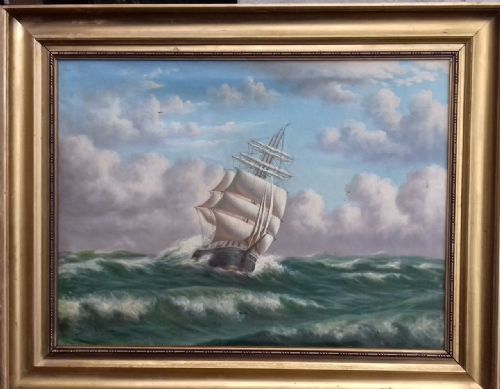


Original Sailing Vessel Painting
An original sailing vessel painting captures maritime history on canvas and paper, bringing the drama of the open sea into any room.
Original Sailing Vessel Painting
Buyers encounter various forms, including detailed watercolour paintings on paper and substantial oil paintings on canvas or board. These artworks frequently emerge from British, Victorian, and later maritime traditions.
The subjects range from clipper ships and fishing boats to large sail ships entering ports or weathering rough seas. Each piece records maritime architecture and naval history through the eyes of period artists.
How they were made
Artists painted these scenes using oil paint or watercolour applied to canvas, wood, paper, or board. Many pieces retain their period frames constructed from wood and embellished with gold leaf.
Makers utilised glass to protect delicate watercolour paintings and sketches from environmental damage. The application of oil paint often involved layering pigment to create depth in turbulent seas and atmospheric skies.
Original Sailing Vessel Painting Retail Price Guide 2026
Typical asking prices for original sailing vessel painting among the pieces listed under this phrase on Sellingantiques today, from the lower quarter to the upper quarter. They describe what is for sale here now, not the wider market.
Materials documented across these marine artworks comprise paper, watercolour, wood, canvas, gold leaf, oil paint, and glass.
What varies in quality
Quality in an original sailing vessel painting depends upon the artist's command of maritime anatomy, rigging detail, and water movement. Works by recognised painters display superior precision in depicting ship construction and atmospheric conditions.
The preservation of the medium, whether oil paint on canvas or watercolour on paper, influences the enduring visual impact of the artwork. Original framing and provenance also contribute to the distinction between standard and exceptional pieces.
William Frederick Settle·Frank Wood·Paul Jean Clays·Fred Mayor·V Dybdal·Thomas Bush Hardy·Edward Wesson
The Original Sailing Vessel Painting Glossary
- Watercolour painting
- A work created using water-soluble pigments on paper. This medium allows for transparent washes that capture light and atmospheric effects on the water.
- Oil painting
- An artwork produced with pigments bound in a drying oil, typically applied to canvas, wood, or board. This technique provides rich colour depth and textured brushwork.
- Canvas
- A heavy woven fabric stretched across a wooden frame to serve as a support for oil paintings. It offers a durable and textured surface for maritime scenes.
- Gold leaf
- Gold beaten into extremely thin sheets and applied to frames as decoration. It enhances the presentation of period artworks.
- Victorian Marine
- An artistic style from the 19th century focusing specifically on ships, coastal views, and naval engagements. These works emphasise realism and maritime heritage.
Original Sailing Vessel Painting: Frequently Asked Questions
How do I hang a watercolour painting?
Watercolour works require protection from direct sunlight to prevent the pigments from fading over time. Position them on interior walls away from moisture sources like kitchens and bathrooms.
Ensure the hanging wire and fixings match the weight of the framed artwork. Professional framing with conservation glass further safeguards the paper and pigment.
How do I identify a 19th century maritime painting?
Nineteenth-century marine artworks often feature specific vessel types such as clipper ships, steam sailing vessels, and traditional fishing boats. Examine the costume of any figures and the rigging details of the ships for period accuracy.
Signatures, framing styles, and materials like aged canvas or hand-made paper provide further clues to the date of execution. Consultation with artist signatures recorded in historical archives helps confirm the period.
What is the difference between oil and watercolour?
Oil paintings utilise pigment suspended in drying oil on canvas, wood, or board, resulting in a rich, opaque finish with visible texture. Watercolour uses water-soluble pigments on paper, producing a transparent and luminous effect.
Oils are generally more robust and traditionally housed without glass, whereas watercolours require framing beneath glass to protect the paper surface.