


Blue Floral Planter
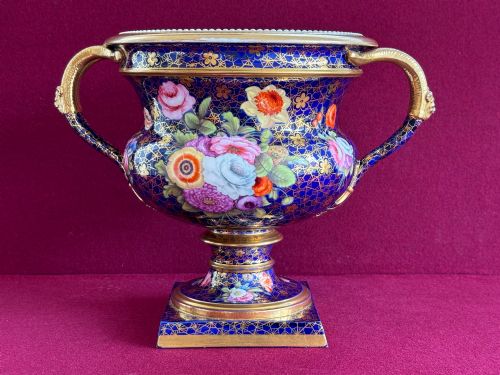
A blue floral planter brings botanical charm to a room, spanning earthenware vessels and porcelain jardinières shaped for indoor planting.
Blue Floral Planter
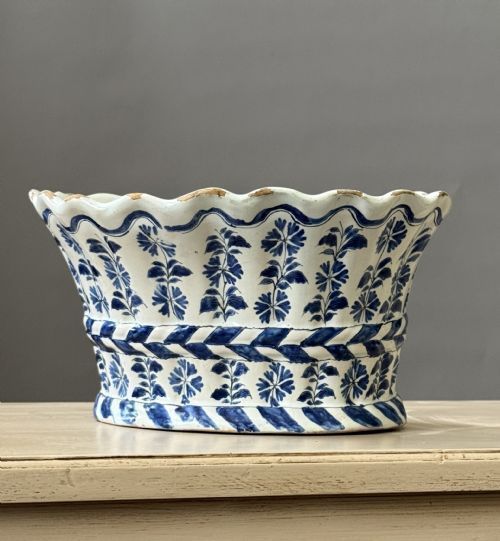
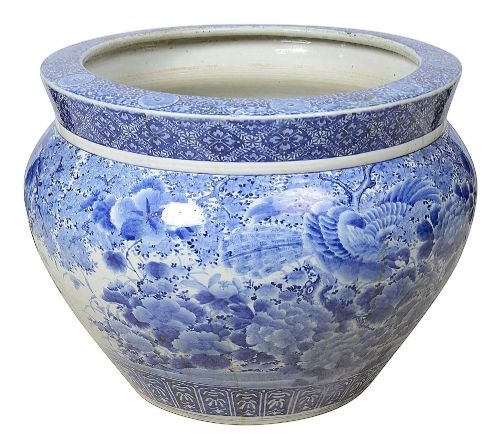
A blue floral planter groups together ceramic vessels and jardinières designed to hold plants and flowers. Buyers searching this phrase encounter forms ranging from early eighteenth-century delft bough pots to Victorian Staffordshire footbaths and large Japanese porcelain pieces.
The selection includes English pottery three-handled jardinières alongside Chinese bronze and cloisonne bowls and Japanese Imari vessels. These diverse origins share a distinct blue and white or enamelled floral decorative scheme across various historical periods.
Vessels span utilitarian forms and decorative pieces like vases, urns, and decorative bowls repurposed for botanical display. The Victorian era is well represented through pieces from makers like Royal Doulton and George Jones.
Materials and construction methods
Makers utilised earthenware, ceramic, and porcelain as the primary foundations for these vessels, applying tin glaze or cobalt underglaze to achieve the blue decoration. Some pieces incorporate enamel and gold leaf detailing over the fired body.
Techniques varied from traditional delftware production to nineteenth-century Staffordshire potting methods and Japanese Meiji period porcelain creation. Bronze and cloisonne techniques also appear in the metalwork bowls found within this category.
Form variations include jardinières, footbaths, bough pots, and vases decorated with cobalt underglaze and enamel.
Assessing quality and execution
Quality reveals itself in the crispness of the cobalt underglaze painting and the precision of the floral motifs across earthenware and porcelain surfaces. Finer pieces demonstrate careful control during firing, resulting in stable glazes and well-defined forms without distortion.
The reputation of the maker and the consistency of the glaze application distinguish standard production wares from exceptional examples. Detail in the handles, rim finishing, and overall weight indicate the care taken in the workshop.
Royal Doulton·Doulton Burslem·Staffordshire Adams·George Jones
The Blue Floral Planter Glossary
- Jardiniere
- An ornamental pot or stand for holding plants or flowers. These large ceramic vessels frequently sit on floors or tabletops.
- Delftware
- Tin-glazed earthenware produced in England and the Netherlands, typically featuring blue and white painting. This technique creates an opaque surface reminiscent of Chinese porcelain.
- Imari
- A style of Japanese export porcelain characterised by underglaze blue and iron red, often supplemented with gold. European potteries frequently copied these distinctive patterns.
- Bough pot
- A vessel designed specifically to hold cut branches and flowers for interior decoration. These early forms often feature pierced lids to keep stems upright.
- Footbath
- A large ceramic basin originally used for personal hygiene, later repurposed as a substantial planter. Their deep proportions suit large botanical arrangements.
Blue Floral Planter: Frequently Asked Questions
What is a jardiniere?
A jardiniere is a large decorative pot designed to hold a potted plant, differing from a standard flower pot by its ornamental nature.
These vessels were made to sit visibly in rooms, often matching the formal style of the interior decoration.
How do I care for antique ceramics?
Antique ceramic planters require gentle cleaning with a dry or barely damp cloth to protect the glaze and enamel work.
Water should not sit directly against unglazed earthenware bases, so placing a hidden liner inside protects the antique body from moisture damage.
Are these planters waterproof?
Many older earthenware and delft pieces possess porous bodies or fine glaze craquelure that can seep moisture over time.
Using a modern plastic or metal saucer inside the vessel prevents water from damaging both the antique ceramic and the furniture beneath.
How are different periods identified?
Periods are identified through a combination of paste composition, glaze characteristics, potting techniques, and maker marks.
Eighteenth-century pieces show different body densities and pigment applications compared to Victorian Staffordshire or later Edwardian productions.