


Pair Ceramic Planters
These pair ceramic planters bring symmetry to green spaces and interiors, offering matching vessels shaped across centuries by diverse hands.
Pair Ceramic Planters
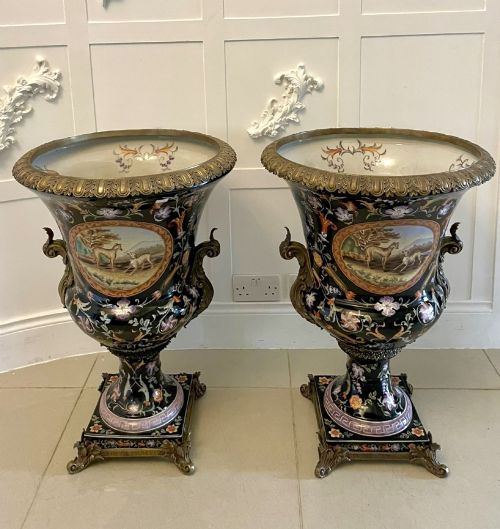
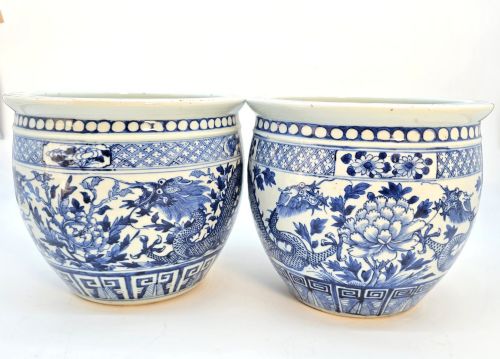
A buyer seeking pair ceramic planters explores matched vessels designed for greenery, ranging from garden pots to formal mantel urns. The selection spans French porcelain and earthenware, English pottery, and Asian porcelain originating from Japanese Meiji and Qing Dynasty workshops.
The most frequent examples encountered on this page are jardinieres and garden planters produced across the nineteenth and twentieth centuries. These encompass styles from Rococo Revival and French Provincial to Arts and Crafts and Japanese Imari.
How they were made
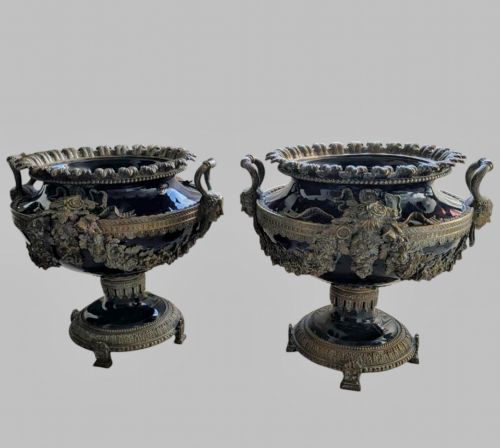
Makers shaped these vessels using terracotta, earthenware, and porcelain, often applying glazes and enamel for colour and protection. Some items integrate brass mounts, gilt bronze, or hardwood stands to complement the ceramic body.
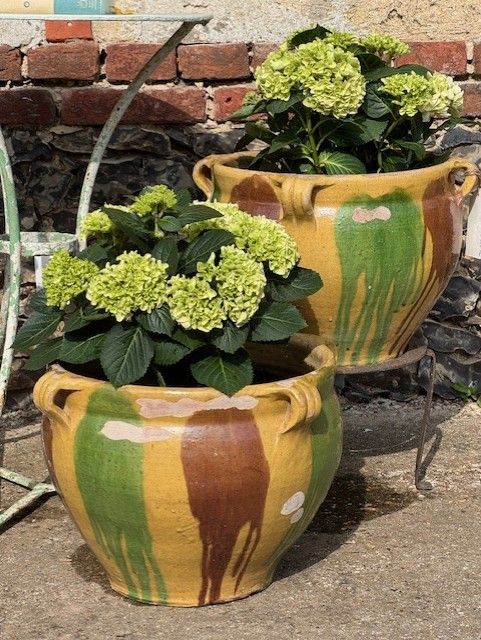
Techniques range from hand-painted decoration and drip glazes to moulded figures and relief work. Firing methods reflect the era, from traditional regional kilns to established European potteries.
Among the ceramic animals keeping watch on this page, pottery cats wait patiently inside their wall pockets.
What varies in quality
Quality rests in the crispness of modelling and the depth of the glaze, whether handling hand-painted porcelain or tactile terracotta. Superior examples show deliberate attention to proportion and finish across both matching items.
The integration of secondary materials such as brass mounts or original panels distinguishes finer work from simpler utilitarian pots. Preservation of surface detail and glaze consistency also marks the higher end of the range.
Kister Scheibe-Alsbach·Royal Doulton·Minton·Samson
The Pair Ceramic Planters Glossary
- Jardiênere
- A decorative pot or stand for holding plants or flowers. These vessels usually sit indoors on tables or plant stands.
- Imari
- A style of Japanese porcelain featuring underglaze blue and overglaze red, gold, and green. This aesthetic gained popularity in Europe during the nineteenth century.
- Terracotta
- Fired unglazed clay ranging in colour from orange to brown. This material appears frequently in garden urns and planters.
- Wall Pocket
- A vessel with a flat back designed to hang directly on a vertical surface. These items often take figurative or ornamental forms.
- Dribble Glaze
- A fluid glaze technique that allows colours to run naturally down the ceramic surface. This creates organic patterns during the firing process.
Pair Ceramic Planters: Frequently Asked Questions
How do I date a ceramic planter?
Dating relies on combining stylistic clues, potting techniques, and any visible marks or labels. Nineteenth-century pieces often reflect revival styles like French Rococo or Japanese Meiji aesthetics.
Materials and glazes also provide context, as specific firing methods and regional styles evolved through the Victorian era and into the twentieth century. Comparing known factory models helps narrow the production period.
Are these planters suitable for outdoor garden use?
Suitability depends entirely on the specific material and frost resistance of the ceramic body. Terracotta and heavier earthenwares designed as garden pots generally withstand outdoor conditions if protected from severe winter freezing.
Delicate porcelain and glazed indoor jardinieres remain vulnerable to weather and temperature extremes. Checking the vessel composition prevents damage when placing items outside.
What is a near pair?
A near pair consists of two separate items that match closely in size, form, and decoration without originating from the exact same mould or batch. These pieces share enough visual traits to display together successfully.
Potters often produced items in overlapping runs where slight variations occurred naturally. Collectors appreciate near pairs for offering the symmetry of a matched set with subtle individual character.