

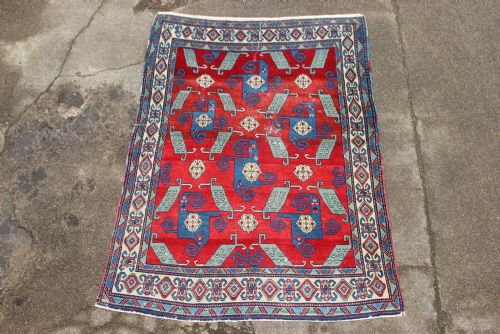
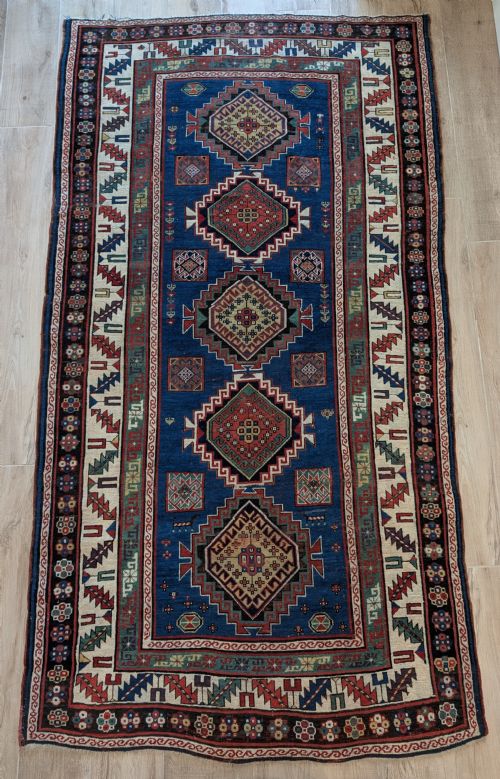
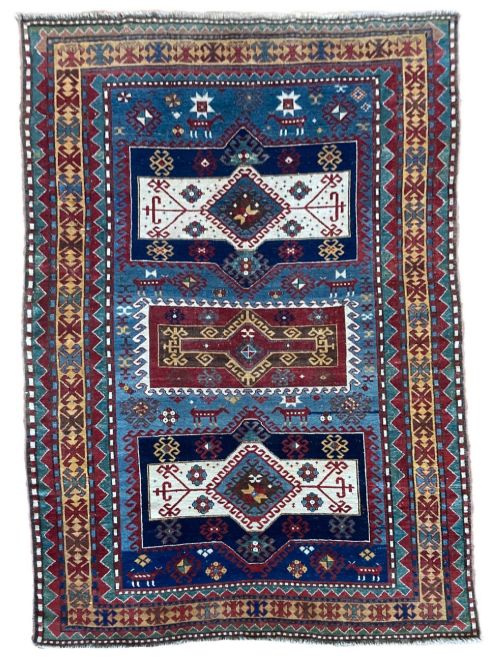
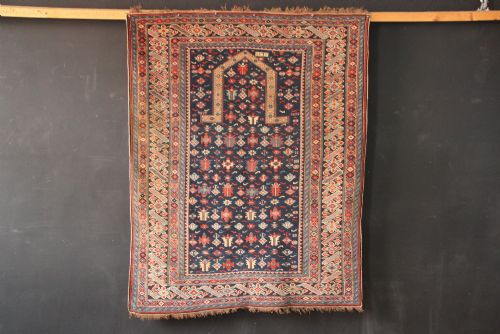
Blue Caucasian Tribal Rug
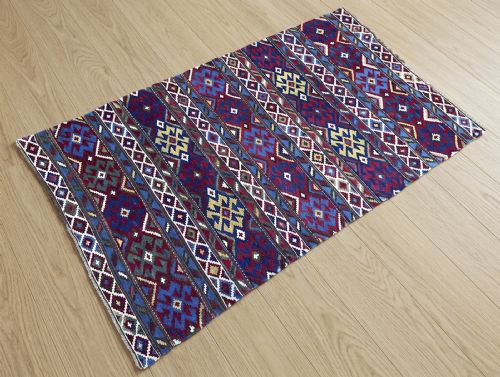
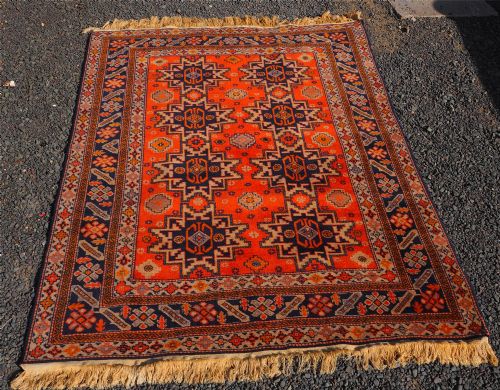
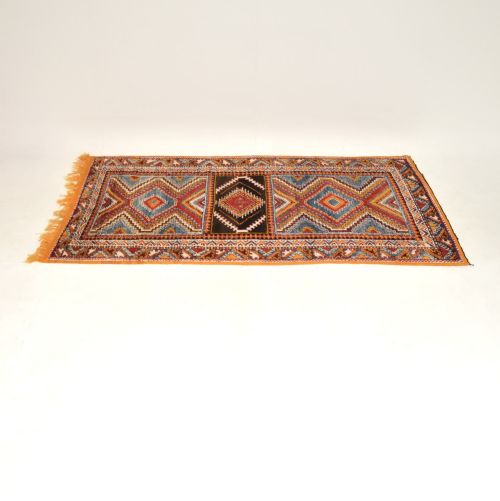
A blue caucasian tribal rug brings geometric energy and rich indigo depth into a room, offering authentic nineteenth and early twentieth century village weaving.
Blue Caucasian Tribal Rug
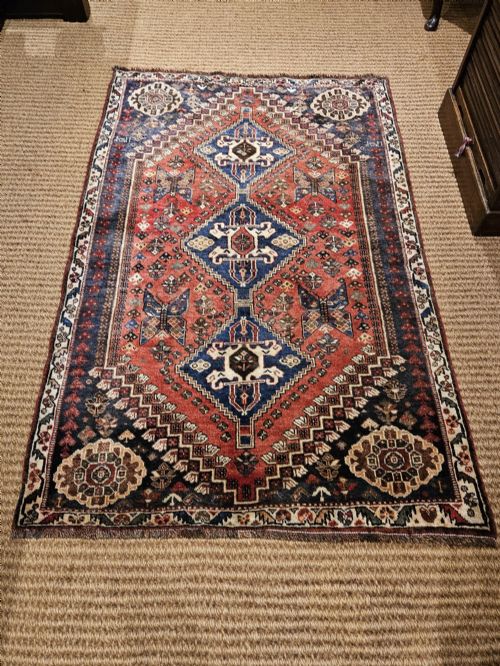
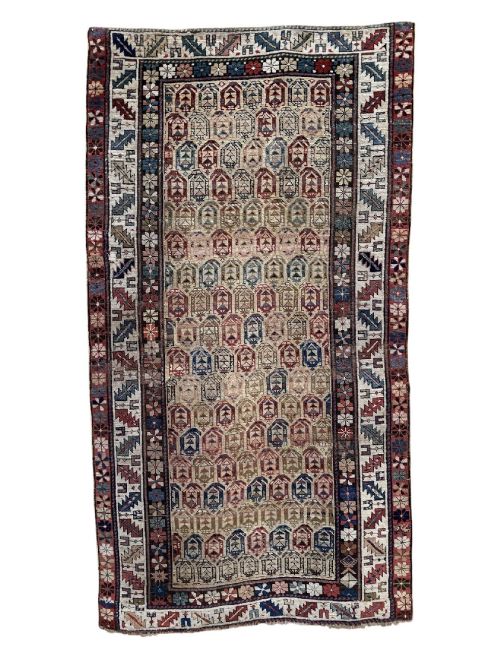
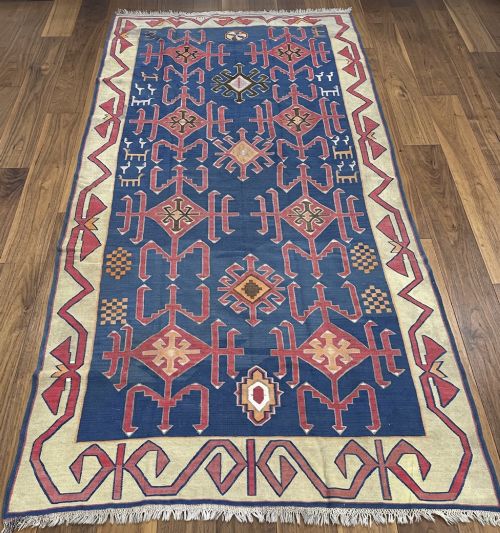
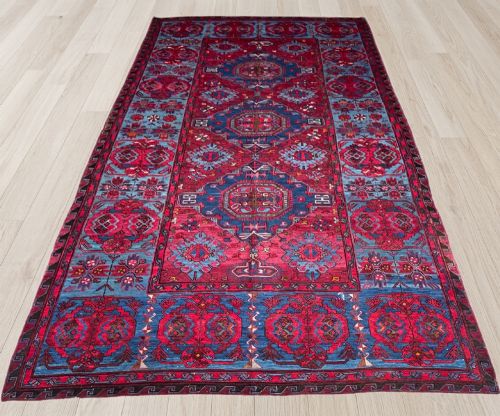
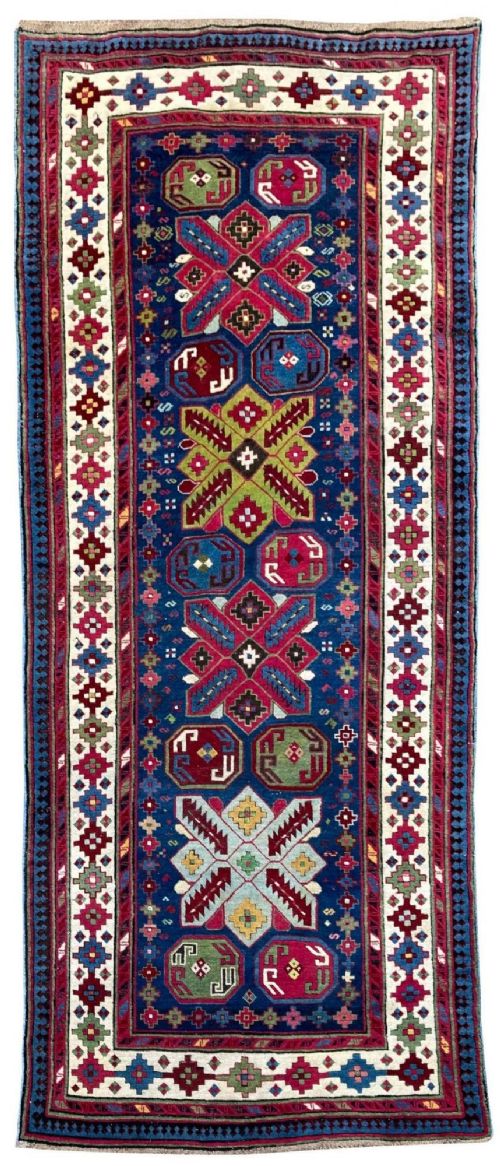
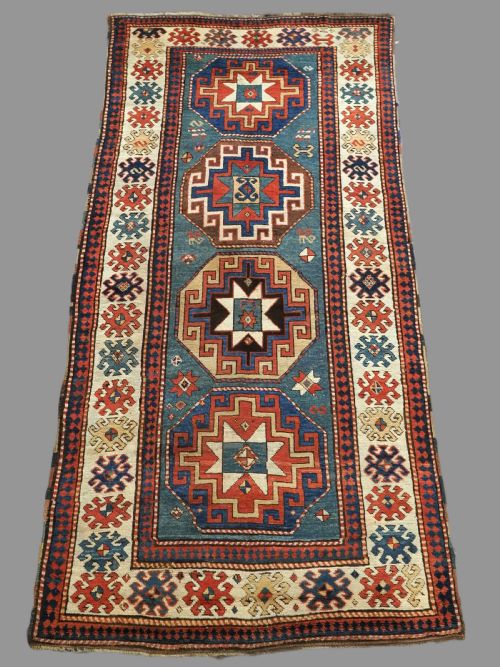
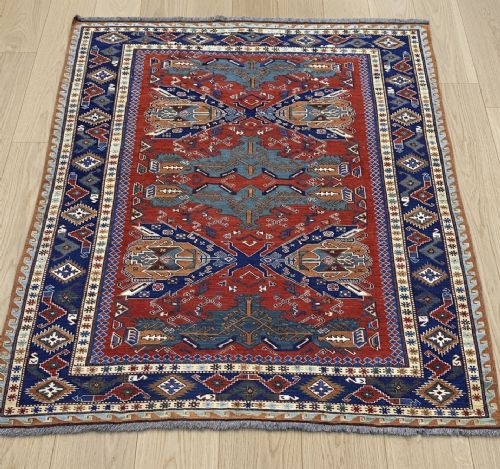
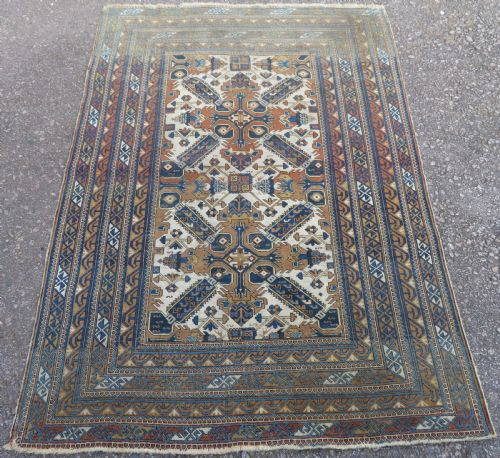
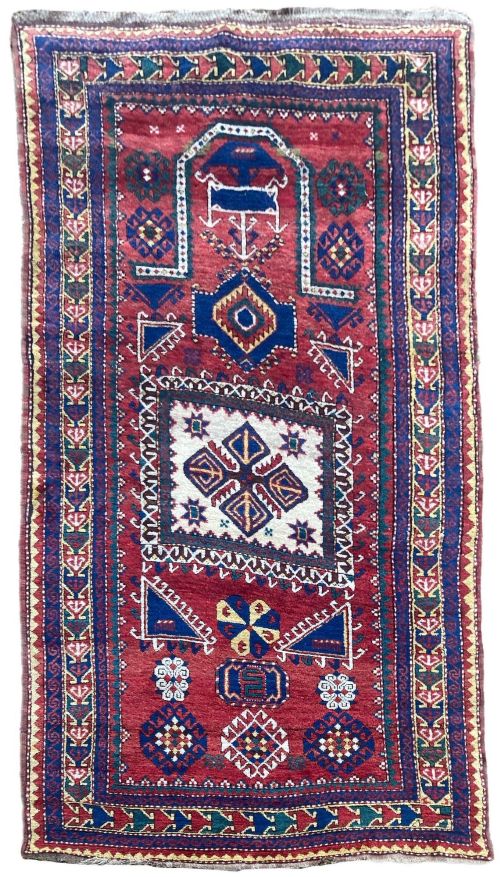
A blue caucasian tribal rug brings together village and nomadic weaving traditions from the Caucasus region, frequently dating from the nineteenth and early twentieth centuries. These floor coverings span rectangular room sizes, long runners, and smaller prayer formats bearing strong geometric motifs.
The selection here draws heavily upon traditional Caucasian styles such as Kazak, Kuba, Shirvan, and Talish, alongside Kurdish and Shahsavan pieces. Buyers encounter various formats, including square area rugs, narrow runners, and specific regional layouts like pinwheel designs or lattice fields.
Dating ranges from the mid-nineteenth century through to the early decades of the twentieth century, encompassing periods like 1850, 1870, 1880, 1900, and 1910. These examples reflect the distinct weaving villages and mountainous regions of the East and South Caucasus.
Materials and construction
Makers utilised wool, cotton foundations, and hand-spun wool, dyed using natural colorants to build deep indigo and sapphire fields. The interplay of hand-spun fibres gives these textiles their characteristic surface texture and varied absorption of dye.
Weaving techniques include standard pile knotting for Kazak and Kuba pieces, alongside flat-woven kilims, Soumak carpets, and soumak structures. These diverse methods dictate the weight, drape, and structural rigidity of each individual textile.
Blue Caucasian Tribal Rug Retail Price Guide 2026
Typical asking prices for blue caucasian tribal rug among the pieces listed under this phrase on Sellingantiques today, from the lower quarter to the upper quarter. They describe what is for sale here now, not the wider market.
Listings feature pieces dated from 1850 up to the 1920s, constructed predominantly from wool, hand-spun wool, and cotton.
Assessing quality
Quality rests upon the crispness of the geometric drawing, the saturation of the natural dyes, and the handling of the wool. Pieces with exceptional hand-spun wool show a lustrous pile that interacts dynamically with light.
The precision of regional motifs, such as Lezghi stars or Fachralo prayer niches, separates standard village output from superior examples. Structural integrity and the retention of original outer borders further define the tier of a piece.
The Blue Caucasian Tribal Rug Glossary
- Kazak
- A specific style of Caucasian rug known for bold geometric medallions, saturated primary colours, and sturdy wool construction. These village pieces originate from the western region of the Caucasus.
- Soumak
- A flat-weave technique where the coloured pattern threads are wrapped over the warp threads before moving to the next, creating a dense, durable textile without a cut pile. This method produces crisp geometric outlines.
- Prayer rug
- A format featuring a mihrab or niche design at one end, traditionally used for daily devotion. Collectors value these for their concentrated symbolic geometry.
- Kelleh
- A large, elongated format of carpet traditionally suited to the proportions of traditional Middle Eastern reception rooms. They offer substantial length while maintaining narrower widths than standard carpets.
- Natural dyes
- Colourants derived from plants, insects, and minerals before the introduction of synthetic aniline dyes in the later nineteenth century. They yield harmonious hues that age with subtle variation.
Blue Caucasian Tribal Rug: Frequently Asked Questions
Where were these rugs made?
These textiles originate from the Caucasus region, situated between the Black Sea and the Caspian Sea. Villages and nomadic groups across Daghestan, Shirvan, and Kazak produced them.
Local tribes utilised regional motifs and hand-spun materials, passing down specific weaving patterns through generations.
How do I care for an old rug?
Protect the textile by placing a quality underlay beneath it to prevent slipping and reduce fibre friction. Vacuum gently using suction only, avoiding rotating brush bars.
Keep the piece away from direct, harsh sunlight to protect the natural indigo and accent dyes from fading over time.
What does tribal mean in this context?
The term denotes pieces woven by nomadic or village communities rather than urban workshops. These makers relied on memory, tribal tradition, and local symbolism rather than pre-drawn cartoon designs.
This method results in charming asymmetries and direct, expressive geometric layouts.
How can I tell the age of a piece?
Age is assessed through the analysis of wool quality, the presence of natural dyes, and structural wear patterns. Earlier nineteenth-century examples often display softer, more depressed foundations and organic colour variations.
Stylistic markers, such as specific border arrangements and regional palette choices, help narrow down the decade of production.