
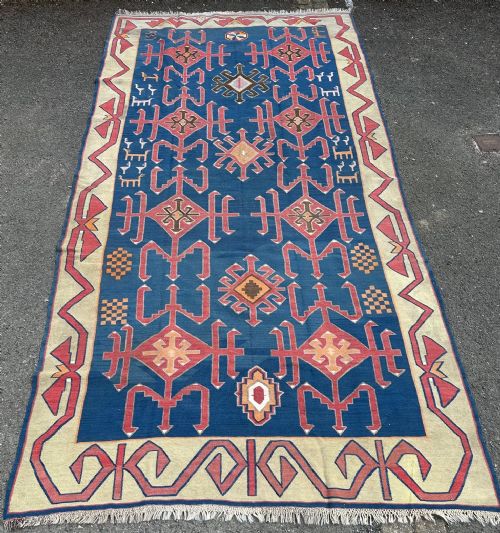


Caucasian Kilim Rug
When you search for a caucasian kilim rug, you are looking at flat-woven tribal textiles created by nomadic and village weavers across the Caucasus.
Caucasian Kilim Rug
A caucasian kilim rug encompasses flat-woven carpets, runner rugs, and utilitarian storage pieces produced by various regional groups including the Shahsavan, Shirvan, and Karabagh. These textiles function primarily as portable floor coverings, wall hangings, and functional containers for nomadic households.
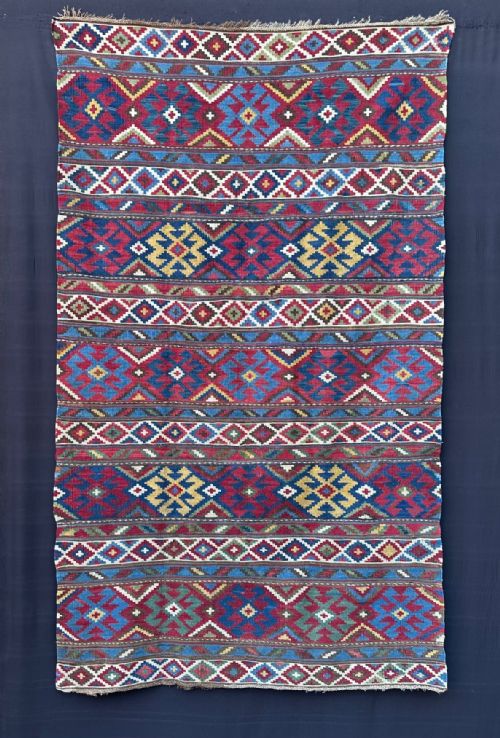
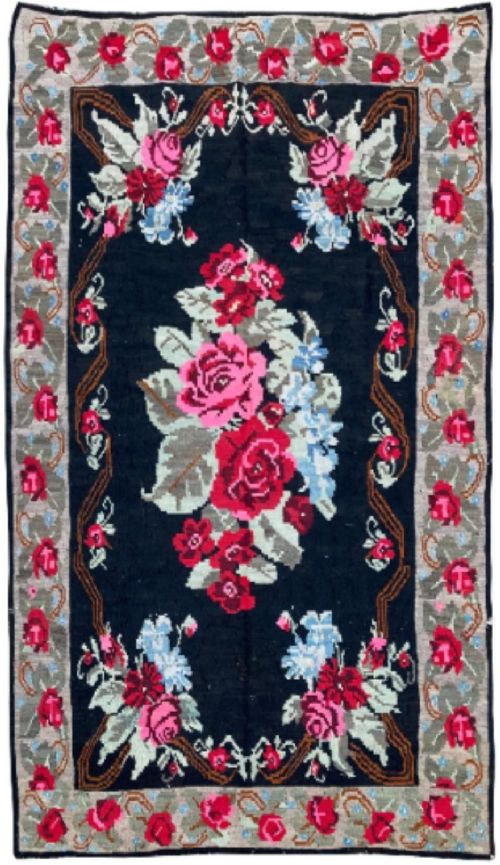
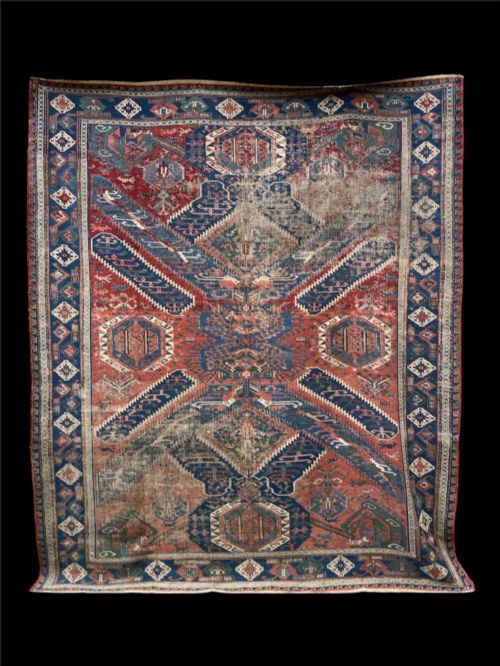
The objects appearing on this page span from the nineteenth century into the early twentieth century, showing distinct village and tribal designs. Pieces often feature banded patterns, large geometric shields, medallions, or structured pictorial elements characteristic of Eastern and Southern Caucasus production.
How they were made
Weavers construct these textiles using hand-spun wool and cotton foundations combined with slit-tapestry weaving techniques that produce crisp geometric boundaries without pile. Artisans employ natural dyes to achieve soft, rich colour palettes across field patterns and borders.
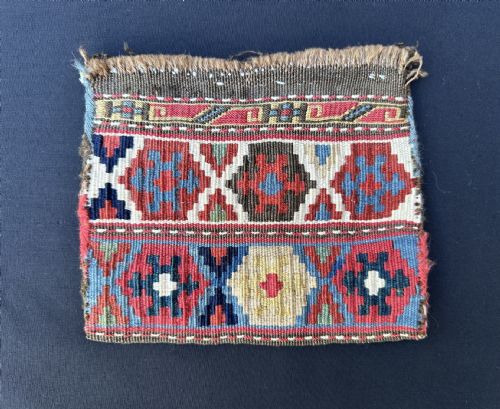
Certain examples incorporate supplementary brocading techniques, such as soumak or zili weaves, adding textural relief and structural complexity to the flat surface. The integration of wool and natural colourants ensures durability while maintaining flexibility for travel and daily domestic use.
The inventory records regional attributions from Shirvan, Daghestan, Karabagh, and Azerbaijan, alongside utilitarian forms including storage bags and cushions.
What varies in quality
The fineness of the weave and the precision of the geometric layout dictate the technical merit of an individual piece. Dense structures and tightly packed slit-tapestry junctions indicate high competence from the weaver.
A balanced colour distribution using complex natural dye palettes distinguishes exceptional examples from simpler regional output. The integrity of the original edges and the preservation of structural panels determine the overall condition of older textiles.
The Caucasian Kilim Rug Glossary
- Kilim
- A flat-woven carpet or rug produced without pile by tightly interweaving warp and weft threads. This technique creates a lightweight textile with identical patterns visible on both sides.
- Soumak
- A brocaded flat-weave technique where coloured weft threads wrap around the warp strands in a continuous pattern. This method produces a raised textured surface on the face and loose threads on the reverse.
- Mafrash
- A large rectangular storage bag or chest panel used by nomadic tribes for transporting household goods. These panels are frequently separated and repurposed into smaller rugs or cushions.
- Banded design
- A decorative layout characterised by horizontal stripes or repeating horizontal bands filled with geometric motifs. This arrangement appears frequently in Shirvan and regional production.
- Natural dyes
- Colourants derived from plant, insect, and mineral sources prior to the widespread adoption of synthetic aniline dyes. These materials age with subtle tonal variations and softer patination.
Caucasian Kilim Rug: Frequently Asked Questions
What is a caucasian kilim rug?
A caucasian kilim rug is a pileless, flat-woven textile created by tribal and village weavers residing in the Caucasus region. These pieces utilise traditional geometric patterns and regional weaving structures passed down through generations.
They serve as decorative floor coverings or wall displays, reflecting the specific cultural aesthetics of groups such as the Shahsavan, Shirvan, and Karabagh.
How were these rugs used originally?
Nomadic and village communities utilised these flat-weaves as floor spreads, bedding covers, and animal transport accessories. Storage bags like mafrashes were packed with household belongings during seasonal migrations.
Over time, many utilitarian storage containers and panel assemblies have been preserved or converted into decorative domestic furnishings.
How do I care for an antique kilim?
Protect antique flat-weaves by placing a quality rug underlay beneath them to prevent slipping and reduce friction against hard floors. Gentle vacuuming without a rotating brush roll helps remove embedded dust safely.
Keep these textiles away from direct, harsh sunlight to prevent natural dye fading, and consult a specialist in antique textiles for professional cleaning.
How can I tell regional styles apart?
Regional attribution relies on observing specific structural traits, colour palettes, and characteristic geometric motifs. Shirvan pieces frequently display refined banded layouts, whereas Karabagh examples often incorporate large medallions or distinct floral abstractions.
Examining the weave density and material composition further clarifies whether a piece originates from the Eastern, Southern, or Daghestan areas of the Caucasus.