

Blue and White Jars
These blue and white jars bring cobalt pigment and tin glaze together across centuries of domestic display.
Blue and White Jars
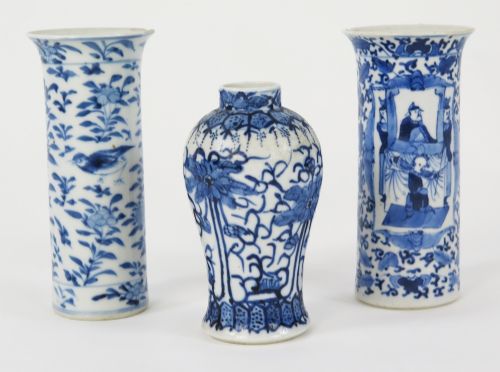
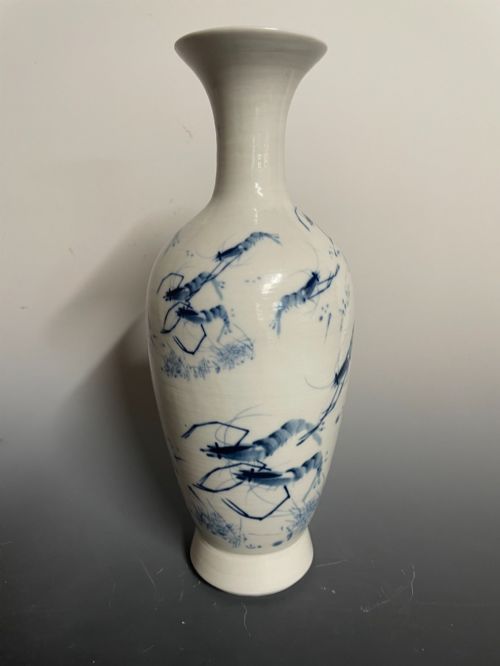
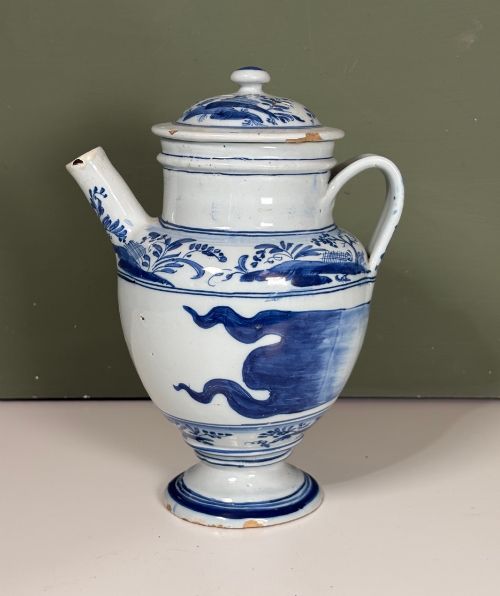
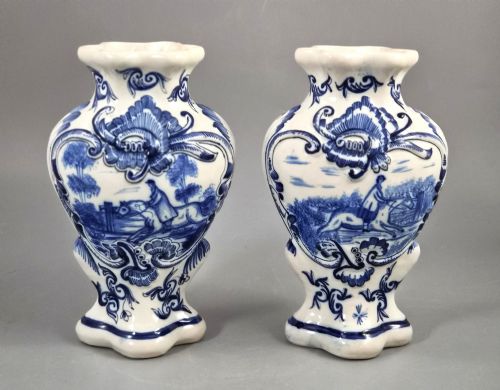
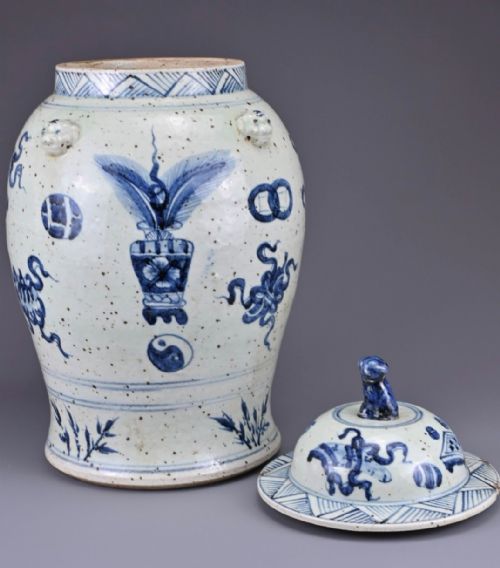
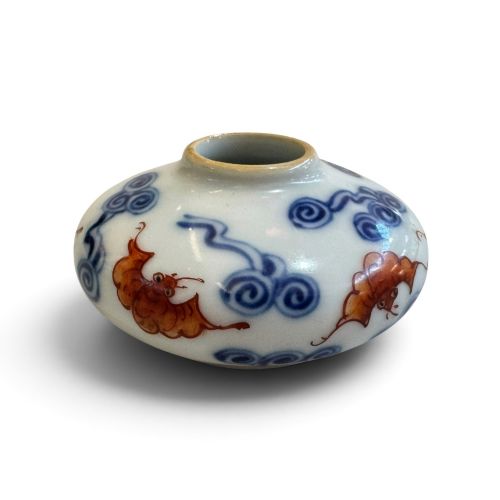
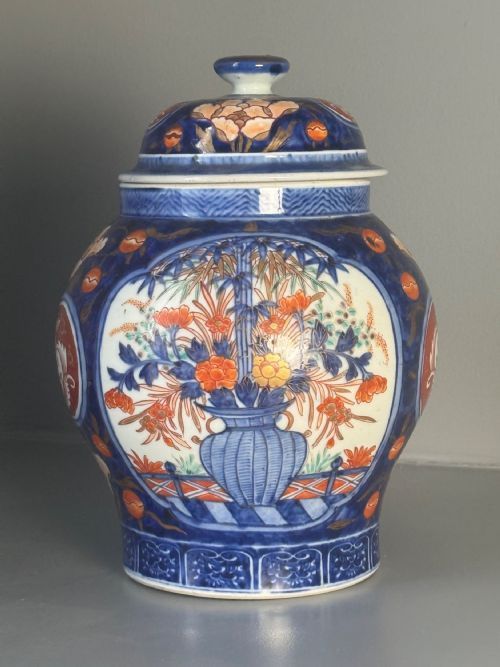
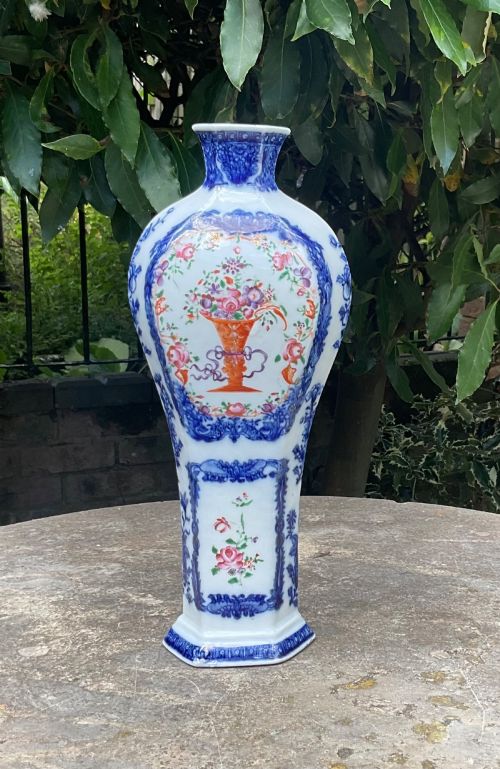
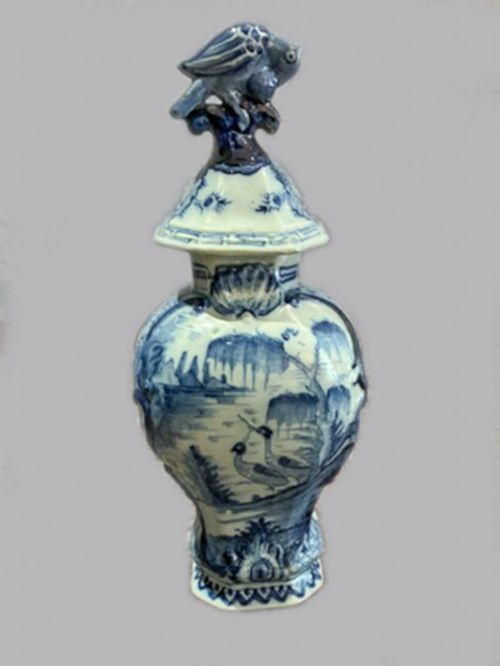
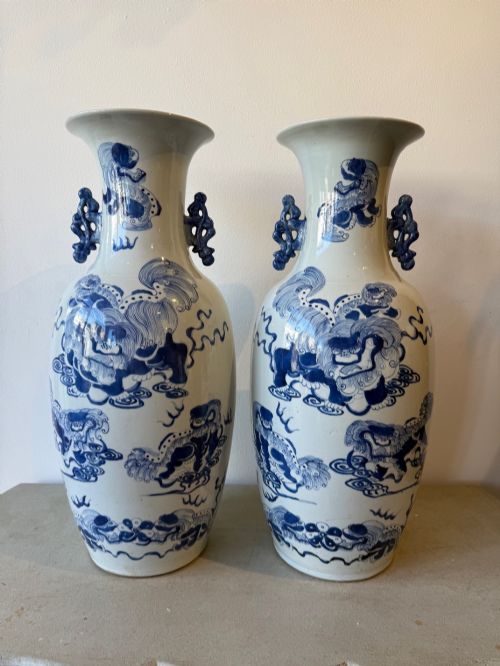
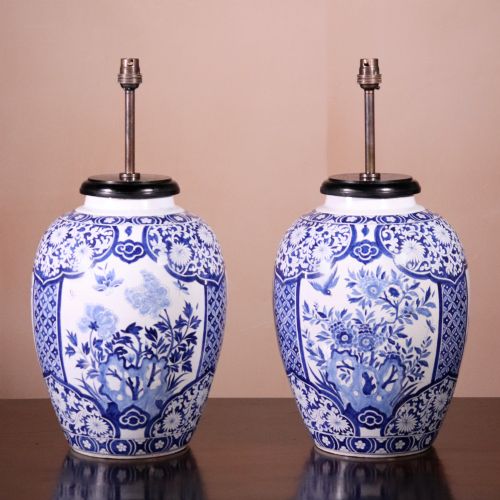
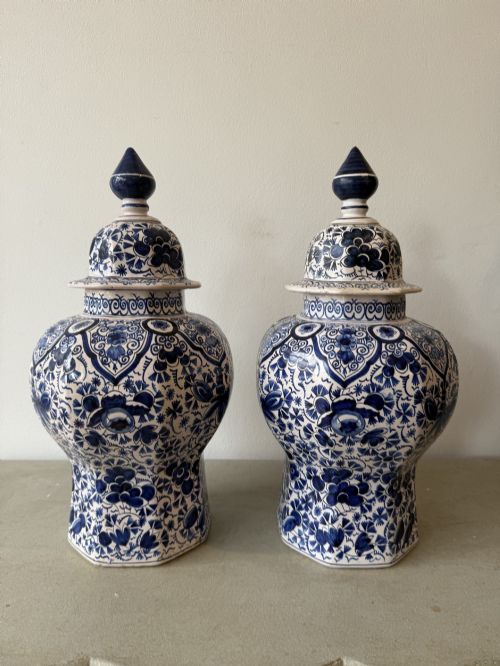
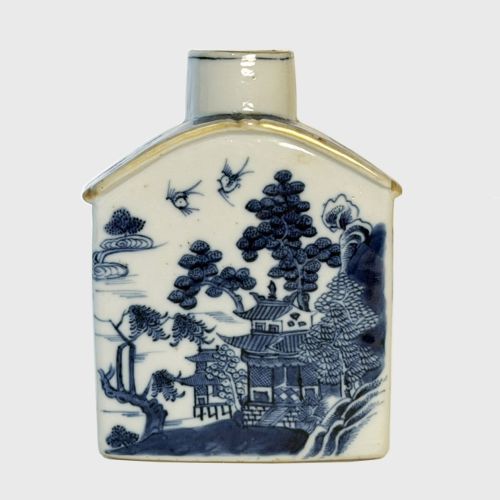
Blue and white jars encompass utilitarian apothecary vessels, lidded baluster forms and export porcelain pieces from Chinese, English, Dutch, French and Italian origins. Buyers searching for blue and white jars encounter utilitarian storage vessels alongside decorative Chinese export items and European delftware.
The selections span production from the seventeenth century through to the Edwardian period, uniting utilitarian pharmacy containers with ornamental mantel pieces. Chinese export porcelain and European tin-glazed earthenware dominate the physical forms seen across these categories.
Materials and technique
Makers utilised porcelain, earthenware and ceramic bodies, coating them in white tin glaze or clear transparent finishes before applying cobalt pigment by hand. Underglaze decoration required precise brushwork directly onto the absorbent clay body prior to firing.
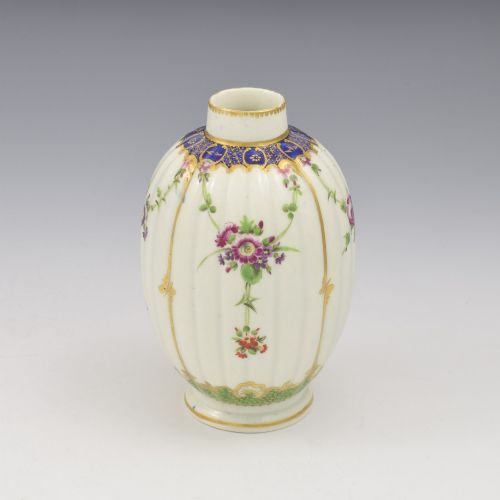
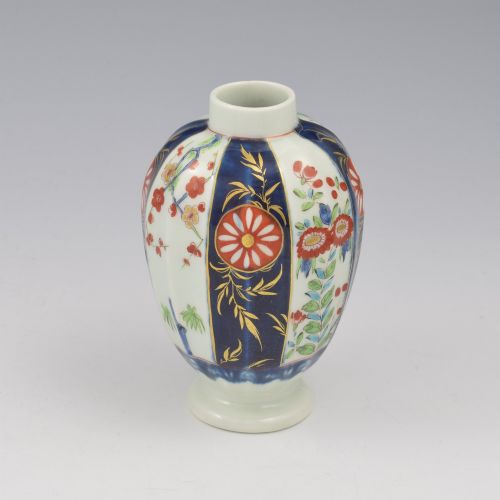
Certain English and continental workshops integrated gold leaf accents or ironstone bodies to alter the visual weight of the finished vessel. The chemistry of the kiln determined whether the cobalt blue achieved a soft, feathered bleed or a sharp, dark definition.
Historical drug jars once stored questionable cures like crushed pearls and earthworms, neatly labelled in flowing blue script.
Evaluating execution
Quality rests upon the crispness of the cobalt painting and the stability of the glaze during high-temperature firing. Finer examples display confident, fluid brushwork that defines botanical or figurative motifs without pooling or running into the white ground.
The survival of original matching lids and the absence of extensive glaze flaking elevate a vessel's standing among collectors. Earlier pieces from the seventeenth and eighteenth centuries command attention through the depth of the mineral blue and the balance of the thrown clay form.
Fourmaintraux Courquin·Makuzu Kozan
The Blue and White Jars Glossary
- Albarello
- A cylindrical pharmacy jar designed for holding dry drugs or ointments, originating in the Middle East and adopted across Italian and European potteries. These vessels typically feature an incurved waist to allow easy handling on apothecary shelves.
- Tin-Glazed Earthenware
- Pottery covered with a white opaque glaze containing tin oxide, providing a smooth canvas for cobalt blue painting. This technique unites Dutch delftware, English delft and French faience.
- Baluster
- A vase form with a rounded body that tapers toward a narrow neck and flares slightly at the rim, resembling architectural balusters. This profile provides stability and generous surface area for pictorial decoration.
- Underglaze
- Pigment applied directly to the unfired ceramic body or unglazed surface before a protective transparent glaze is added. The technique locks the blue decoration permanently beneath the glossy surface layer.
Blue and White Jars: Frequently Asked Questions
How do I identify an apothecary jar?
Apothecary jars usually feature straight cylindrical bodies, waisted profiles, or specific drug labels painted within floral cartouches. They were originally utilised in European dispensaries to store medicinal herbs, wet syrups, or dry powders.
Many bear Latin inscriptions or pharmaceutical abbreviations to denote their contents. Their robust earthenware construction and tin glazes set them apart from decorative table vases.
What is the difference between delft and porcelain?
Delftware consists of a porous earthenware body covered in an opaque tin glaze that absorbs cobalt pigment with a slightly soft edge. Porcelain employs a dense, vitrified clay body fired at higher temperatures to create a hard, resonant material.
Chinese export porcelain and English porcelain bodies remain impervious to liquids even without glaze. European delft relies entirely on the tin glaze layer to seal the underlying buff or pinkish earthenware.
How should I display these jars at home?
These jars anchor room schemes when placed on sideboards, mantels, or within glazed cabinets where natural light illuminates the cobalt pigment. Pairing lidded baluster forms with open vases creates height variation on deep wooden surfaces.
Avoid placing antique earthenware in direct sunlight or damp environments to protect the tin glaze surface. Stable indoor temperatures preserve the integrity of the original ceramic body over time.
Are lids usually original to these jars?
Finding a jar with its matching original lid remains uncommon due to centuries of domestic handling and separation. Many surviving lidded pieces have been paired together during later periods to complete the silhouette.
Inspect the fit, glaze colour, and wear patterns around the rim to determine if the cover shares the same origin. Even married lids add decorative symmetry to baluster and ginger jar forms.