




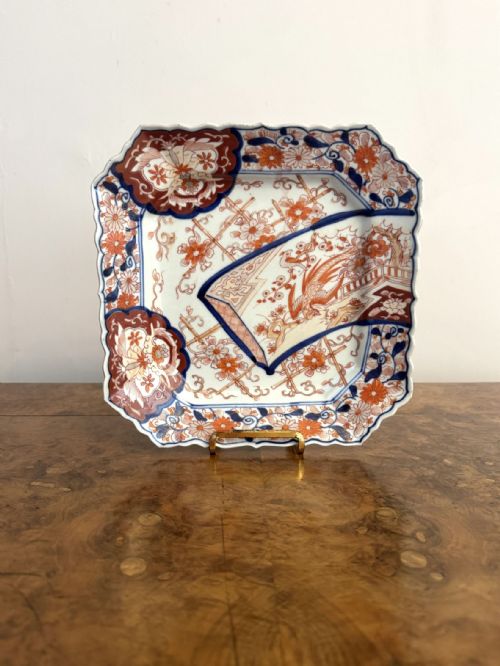
Blue and Orange Porcelain Dish
A blue and orange porcelain dish brings the rich palette of Imari work and export ceramics into domestic spaces.
Blue and Orange Porcelain Dish
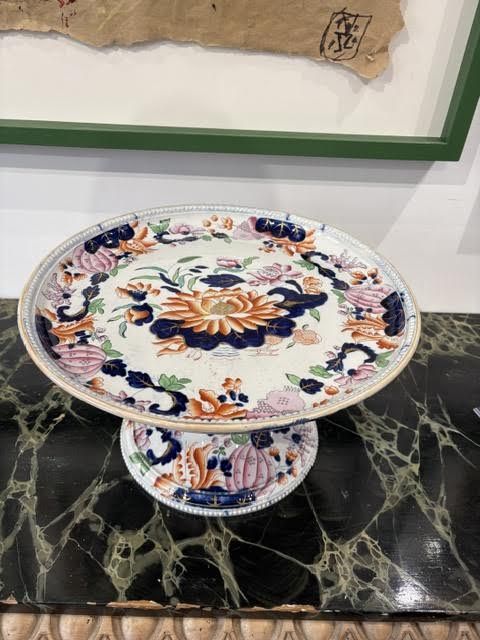
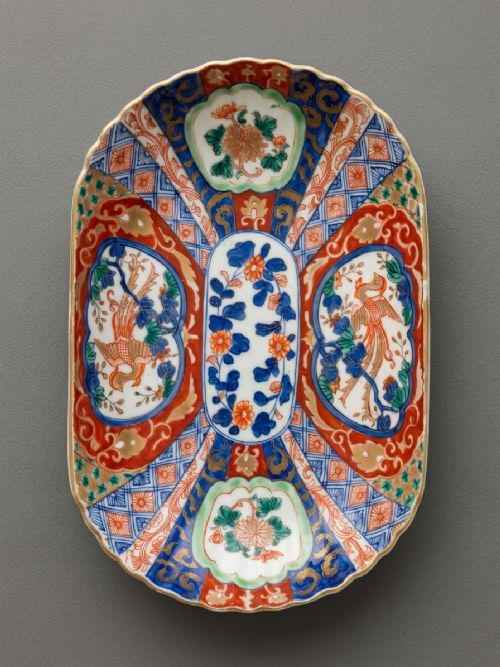
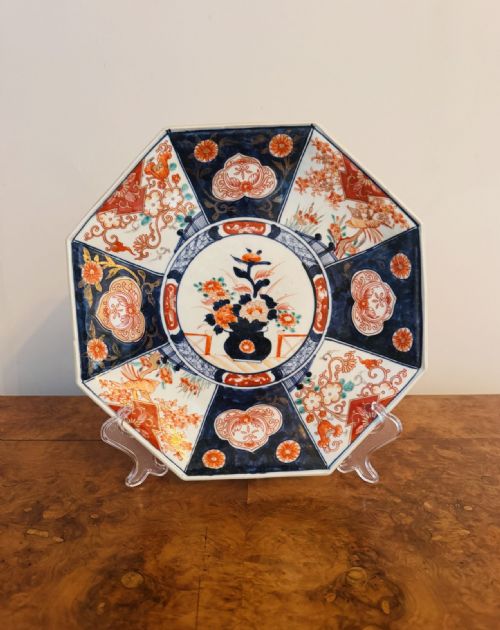
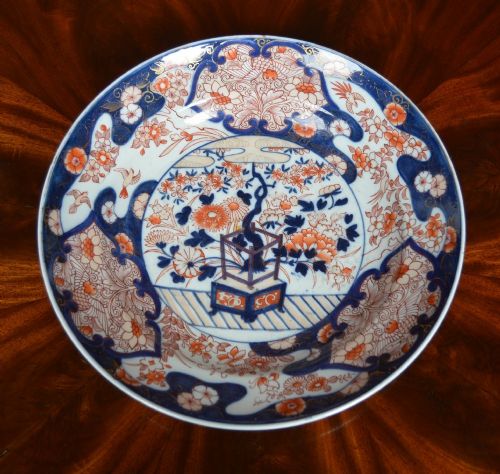
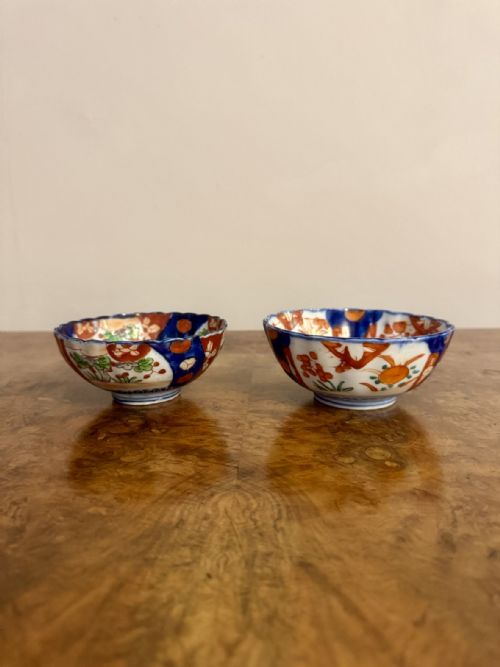
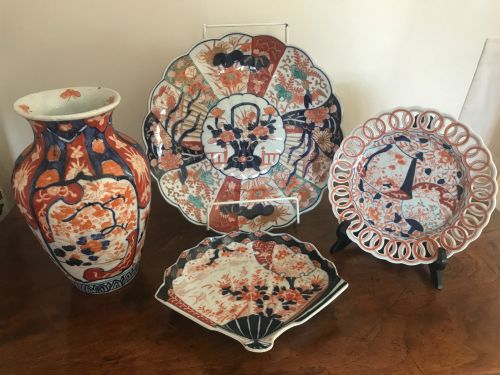
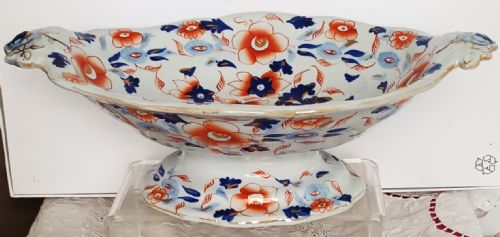
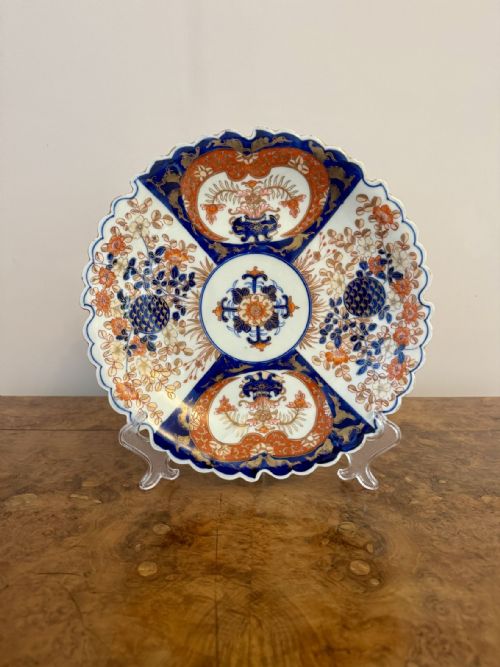
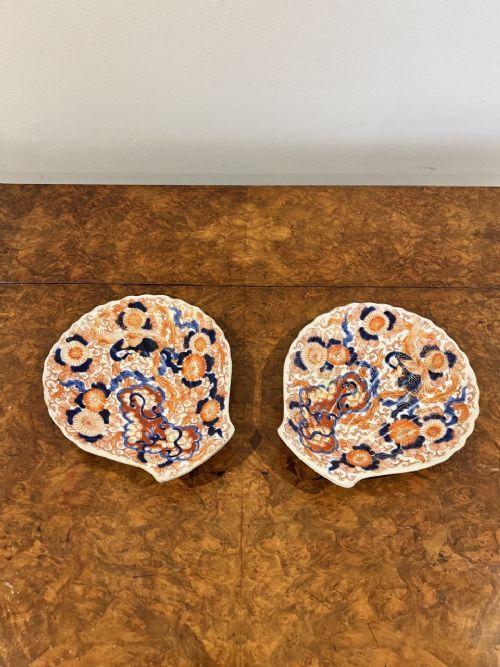
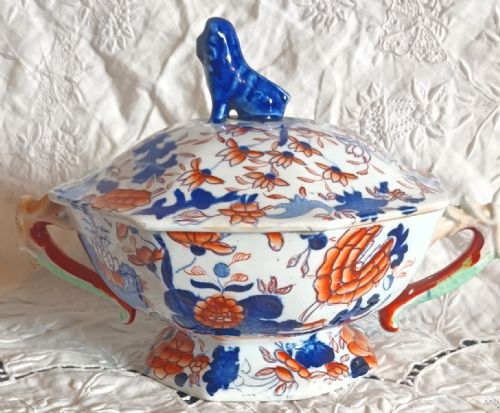
When you search for a blue and orange porcelain dish, you encounter decorative ceramics that span centuries of global trade and domestic display. The pieces on this page are predominantly Japanese Imari plates, chargers, and bowls from the Meiji period and the year nineteen hundred, alongside English ironstone and Chinese export pieces.
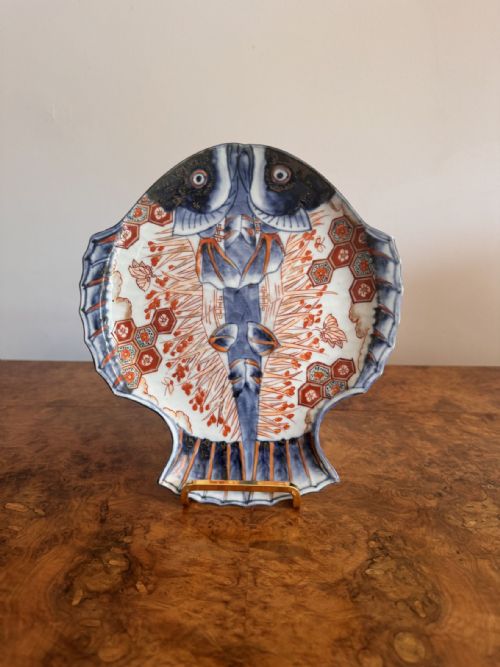
Forms vary widely from standard round chargers to shell shapes, square plates, fan shapes, and boat-shaped dishes. Collectors find these items used traditionally for display, offering vibrant colour combinations that anchor a room's aesthetic.
How they were made
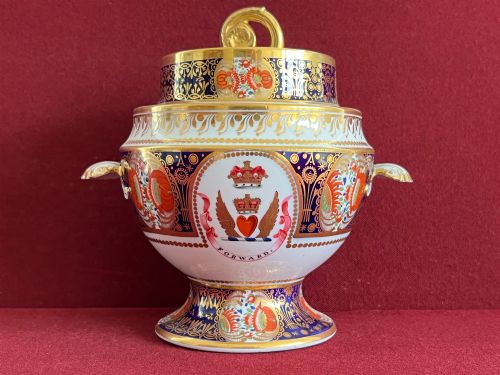
These items rely on porcelain, ceramic, and ironstone bodies painted by hand under or over the glaze. Cobalt blue and iron red form the backbone of the palette, frequently enhanced by gilt, gold leaf, and enamel details.
Potters shaped these ceramics on wheels or pressed them into moulds to create scalloped edges, ribbed ribbons, and geometric forms like hexagonal and square plates before firing and painting.
Blue and Orange Porcelain Dish Retail Price Guide 2026
Typical asking prices for blue and orange porcelain dish among the pieces listed under this phrase on Sellingantiques today, from the lower quarter to the upper quarter. They describe what is for sale here now, not the wider market.
Fish-shaped plates swim alongside standard round chargers.
What varies in quality
Quality rests upon the crispness of the hand painting and the complexity of the design, such as figures depicting the Seven Lucky Gods or intricate floral panels. Finer examples display precise brushwork in the cobalt underglaze and rich, unrubbed application of gold leaf and enamel overglaze.
The physical form dictates distinction, with unusual shapes like fish, fans, and shells requiring greater skill from the potter than a standard round plate. Heavy, well-potted bodies and crisp moulding around scalloped edges separate ordinary utility wares from superior decorative items.
John Davenport of Longport·Mason's·Royal Crown Derby
The Blue and Orange Porcelain Dish Glossary
- Imari
- A style of Japanese export porcelain originating from the port of Arita, traditionally decorated in underglaze blue and iron red with added gold. This palette defines the majority of pieces found in this category.
- Charger
- A large decorative plate or dish intended for display on a sideboard or wall rather than for serving food at the table. These items measure larger than standard dining plates.
- Ironstone
- A type of durable heavy earthenware developed in nineteenth-century England as a sturdy alternative to porcelain. Makers like Mason and Davenport utilised this ceramic body for Japan pattern wares.
- Meiji Period
- The era in Japanese history spanning from eighteen sixty-eight to nineteen twelve, noted in these listings for hand-painted porcelain chargers and bowls. Pieces from this time often exhibit bold colours and detailed motifs.
- Comport
- A footed dish or bowl raised on a pedestal, used for displaying fruit or sweetmeats on the dining table. These ceramic pieces add height to a table setting.
Blue and Orange Porcelain Dish: Frequently Asked Questions
What is an Imari dish?
An Imari dish is a piece of Japanese export porcelain decorated in a distinct palette of cobalt blue and iron red, frequently highlighted with gold. These items were produced for international export and display.
They reflect centuries of ceramic exchange, combining bold pigments with intricate surface patterns that catch the light.
How were chargers used?
Chargers are large plates designed primarily for decorative display on walls, sideboards, or tables rather than practical dining use. Their generous diameters allowed artisans to paint complex scenes.
In historic interiors, they served to showcase wealth and taste through vibrant colour and pattern.
How do I date these ceramics?
Dating relies on stylistic markers, ceramic bodies like ironstone or porcelain, and recorded periods such as the Meiji era or the nineteenth century. Examining the foot ring and glaze characteristics also aids attribution.
Consulting the specific details provided in each listing helps place the piece within its historical manufacturing window.
Are these dishes safe for food?
Most antique decorative dishes are intended for display and collection rather than daily culinary use due to historic wear and metallic overglazes. Hand-painted surfaces require gentle care.
Displaying them on stands or walls preserves the fragile enamel and gold leaf decoration for the future.