



Blonde Wood Writing Desk
A blonde wood writing desk offers pale grain and practical surface area, bringing lightness to a study while keeping papers in order.
Blonde Wood Writing Desk
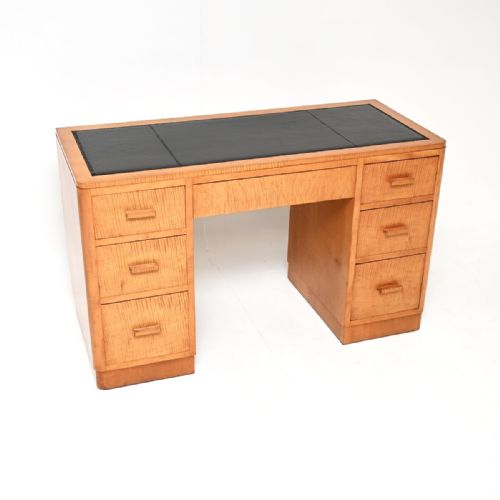
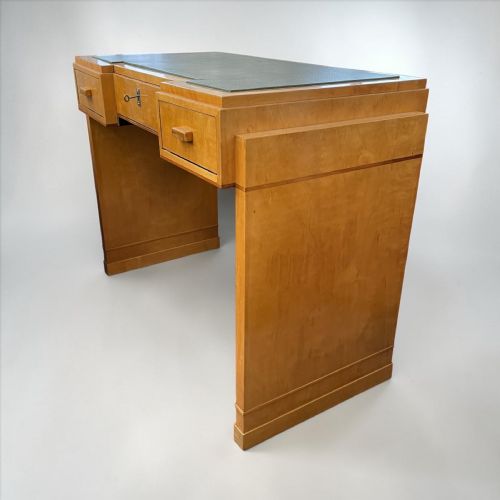
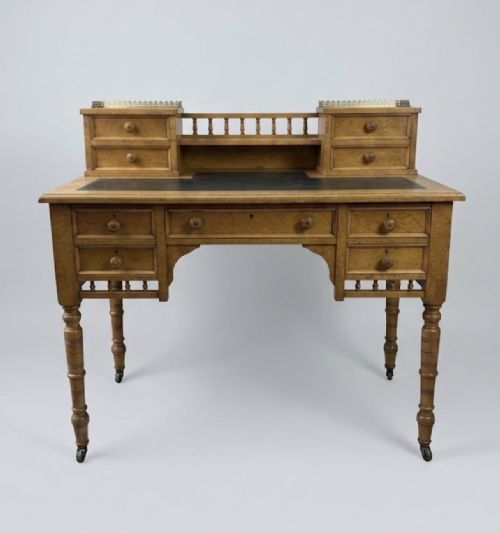
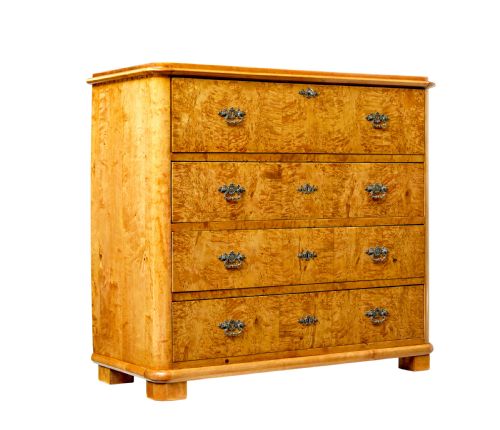
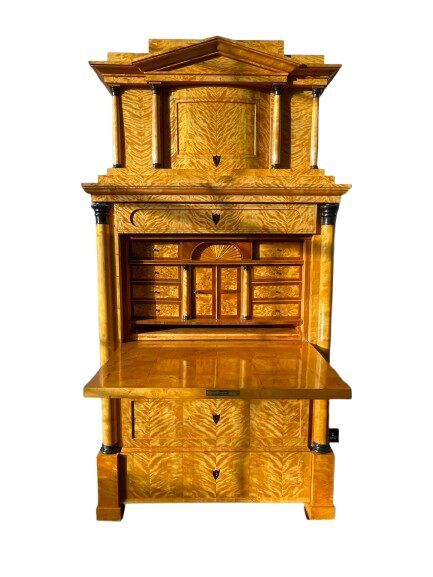
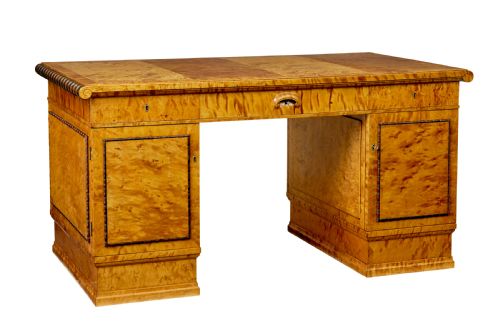
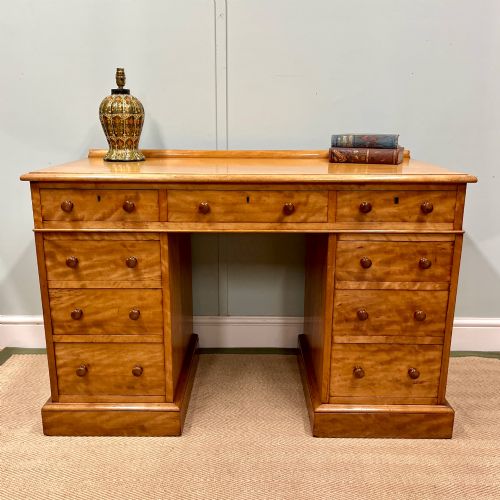
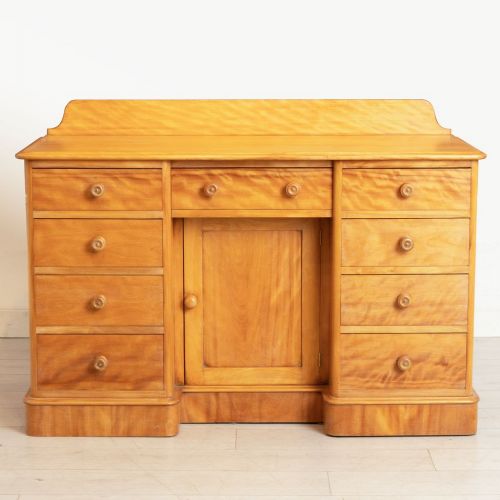
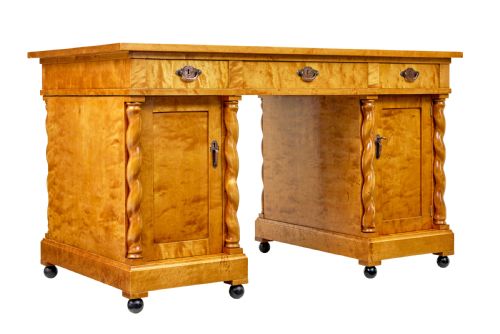
A blonde wood writing desk brings together pale timbers like satin birch, birds eye maple, and burr birch into practical forms for the study. Buyers searching for a blonde wood writing desk encounter Victorian pedestal desks, Art Deco pedestal forms, and 19th-century secretaire chests from Sweden, Britain, and France.
The selection ranges from kneehole configurations with multiple drawers to fitted secretaires and simpler writing tables. These pieces utilise lighter timbers rather than dark mahogany or walnut, offering a distinct visual lightness within domestic workspaces.
Materials and construction
Makers utilised pale hardwoods and figured veneers, selecting satin birch, birds eye maple, and burr birch over heavier dark woods. These timbers were applied as veneers over stable secondary woods or worked as solid ash and pine carcasses, depending on the period.
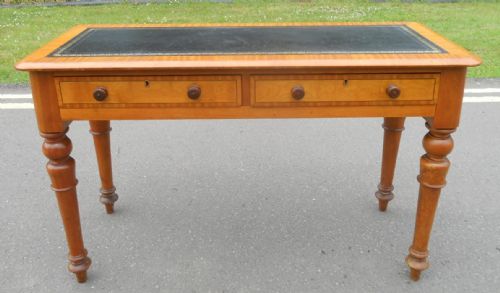
Details such as brass hardware, fitted leather writing surfaces, and hand-cut dovetail joints in the drawer construction define the build. Surface finishes were kept relatively clear to highlight the natural figuring of the grain rather than hiding it beneath heavy stains.
Listings feature satin birch, birds eye maple, and burr birch across Victorian, Art Deco, and 19th-century periods.
Distinctions in quality
Quality rests in the selection of the timber veneer and the precision of its book-matching across drawer fronts and desk tops. Uniformity of grain pattern and careful handling of complex curves separate finely judged workshop pieces from standard commercial output.
Internal construction, including solid drawer linings and original brass handles, marks the difference between well-preserved examples and heavily altered items. The integrity of the secondary woods and the neatness of the joinery tell the true story of the maker's hand.
Heal and Son·Heal’S, London·Gillows
The Blonde Wood Writing Desk Glossary
- Satin birch
- A pale, fine-grained timber often utilised for high-status Victorian and Art Deco furniture. It provides a shimmering, golden surface appearance.
- Birds eye maple
- A figured timber marked by tiny swirling eyes within the grain pattern. It was frequently employed on Victorian and French surface veneers.
- Pedestal desk
- A form featuring two supporting banks of drawers beneath a main writing surface. This arrangement allows generous knee room in the centre.
- Secretaire chest
- A chest of drawers incorporating a fitted drop-front writing flap. It combines storage with a pull-out desk surface.
- Kneehole desk
- A compact desk design with a central recessed space for the legs. It typically includes smaller drawers flanking the opening.
Blonde Wood Writing Desk: Frequently Asked Questions
What woods count as blonde wood?
Blonde wood refers to pale timber varieties such as satin birch, birds eye maple, burr birch, and blonde mahogany.
These light natural tones distinguish these desks from the darker walnut and mahogany pieces common to the 18th and 19th centuries.
Are these desks suitable for daily use?
Most of these pieces were built for daily administrative tasks, offering sturdy drawers and writing surfaces.
Leather inserts and solid wood frames handle regular writing duties well, provided modern care guidelines are followed.
How do I date a pedestal desk?
Dating relies on carcass construction, drawer dovetailing techniques, and the choice of surface veneer.
Victorian examples often show dense satin birch with traditional brass pulls, while 1930s Art Deco pieces display cleaner, more streamlined silhouettes.
Where were these desks made?
The pieces originate from British workshops, French provincial makers, and Scandinavian cabinetmakers.
Regional preferences influenced whether a desk took the form of a Swedish pedestal model or a British kneehole variation.