
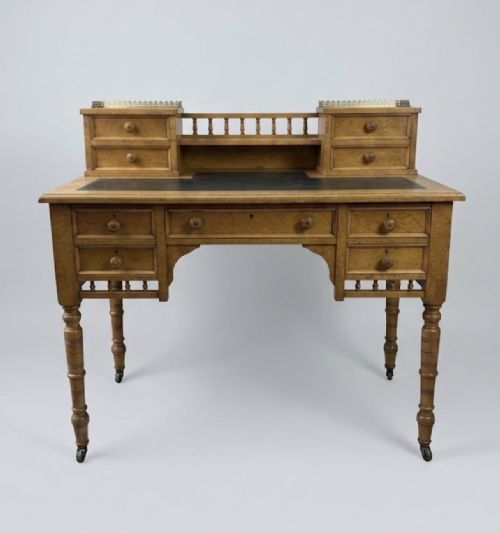
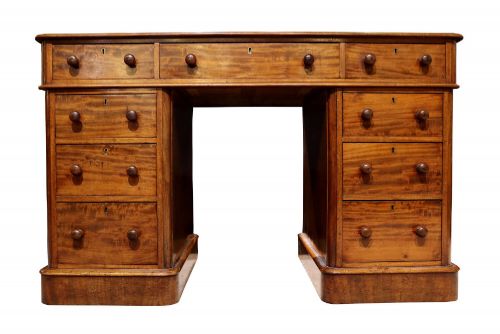

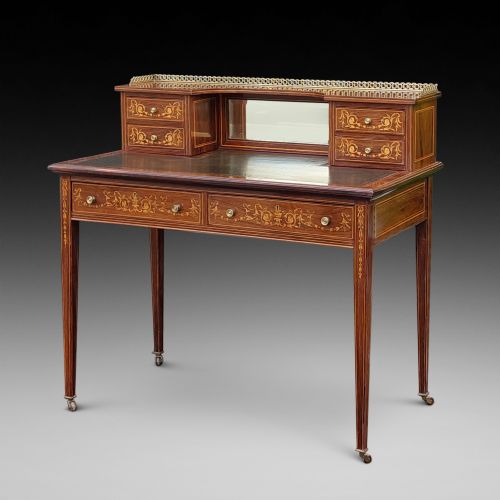


Maple Writing Table
A maple writing table brings figured timber and nineteenth-century craftsmanship into a room.
Maple Writing Table
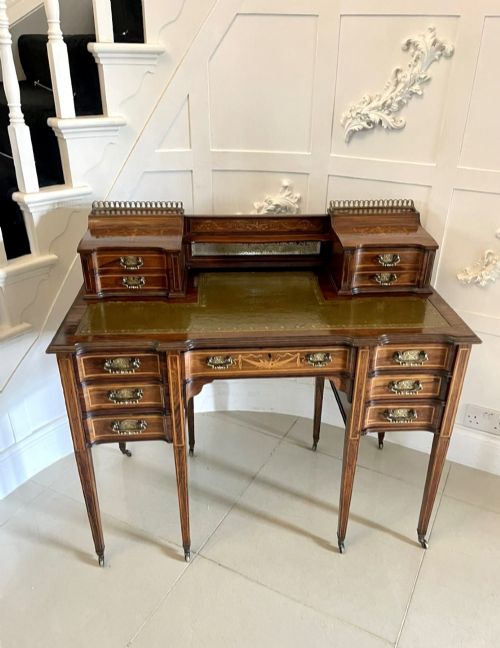
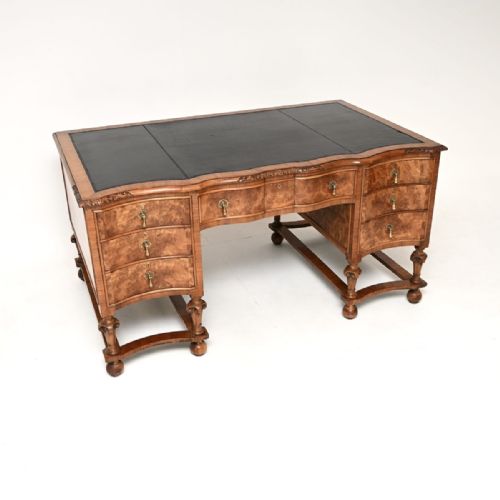
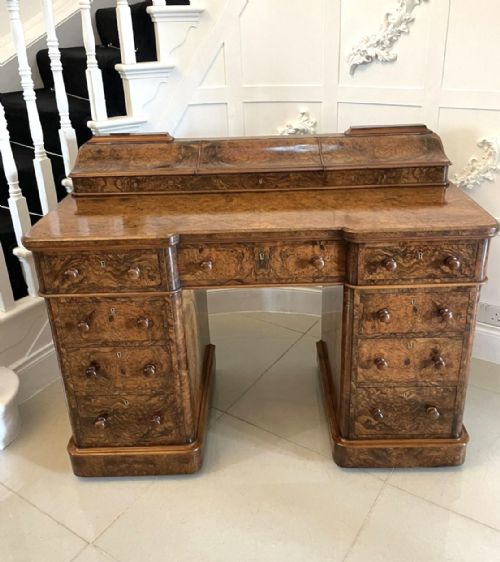
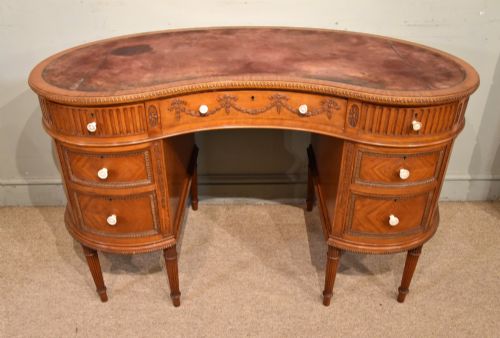
When you search for a maple writing table, you encounter forms that span the nineteenth century and the Edwardian era. These pieces range from simple side tables adapted for correspondence to elaborate pedestal desks and kidney-shaped surfaces.
The version you are most likely to meet on this page originates from Victorian and Edwardian workshops, frequently bearing the stamp or label of major retailers. They combine functional drawers with figured wood veneers tailored for domestic studies and reception rooms.
Materials and construction
Cabinet makers utilised bird's eye maple, burr walnut, and mahogany, often pairing figured timbers with contrasting inlay work. Leather inserts appear frequently on writing surfaces, providing a durable plane for correspondence.
Joinery techniques from the period relied on solid secondary woods for drawer framing and dovetailing for structural integrity. Brass handles, hinges, and locks complete the construction of these fitted pieces.
Ship's pursers required compact writing desks that remained steady while navigating rough seas.
Standards of manufacture
The division between standard items and superior examples lies in the selection of the timber veneer and the precision of the marquetry. Highly figured bird's eye maple or burl sections demand careful book-matching across the top and drawer fronts.
Internal construction also separates workshops, with secondary drawer linings in solid mahogany rather than pine indicating higher production standards. Retained brass hardware and original fitted leather surfaces further distinguish the finest pieces.
Maple and Co·Edward and Roberts·Gillows of Lancaster
The Maple Writing Table Glossary
- Bird's eye maple
- A figure in maple wood where small swirls in the grain resemble tiny eyes. This pattern occurs naturally and is prized for veneer work.
- Pedestal desk
- A heavy writing desk supported by two banks of drawers reaching down to the floor. They offer substantial storage alongside a central writing space.
- Marquetry
- The art of applying pieces of veneer to a structure to form decorative patterns and pictures. It often incorporates contrasting exotic timbers.
- Superstructure
- A set of small drawers and pigeonholes mounted on top of the main writing surface. This addition provides organised storage for stationery.
Maple Writing Table: Frequently Asked Questions
How do I date a maple writing table?
Dating relies on stylistic clues, construction methods, and timber choices typical of the nineteenth and early twentieth centuries. Victorian and Edwardian examples often display distinct revival motifs or maker marks.
Secondary woods inside drawers and the presence of original brass hardware provide further physical evidence for chronology.
Where were these desks used?
These tables served primarily in private libraries, drawing rooms, and studies for correspondence and personal administration. Lighter forms also functioned as dressing tables in bedrooms.
Their finished backs allowed them to stand away from walls in the centre of a room.
How do I care for bird's eye maple?
Polished timber surfaces require protection from direct sunlight and excessive heat fluctuations to prevent veneer cracking. Regular dusting with a soft, dry cloth preserves the finish.
Application of traditional wax polish maintains the lustre of the figured wood without building up heavy residues.
What is the difference between a writing table and a desk?
Writing tables generally feature lighter frames with one or more drawers beneath a flat top, designed for occasional correspondence. Desks often incorporate pedestal bases or built-in superstructures for heavier administrative tasks.
Both forms utilise fine veneers, but pedestal variations offer significantly more internal storage capacity.