





Antique Biedermeier Bureau
An antique biedermeier bureau brings clean lines and warm wood tones to a room, offering practical writing space alongside generous drawer storage.
Antique Biedermeier Bureau
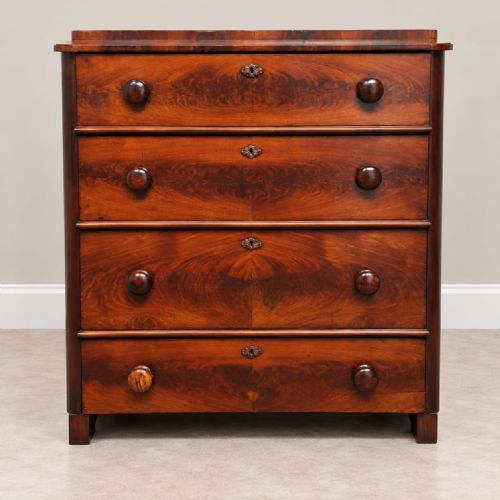
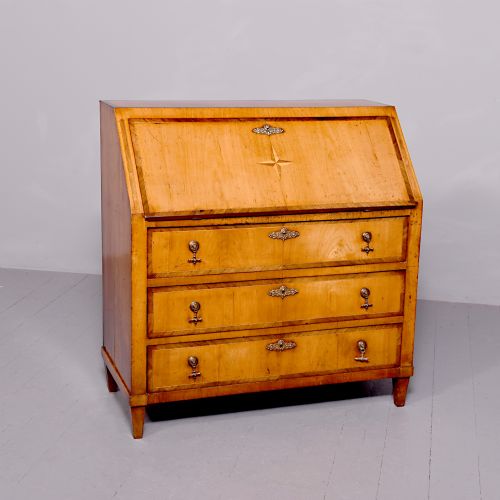
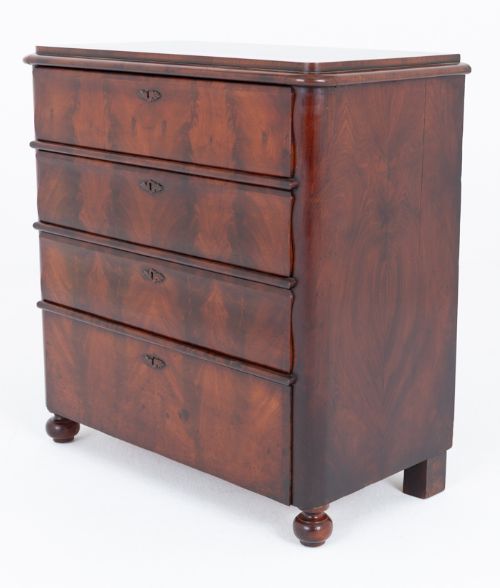
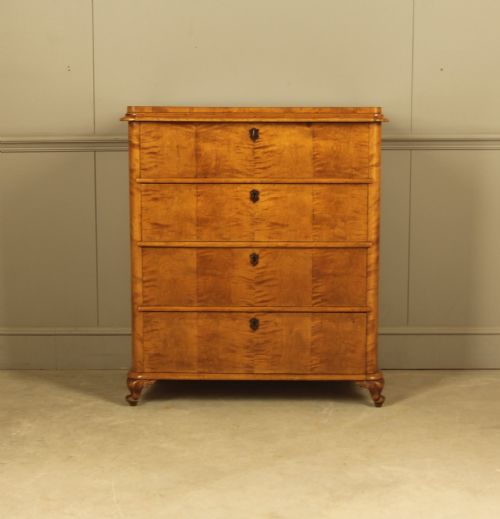
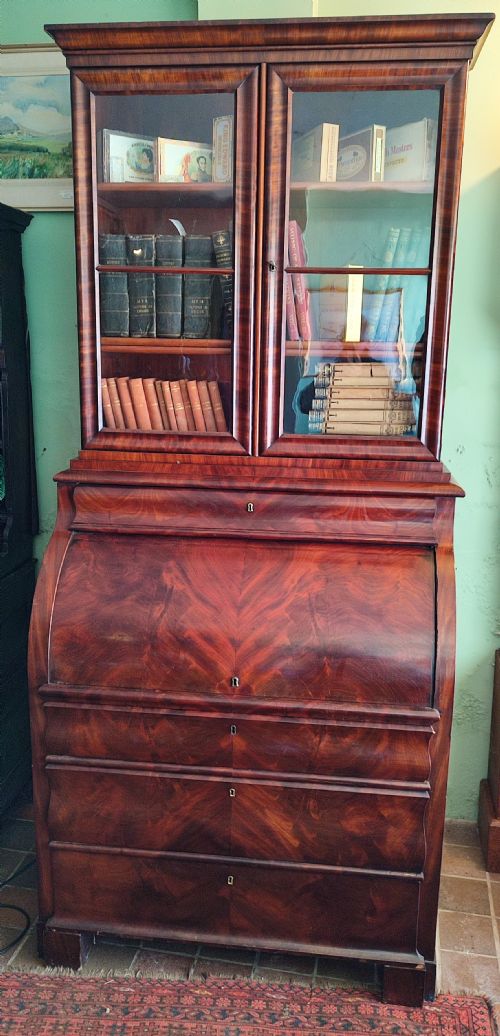
When you search for an antique biedermeier bureau, you encounter 19th-century Continental furniture that combines architectural form with functional utility. The selection includes drop-front secretaires, cylinder bureau bookcases, and chests of drawers fitted with writing compartments.
You are most likely to meet pieces originating from Sweden and wider Scandinavia alongside Continental examples. These range from modest country workshops to refined urban pieces produced during the 19th century and the Victorian era.
The primary forms serve dual purposes, functioning as compact desks when the writing flap lowers and as orderly storage units when closed. This practicality explains their enduring appeal for modern studies and bedrooms.
Materials and construction methods
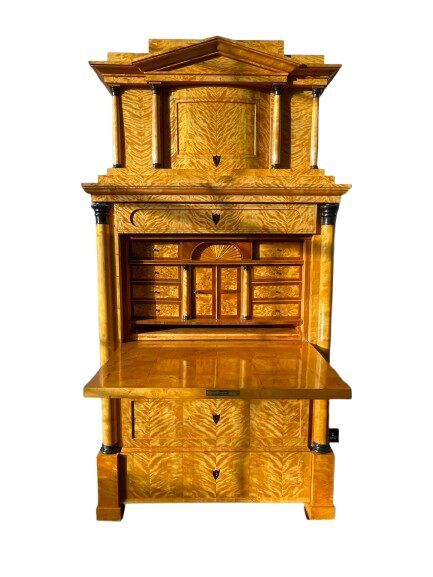
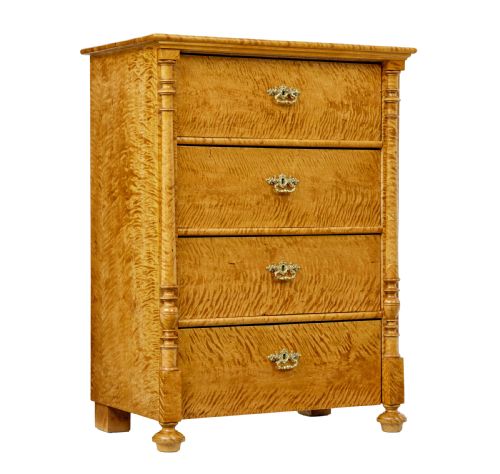
Cabinetmakers utilised timber veneers over secondary woods like pine to achieve striking surface patterns. Birch, flame birch, masur birch, and tiger birch feature prominently alongside richer dark hardwoods such as mahogany and walnut.
Decorative detailing relies on subtle contrasts rather than heavy carving, frequently employing ebonised wood and brass hardware to frame the figured grain. Skilled selection of veneers ensures the natural patterns of the wood remain the central decorative element.
Form variations span upright secretaire chests, cylinder bureau bookcases, and standard chests of drawers.
Assessing the grade and finish
The quality of an antique biedermeier bureau rests on the choice of wood veneers and how evenly the grain matches across the front drawers and writing surface. Finer examples display carefully aligned figures in birch or mahogany that demonstrate exceptional planning by the cabinetmaker.
Construction integrity and the preservation of original mounts also dictate the standing of a piece. Smooth movement in the drop-front mechanism and the interior pigeonholes distinguish superior examples from those requiring extensive intervention.
The Antique Biedermeier Bureau Glossary
- Secretaire
- A desk or chest of drawers featuring a fold-down writing flap that conceals small compartments and pigeonholes.
- Escritoire
- A small writing cabinet or desk used for correspondence and document storage.
- Veneer
- A thin layer of finely figured wood applied to a secondary timber base to create decorative surfaces.
- Masur birch
- A distinctive timber showing swirling dark patterns within the grain, native to northern regions.
- Cylinder bureau
- A writing desk fitted with a rolling curved wooden shutter that encloses the workspace.
Antique Biedermeier Bureau: Frequently Asked Questions
What is a biedermeier bureau?
A biedermeier bureau is a 19th-century writing desk or secretaire characterised by restrained neoclassical lines and decorative wood veneers.
These pieces prioritise utility and clean geometric forms over heavy ornamentation, making them versatile for domestic interiors.
How do I use a secretaire desk?
The drop-front writing flap lowers to create a flat surface for correspondence, revealing internal drawers and pigeonholes for storage.
When not in use, the flap folds up and locks, concealing papers and restoring an orderly appearance to the room.
Which woods are common in these desks?
Cabinets frequently feature birch varieties such as flame, masur, and tiger birch, alongside darker woods like mahogany and walnut.
Craftsmen also utilised ebonised wood accents and brass fittings to provide visual contrast against the pale or figured surfaces.
How do I identify a Swedish piece?
Swedish examples often display pale Scandinavian birch timbers and simpler, elegant proportions influenced by local neoclassical and empire revival styles.
Their construction frequently incorporates pine as a secondary wood behind the decorative exterior veneers.